Sanskrit generative power challenges modern linguistics
July 1, 2026
  • Read Ecopy
  • Circulation
  • Advertise
  • Careers
  • About Us
  • Contact Us
Android AppiPhone AppArattai
Organiser
  • ‌
  • Bharat
    • Assam
    • Bihar
    • Chhattisgarh
    • Jharkhand
    • Maharashtra
    • View All States
  • World
    • Asia
    • Europe
    • North America
    • South America
    • Africa
    • Australia
  • Editorial
  • International
  • Opinion
  • RSS @ 100
  • More
    • Op Sindoor
    • Analysis
    • Sports
    • Defence
    • Politics
    • Business
    • Economy
    • Culture
    • Special Report
    • Sci & Tech
    • Entertainment
    • G20
    • Azadi Ka Amrit Mahotsav
    • Vocal4Local
    • Web Stories
    • Education
    • Employment
    • Books
    • Interviews
    • Travel
    • Law
    • Health
    • Obituary
  • Subscribe
    • Subscribe Print Edition
    • Subscribe Ecopy
    • Read Ecopy
  • ‌
  • Bharat
    • Assam
    • Bihar
    • Chhattisgarh
    • Jharkhand
    • Maharashtra
    • View All States
  • World
    • Asia
    • Europe
    • North America
    • South America
    • Africa
    • Australia
  • Editorial
  • International
  • Opinion
  • RSS @ 100
  • More
    • Op Sindoor
    • Analysis
    • Sports
    • Defence
    • Politics
    • Business
    • Economy
    • Culture
    • Special Report
    • Sci & Tech
    • Entertainment
    • G20
    • Azadi Ka Amrit Mahotsav
    • Vocal4Local
    • Web Stories
    • Education
    • Employment
    • Books
    • Interviews
    • Travel
    • Law
    • Health
    • Obituary
  • Subscribe
    • Subscribe Print Edition
    • Subscribe Ecopy
    • Read Ecopy
Organiser
  • Home
  • Bharat
  • World
  • Operation Sindoor
  • Editorial
  • Analysis
  • Opinion
  • Culture
  • Defence
  • International Edition
  • RSS @ 100
  • Magazine
  • Read Ecopy
Home Bharat

Not a ‘dead’ tongue but a living code: Sanskrit’s vast, generative power challenges modern linguistic assumptions

Often labelled a “dead” language, Sanskrit is now being recognised for its vast, generative structure, with millions of possible words formed through precise grammatical rules

WEBDESKWEBDESK
Dec 27, 2025, 05:10 pm IST
in Bharat, World, Culture
Follow on Google News
FacebookTwitterWhatsAppTelegramEmail

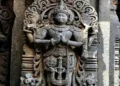
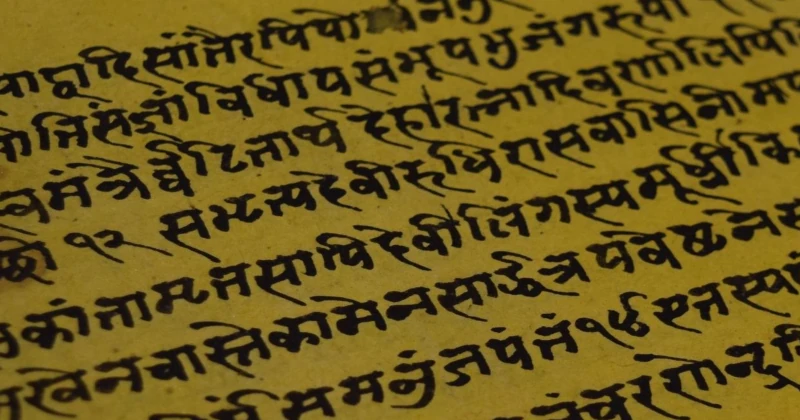
NEW DELHI: For decades, Sanskrit has routinely been labelled a “dead language” in academic and popular discourse. Yet emerging linguistic analysis and renewed scholarly interest are forcing a serious re-evaluation of that claim. By conservative estimates, Sanskrit contains over 10 million words a figure that dwarfs most modern languages and exposes the limitations of conventional word-count comparisons.

The DEAD language Sanskrit has 10 million words by conservative estimates.

If you coined 1,000 new words every year, you'd need 10,000 years to match it. English? 170,000 words. Mandarin? Around 370,000.

A linguistic architecture built across millennia, encoding knowledge… pic.twitter.com/h06FVph6en

— GemsOfINDOLOGY (@GemsOfINDOLOGY) December 25, 2025

To put this in perspective, even if a language coined 1,000 new words every year, it would take 10,000 years to reach Sanskrit’s scale. English, often considered one of the world’s most expansive languages, contains roughly 170,000 words in active use, while Mandarin Chinese is estimated at around 370,000. Sanskrit’s magnitude is not merely numerical it is structural.

Linguists point out that Sanskrit’s true strength lies in its architectural design, formalised over 2,500 years ago by the grammarian Pānini. His grammatical system does not treat words as static units but as outcomes of a highly precise generative process. Almost every verbal or nominal root in Sanskrit can systematically produce verbs, nouns, adjectives, participles, compounds, and specialised technical terms with mathematical accuracy.

Unlike many modern languages, Sanskrit does not expand linearly. It grows combinatorially. Its rules of sandhi (phonetic transformation) and samāsa (compounding) allow the creation of long, information-dense words that can compress what would otherwise require full sentences in English or Mandarin. As a result, the very concept of “word count” becomes inadequate when applied to Sanskrit.

Also Read: Chhattisgarh: “Conversion through lure should be opposed,” says Chief Minister Vishnu Deo Sai

This generative capability made Sanskrit uniquely suited to encode complex knowledge systems ranging from philosophy, mathematics, astronomy, medicine, and logic to poetics and metaphysics long before the advent of modern computational thinking. Scholars argue that Sanskrit functions less like a spoken vernacular frozen in time and more like a linguistic operating system, designed for precision, abstraction, and infinite extensibility.

Far from being obsolete, Sanskrit’s rule-based grammar has drawn interest from fields such as artificial intelligence, computational linguistics, and knowledge representation. Researchers note that its clarity of syntax and semantic predictability make it remarkably compatible with algorithmic modelling.

(This story is based on a twitter thread by GemsOfINDOLOGY)
Topics: Sanskrit revaluationSanskritLinguistic languageMandarin Chinese
ShareTweetSendShareSend
✮ Subscribe Organiser YouTube Channel. ✮
✮ Join Organiser's WhatsApp channel for Nationalist views beyond the news. ✮
Previous News

Bihar: 359th Prakash Parv celebrated at Takht Sri Harmandir Sahib Gurudwara Patna

Next News

Rs 30 crore empire crumbles: UP Police attach 14 properties of absconding gangster Firoz Khan in Shamli

Related News

Mann Ki Baat: PM Modi Celebrates India's Scientific Progress, Defence Self-Reliance and Yoga

Mann Ki Baat: PM Modi highlights indigenous innovation, defence strength, yoga & people’s participation

(Left) Russian President Vladimir Putin (Right) Prime Minister Narendra Modi (Image Credit: ANI)

Russia Day 2026: The ancient civilisational bond between India and Moscow

CBSE introduces three language reform (This is an AI generated image)

Sanskrit favoured with three language formula in CBSE schools

Harvard apologises for defaming Hindu sentiments; Diaspora criticised the university for posting insensitive image

Representative image

Sanskrit Beyond India: How ancient Buddhist monasteries in Termez preserved a transregional language of devotion

Representative Image

Binary logic hidden in the Sanskrit verse

Load More

Latest News

Alang's Comeback: How Modi Government Strengthened India's Maritime Economy

Congress’ assault on Alang China sponsored? How Modi’s vision saved India’s maritime lifeline

Ancient Hindu temples break through watery graves to reclaim Sanatan Dharma’s indestructible legacy

Representative Image

Radical Islamist drivers weaponise public transit to target and exploit Hindu women

Central Sanskrit University launches India's First AI engineering Programme

Central Sanskrit University launches India’s 1st AICTE-approved AI engineering programme with Indian knowledge systems

General Dhiraj Seth assumes charge as the 31st Chief of the Indian Army; Succeeds General Upendra Dwivedi

Representative Image

From Aadhaar to UPI: How Digital India’s 11 year journey rewired governance, welfare and economy

Delhi-NCR Fight Against Vehicular Pollution: How Rs. 9,585cr central govt. scheme aims to improve city’s air quality

US President Trump signs the US–Iran Peace Agreement at Versailles, France

West Asia Conflict: The deal out of exhaustion

FCRA: Enforcement, not harassment

Born on July 6, 1901, in Kolkata, Dr Syama Prasad Mookerjee is remembered as a visionary leader, an educationist, and the founder of the Bharatiya Jana Sangh, who sacrificed his life for the unity & integrity of the nation

Dr Syama Prasad Mookerjee: Symbol of conviction, courage and commitment

Load More
  • Privacy
  • Terms
  • Cookie Policy
  • Refund and Cancellation
  • Delivery and Shipping

© Bharat Prakashan (Delhi) Limited.
Tech-enabled by Ananthapuri Technologies

  • Home
  • Search Organiser
  • Bharat
    • Assam
    • Bihar
    • Chhattisgarh
    • Jharkhand
    • Maharashtra
    • View All States
  • World
    • Asia
    • Africa
    • North America
    • South America
    • Europe
    • Australia
  • Editorial
  • Operation Sindoor
  • Opinion
  • Analysis
  • Defence
  • Culture
  • Sports
  • Business
  • RSS @ 100
  • Entertainment
  • More ..
    • Sci & Tech
    • Vocal4Local
    • Special Report
    • Education
    • Employment
    • Books
    • Interviews
    • Travel
    • Health
    • Politics
    • Law
    • Economy
    • Obituary
  • Subscribe Magazine
  • Read Ecopy
  • Advertise
  • Circulation
  • Careers
  • About Us
  • Contact Us
  • Policies & Terms
    • Privacy Policy
    • Cookie Policy
    • Refund and Cancellation
    • Terms of Use

© Bharat Prakashan (Delhi) Limited.
Tech-enabled by Ananthapuri Technologies