Language is not only a vehicle of communication, but also a vessel of values, emotions and identities. When a social or cultural movement seeks to inspire transformation, the first and foremost instrument it fashions is vocabulary. Since its inception in 1925, the Rashtriya Swayamsevak Sangh(RSS) has stood out not only as an organization of discipline and social service but also as an innovative linguistic practitioner. RSS has crafted a distinctive lexicon, where every key-term is imbued with cultural memory and national spirit. RSS’s vocabulary is more than organizational terminology—it is a living philosophy encoded in words. Every term, from swayamsevak to dayitva, reflects inclusiveness, collectivity, humility and a deep sense of nationality.
Where other organizations may rely on rhetoric of power or authority, the RSS relies on a lexicon of service and belonging. Words like ‘dayitva’ remind us that true responsibility is not domination but sensitive custodianship. Terms like shakha, parivar and sangh embody togetherness. Words like Bharat Mata and Rashtra bind generations into a single civilizational identity. This linguistic culture explains why the RSS continues to inspire millions-its vocabulary creates a consciousness where ego dissolves into service, isolation into collectivity and nationality rises beyond politics into the realm of the sacred. It is a vocabulary of belonging and through it, the Sangh nurtures a Rashtra of shared pride and destiny. As a matter of fact, the unique lexicon of RSS embodies the linguistic culture of humility, sensibility, collectivity, nationality and belonging.
Major words of functionality in the RSS lexicon
Commenting on the nature of RSS lexicon, Sarsanghchalak Mohan Bhagwat said, “RSS does not speak the language of power; it speaks the language of belonging. Our words—like seva, parivar, dayitva—are not borrowed. They arise from our culture and bind us as one family. In the Sangh, words are not labels but living practices. A swayamsevak is not called so by name alone, but by conduct”. Some major words of functionality in the lexicon of RSS are:
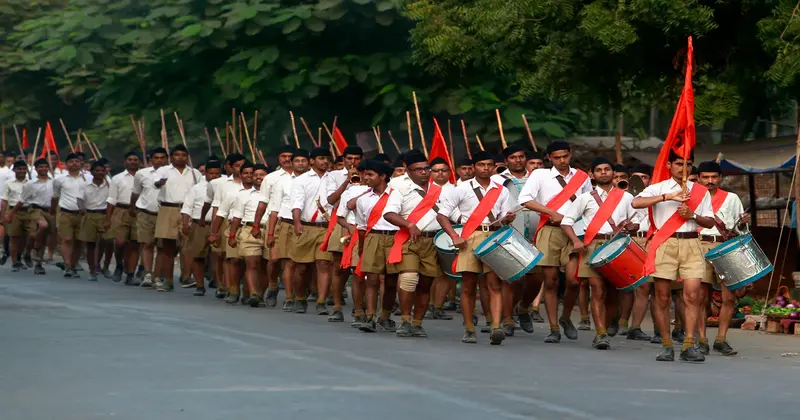
- Swayamsevak (स्वयंसेवक)– It means ‘selfless volunteer’. Unlike the term “member”, which suggests formal affiliation, Swayamsevak is one who willingly dedicates himself to service without expectation of reward. It carries humility—because a swayamsevak is never above service and his identity is defined by what he contributes to society. It carries inclusiveness—anyone can be a swayamsevak; caste, creed or wealth do not matter. It reflects collectivity also, for each swayamsevak sees himself as part of a larger mission.
- Pracharak: Is a person who decides to remain unmarried to be a full-time propagator of Bharat’s glorious cultural heritage. Unlike a “propagandist, he leads a life of discipline, celibacy and dedication, moving from place to place to spread ideas of Bhartiya cultural and national glory. A Pracharak exemplifies humility because he renounces personal comfort for social service. The word links to ancient Bhartiya traditions of itinerant monks and teachers who spread dharma across the land.
- Sarsanghchalak (सरसंघचालक): Sarsanghchalak is the word used for the Chief of the entire Sangh. Unlike words like “President” or “Leader”, Sarsanghchalak literally means the one who steers (Chalak) the collective (Sangh). It avoids authoritarian connotations. The Sarsanghchalak is not a ruler but a guide, a navigator who directs the collective will. The word embodies humility as he is also one among the swayamsevaks, simply entrusted with more responsibility.
- Shakha (शाखा): Shakha (Branch) is not “unit” or “cell” but a branch, symbolizing growth, rootedness and life. A shakha is where swayamsevaks assemble, train and bond, much like branches connected to the same trunk. It conveys inclusiveness, because each branch contributes to the flourishing of the whole tree.
- Guru Dakshina (गुरु-दक्षिणा): It is traditional offering to the Guru. In RSS, this is a collective annual ritual, not a fee or tax. It symbolizes gratitude, humility, and remembrance of our eternal teacher—the Rastra and its culture. By giving guru dakshina, swayamsevaks reinforce their bond with their cultural roots.
- Rashtra (राष्ट्र): In Euro terminology, the word Rashtra stands for Nation(in the civilizational sense). Distinct from “nation-state,” Rashtra encompasses shared culture, history and collective memory. This word reminds swayamsevaks that nationality is not bureaucratic but spiritual, an inheritance and a responsibility.
- Sangathan (संगठन): Derived from sanghati (union, togetherness), Sangathan (Organisation) emphasizes the collective, not the individual. In RSS lexicon, sangathan means weaving society into a harmonious whole, beyond narrow divisions.
- Balidan (बलिदान): Balidan is not forced or tragic—it is glorious, inspired by the heroes of Bharat who laid down their lives for dharma. It teaches swayamsevaks that sacrifice is the highest form of service.
- Parivar (परिवार): The Sangh often describes itself as a Parivar (family). This reduces formality, creating intimacy and emotional warmth. It ensures inclusiveness, because in a family, no one is left behind. Further, every Swayamsevak in the Sangh like a family member has the right to assert within the given limitations.
- Dayitva (दायित्व): This word deserves special attention because of its unique meaning and place in RSS vocabulary. It means responsibility, duty or entrusted role. Unlike the Western concept of “power” or “authority,” dayitva is not about command. It is about being entrusted with a role that must be carried out with humility and sensitivity. In the Sangh, one does not hold power; one carries dayitva. A karyakarta (worker) is given dayitva for a task, not to assert ego, but to serve. Dayitva carries humility because the responsibility is received, not seized or captured. It reminds the worker that he is a custodian (not an owner) of the assignment given to him. It carries sensibility because it demands awareness of collective needs. A person with dayitva must listen, cooperate and harmonize. This subtle shift of vocabulary transforms leadership from a position of dominance to that of service. In this way, the word dayitva becomes a shining example of how the RSS uses language to nurture collective spirit and dissolve ego.
A comparative perspective
No language is neutral—it carries the worldview of the system that generates it. The RSS vocabulary emerges from the soil of the land, i.e. Bharat, while political and colonial words often form part of the systems of power, control and division. When we compare them, the uniqueness of the RSS linguistic traditions becomes strikingly clear. Guruji reiterated “Our vocabulary must awaken the soul of Bharat, not merely address the mind. Words must inspire, not just instruct”.
1. Membership vs. Swayamsevak
In Political Parties, members are enrolled, often with a fee or formality. The word “member” suggests a transactional belonging—linked to rights, privileges and sometimes patronage. The term swayamsevak is entirely different. It implies voluntary participation, selfless service and humility. There are no privileges—only duties. Where membership creates entitlement, the word swayamsevak nurtures service and humility. Defining a Swayamsevak, Hedgewar ji said, “The Sangh does not create members; it creates swayamsevaks—men who live not for themselves but for the Rastra”. Guruji, the Second Sarsanghchalak M S Golwalkar ji asserted, “In the Sangh, no one holds authority; each hold dayitva. It is a trust from the collective, to be carried with humility”.
2. Leader vs. Sarsanghchalak
The word “leader” implies authority, charisma or command over followers. It often elevates one above the rest. The term Sarsanghchalak means “the one who steers the collective”. He is not a superior but a guide, entrusted with the responsibility to keep the Sangh on course whether literally (like navigating a route) or figuratively (like staying focused on a goal or plan). Thus, leadership in the RSS lexicon is custodianship (not domination).
3. Power vs. Dayitva
The language of governance uses “power”, “authority”, and “position”. These terms place the individual above others, creating vertical hierarchies. The word dayitva emphasizes responsibility, humility and sensibility. It reminds one that the role is a trust from society, not a personal privilege. Dayitva transforms authority into sensitive service, dissolving ego in collective duty. Keshav Baliram Hedgewar ji asserted, “The task before us is not of power, but of responsibility (dayitva). Power divides, but responsibility unites.”
4. Office vs. Karyalaya
“Office” denotes a place of administration, often impersonal and hierarchical in Bureaucracy and Politics. The Karyalaya (place of work) is simple, open and collective. It is not a power center but a functional hub for activity. The word effectively shifts the focus from status to function.
5. Committee vs. Shakha
Political parties and administration organize activities through “committees” and “cells”, which sound bureaucratic and transactional. The shakha (branch) is organic, alive and deeply symbolic. It is not a meeting room but a living practice of training, prayer, play and discussion. Shakha fosters fraternity and emotional connection, unlike committees which often breed politics. The third Sarsanghchalak Balasaheb Deoras defined, “Shakha is not a meeting or a committee; it is a branch of the national tree, where every leaf and twig grows together”.
6. Nation vs. Rashtra
The “nation” is often defined territorially and politically, bound by constitutions and laws. The word Rashtra is civilizational, rooted in shared culture, heritage and sacred geography. It emphasizes continuity across millennia. Thus, nationality becomes a spiritual bond, not just a legal contract. Guruji, the Second Sarsanghchalak M.S. Golwalkar, also cautioned “We must understand the word ‘Rashtra’ not in the political sense of a State but in the cultural sense of a living people bound by common heritage”.
7. Campaign vs. Seva
“Campaigns” are short-term drives, often linked to elections or publicity or propagation of an idea or activity with certain aim. The word Seva (service) is continuous, selfless and unconditional. Flood relief, health work, or education projects are done not for votes but for dharma. Seva-based vocabulary sustains long-term trust in society, unlike campaigns that end with elections or the fulfilment of specified objective/s.
8. Party vs. Parivar
“Party” implies division—usually one party against another. The language of parties is adversarial, confrontational, conflictual, contendind, disputatious etc. Parivar (family) implies unity and warmth. The Sangh sees itself not as a party but as a family of Swayamsevaks, each with a role in collective life. “Party” divides and disunites, but parivar unites and consolidates.
The colonial contrast
Colonial administrators introduced words like “subject”, “law and order”, “loyalty”, and “census” to describe Indians. These terms reduced people (who constitute the core of democracy) to objects of governance and control. The RSS overturned this vocabulary. Instead of “subjects”, it used swayamsevaks. Instead of “law and order”, it spoke of dharma. Instead of “loyalty”, it invoked shraddha (devotion). Instead of “census categories”, it used parivar and sangh. Where colonial language dehumanized, RSS language rehumanized, restoring dignity and agency to individuals as a human being.
The RSS Vocabulary is deeply rooted in Culture. The use of abundant Sanskritic and vernacular idioms make it resonate with Indian memory. Secondly, it is emotionally charged, for the words like Matrubhumi or Balidan stir the heart. Thirdly, it is non-bureaucratic, simple, warm and human, not dry or legalistic. Fourth, it is a language of the collective over individualism or Ego: Words avoid glorifying individuals, focusing on the collective mission. Fifth, it is the vocabulary of spiritual dimensions and links patriotism with dharma, making service sacred.
The linguistic philosophy of RSS Lexicon
The linguistic philosophy of RSS lexicon underlines the following-
- Humility over Ego: Terms like swayamsevak and dayitva avoid self-aggrandizement.
- Collectivity over Individuality: Words like Sangh, Shakha, Parivar highlight shared identity.
- Spiritual Rastriyata: Terms like Rashtra, Matrubhumi, Bharat Mata elevate nationality to a sacred relationship.
- Continuity with Traditions: Use of Sanskrit-derived words ensures that modern activism is linked with ancient heritage.
When viewed against the backdrop of political and colonial vocabularies, the Rashtriya Swayamsevak Sangh’s linguistic culture appears not just unique but trailblazing. It consciously avoids the language of domination, power, division and authority, replacing it with the lexicon of humility, service and togetherness. Where politics speaks of leaders and members, the Sangh speaks of swayamsevaks and dayitva. Where colonial rulers saw Subjects, the Sangh saw Parivar. Where bureaucracies create workers, offices and committees, the Sangh nurtures Karyakartas, Shakhas and Karyalayas. Where modern States speak of nationhood, the Sangh revives the deeper cultural and civilizational idea of Rashtra.
This conscious shift in vocabulary is not cosmetic; it is instrumental in transforming psychology. It dissolves hierarchies, promotes inclusiveness and elevates nationality to a spiritual experience. Words like dayitva epitomize this transformation—showing that responsibility is not power, but humble service. Thus, the vocabulary of RSS is not only a tool of communication but also a moral compass, guiding millions towards a collective vision of unity and national resurgence. It is, in essence, the language of Bharatiya belonging. Balasaheb Deoras (Third Sarsanghchalak) said “The Sangh is not an organization of commands, but a family of responsibilities. Each swayamsevak is entrusted with a role—this is our language of duty”.