




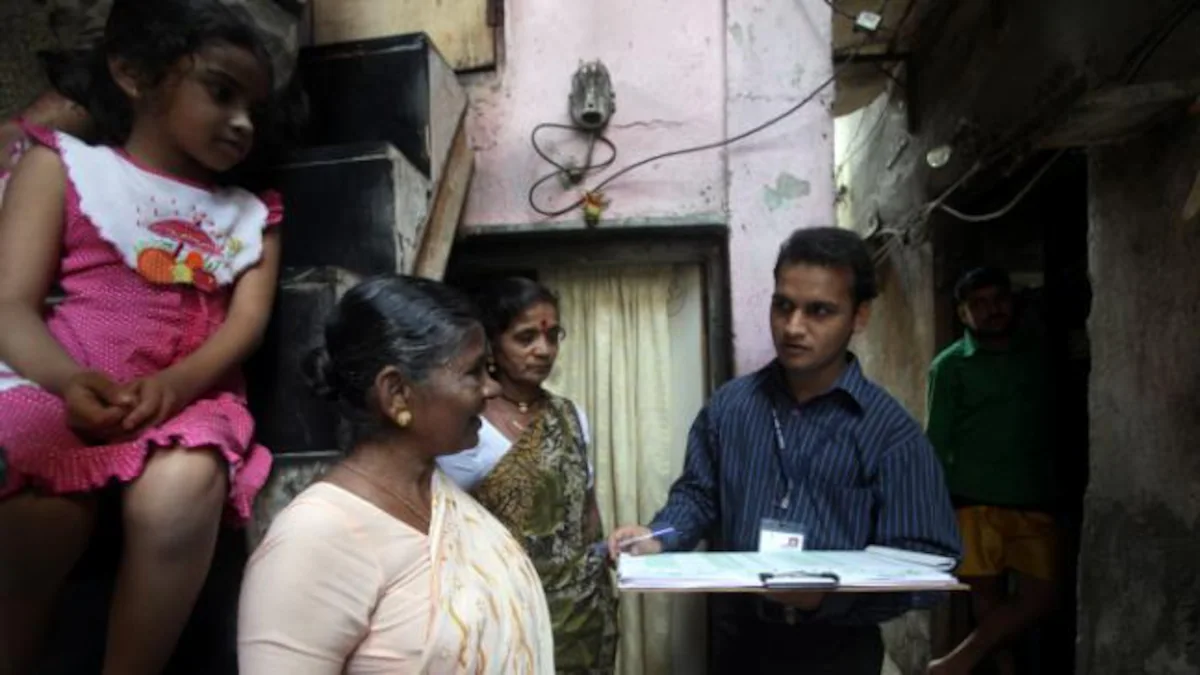
The Ministry of Home Affairs notified the Census (Amendment) Rules, 2026, under Section 18(1) of the Census Act, 1948. The amendment revises Rule 3, which deals with the appointment of enumerators for Census operations.
The revised provisions explicitly cover teachers from government institutions, local authorities, aided and unaided private educational institutions, societies and trusts. They also include clerks and officials from government departments, public-sector undertakings, statutory bodies, banks, companies, institutions, societies and trusts. State governments and Union Territory administrations can also appoint any person they consider suitable.
The change matters because the earlier wording referred more generally to teachers, clerks, officials and other persons. The revised language spells out the categories more clearly, particularly the inclusion of private-school staff and employees of a wider range of establishments.
Nowhere in the amendment, as described in the notification, is there a quota for RSS, BJP or any political party workers. Nor does it hand either organisation the authority to appoint enumerators.
However, the Congress party has called this amendment a political jobs scheme, but the provisions it is attacking expand eligibility for Census work rather than establish a recruitment arrangement for political cadres.
If Congress believes the amendment will be used to favour party workers, it needs to show how that would happen under the rules and provide evidence of such a plan. A wider pool of eligible personnel is not, by itself, proof of partisan recruitment.
The legal complication Congress leaves out
The amendment did not emerge in a vacuum. It followed legal challenges concerning the requisitioning of teachers from private schools for Census duties.
The deployment of private-school teachers raised questions about whether the earlier rules clearly authorised authorities to compel staff from aided and unaided institutions to undertake the work. Challenges before High Courts, including the Punjab and Haryana and Bombay High Courts, brought the legal basis of such requisitions into question.
That uncertainty created a practical problem for Census planning. A nationwide enumeration requires a large workforce, and restrictions on using particular categories of staff can complicate recruitment and deployment.
The amendment expressly identifies private educational institutions and a broader range of establishments in the eligibility framework. It therefore addresses a genuine administrative and legal issue: who can be considered for Census duties.
Congress can question whether the amendment is appropriately drafted. But ignoring the legal backdrop while portraying the change as a political employment scheme leaves out a central part of the story.
A new rule does not automatically prove that every earlier requisition was lawful or settle every pending dispute.
Congress’s ‘Rozgar Guarantee Yojana’ charge
Congress general secretary Jairam Ramesh has described the amendment as “mischief” and a “Rozgar Guarantee Yojana” for RSS and BJP workers. He has also warned that the Census could be “dangerously doctored”, comparing the issue with controversies over electoral-roll revisions.
The amendment does not name RSS or BJP members as a preferred category. It does not establish a quota for them, and it leaves the selection of suitable personnel to the relevant government administrations.
That does not make political interference impossible in every conceivable circumstance. It means that such interference must be demonstrated through evidence of actual appointments, instructions or conduct, not assumed from the fact that the government has broadened eligibility.
Instead, the claim that the amendment is a jobs scheme risks turning a question about administrative rules into a conclusion about political intent before that conclusion has been established.
The allegation of ‘Doctored’ Census data
Ramesh has gone further by suggesting that the amendment could compromise the Census itself. This allegation deserves separate scrutiny because staffing eligibility and the falsification of population data are not the same issue.
The amendment expands the pool of people who may be appointed. It does not, on its face, direct enumerators to alter household information, change population figures or manipulate responses. Nor does the supplied material establish that the rules weaken the statutory confidentiality protections governing Census records.
Section 15 of the Census Act, 1948, protects the confidentiality of individual census records and restricts their use in legal proceedings, subject to the law’s provisions. Such protections are important, although confidentiality alone cannot guarantee that every entry will be accurate.
Data integrity also depends on training, supervision, verification, secure data handling and action against misconduct. The government should explain these safeguards clearly as Census 2027 approaches.
But Congress must also explain the basis for its claim. What provision in the amendment enables systematic fabrication? What evidence shows that enumerators will be instructed to falsify returns? Has the party identified a recruitment plan that would undermine data collection?
Without answers to such questions, the warning that the Census will be “dangerously doctored” remains an allegation, not an established finding.
The RSS meeting and demographic committee
Congress has also linked the amendment to the RSS’s annual meeting in Belagavi in July 2026 and to a Home Ministry committee examining demographic changes.
The RSS meeting reportedly covered organisational matters, training activities, expansion and contemporary issues, including demographic developments. The fact that an organisation discusses the Census or population trends does not establish that it directed a government amendment months later.
To prove that connection, Congress would need evidence that the meeting produced a plan to influence enumerator appointments or manipulate Census data.
The same applies to the demographic changes committee chaired by retired Supreme Court judge Justice Prakash Prabhakar Naolekar. Its mandate reportedly includes examining demographic shifts, cross-border movement and related policy questions. Congress can scrutinise the committee’s membership, methods and recommendations, but criticism of its ideological orientation does not establish that it is coordinating a plan to manipulate the Census.
The government should remain transparent about both the committee’s work and the Census appointment process. But a chain of associations is not proof of a conspiracy. If Congress believes these developments are connected, it should present evidence demonstrating that connection.
Why Census 2027 amendment is a necessary administrative reform
The Census is one of India’s largest administrative exercises, requiring extensive manpower to visit households, collect information and ensure that the population is counted systematically. After the COVID-19 pandemic delayed the 2021 Census, preparing for the next enumeration requires careful planning, adequate staffing and clear rules governing the deployment of personnel.
The October 16, 2026, amendment to the Census Rules, 1990, addresses an important part of this challenge: who can be appointed as an enumerator.
The amended rules explicitly include teachers from government, local-authority, aided and unaided private educational institutions, as well as employees of a wider range of establishments, including public-sector undertakings, banks, companies, institutions, societies and trusts. They also allow state governments and Union Territory administrations to appoint any person they consider suitable.
The earlier rules already referred to teachers, clerks, officials and other persons. The amendment clarifies and expands the stated categories, particularly by expressly identifying private-school staff and employees of different establishments. It does not automatically appoint everyone covered by these categories; it gives the authorities a wider pool from which to select suitable personnel.
This is a practical approach to a nationwide logistical challenge. Restricting the potential workforce unnecessarily could make deployment more difficult, particularly where large numbers of enumerators are needed across urban, rural and remote areas. A broader eligibility framework gives administrations greater flexibility to plan staffing according to local requirements.
Legal clarity after court challenges
The amendment also addresses legal uncertainty surrounding the requisitioning of private-school teachers for Census duties. Challenges before High Courts raised questions about whether the earlier rules clearly authorised authorities to require teachers from aided and unaided private institutions to participate.
By expressly including these institutions in the eligibility framework, the government has sought to clarify the rules and provide a clearer basis for staffing decisions. The precise effect on individual court cases depends on the relevant judicial orders, but the broader objective of reducing uncertainty in the appointment process is understandable.
A national exercise of this scale cannot depend on unclear eligibility provisions. Clearer rules help authorities plan ahead, identify suitable personnel and reduce the risk of staffing arrangements being disrupted by legal disputes. The amendment should therefore be assessed on its stated administrative purpose, rather than treated as evidence of political interference without supporting proof.
Digital census requires effective planning
Census 2027 is planned as a digital exercise, with a self-enumeration option and caste enumeration. The Union Cabinet has approved approximately Rs 11,718 crore for the exercise. Its success will depend on more than technology: trained personnel, effective supervision and reliable data collection remain essential.
Expanding the pool of eligible enumerators can support this effort by giving administrations more options when allocating responsibilities. The government must ensure that personnel are properly trained and that clear procedures are followed, but these implementation requirements are not arguments against broadening eligibility. They are part of delivering the exercise effectively.