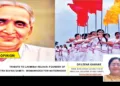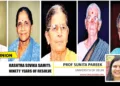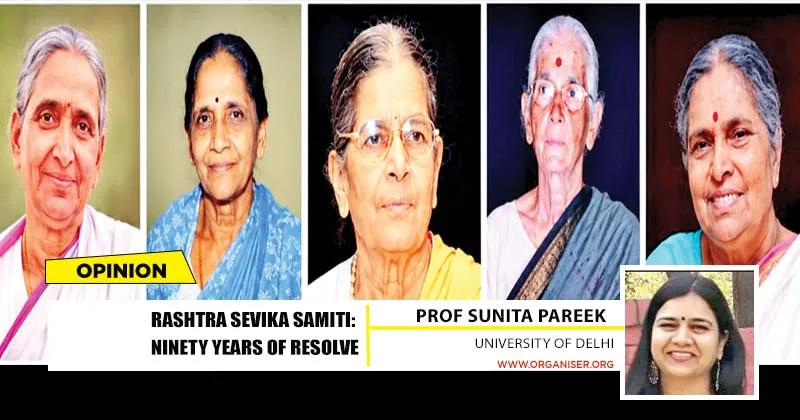
The Rashtra Sevika Samiti was founded on Vijayadashami, October 25, 1936, in Wardha by Vandaniya Lakshmibai Kelkar, fondly known as “Mausiji”. She had been influenced by Gandhi’s ashram in Wardha, but her sons’ involvement in the Rashtriya Swayamsevak Sangh (RSS) drew her towards Dr KB Hedgewar’s organisational model. The RSS did not admit women, and Dr Hedgewar is traditionally said to have encouraged her to build a parallel, autonomous women’s organisation. That autonomy was deliberate. The Samiti has always maintained its own leadership, finances and training, separate from the Sangh. The Samiti’s worldview rests on three ideals: matritva (motherhood), kartritva (agency and social responsibility) and netritva (leadership). Together, they present women as bearers of sanskriti and moral authority who also take on organisational responsibility. Jijabai, Ahilyabai Holkar and Rani Lakshmibai are held up as the respective icons of these three ideals.
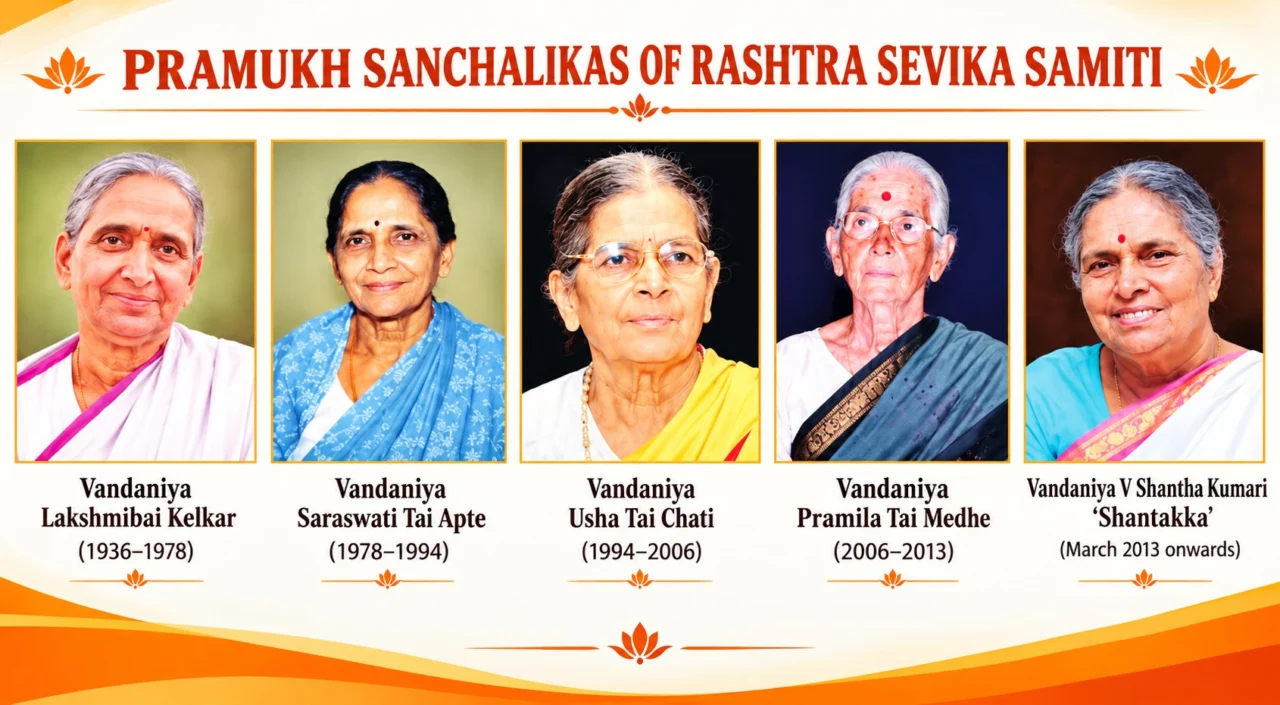
Mausiji led the Samiti until 1978. By the 1940s, it had spread across Maharashtra and parts of central Bharat. Partition was a formative moment, and the memory of 1947 became tied to the Samiti’s idea of nationhood. Successive Pramukh Sanchalikas — Saraswati Apte from 1978, Usha Chati from 1994, Pramila Medhe from 2006 and V Shantha Kumari (or Shantakka) from 2013 — consolidated the organisation’s structure. The Samiti also featured in the Ram Janmabhoomi movement of the 1980s and 1990s, in which women’s participation became an important symbol.
Seva In Action
The Samiti presents service as the core of its identity, and its reported record spans crisis relief in 1947 to 2,238 service projects in 2026. Its service tradition began with Partition. On August 13, 1947, Kelkar flew from Bombay to Karachi to be with sevikas in Sindh amidst heightened communal tensions. A shakha pledge was taken on the night of August 14.
The Samiti has since been credited with Partition-era rehabilitation work, participation in the Goa liberation movement and resistance during the Emergency of 1975–77. The Samiti’s own 80-year retrospective lists relief work undertaken after the 1993 Latur and 2001 Kutch earthquakes, the 1998 cyclone, the 2004 tsunami and the 2013 Uttarakhand floods, as well as a campaign on Jammu and Kashmir in 1990. In 1953, it established Sevika Prakashan, a publishing house for socio-national literature.
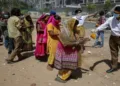
The Samiti’s recent work follows the same pattern. During the floods in Jammu and Punjab, sevikas cleaned affected areas and distributed food, clothing and kitchen utensils. During the COVID-19 pandemic, the sevikas distributed 426,237 masks, gloves and personal protective equipment (PPE) kits, 109,696 grocery and 11,600 packets of sanitary napkins. They also provided meals to 423,794 people and Ayurvedic remedies to 11,550 people.
Beyond crisis response, the Samiti runs ongoing projects for girls and women, especially in rural, Janajatiya and northeastern areas. It reportedly runs more than thirty hostels for girls, with over 6,000 residents. These include at least eighteen hostels and vocational centres in northeastern part of Bharat, where pracharikas often live alongside the communities they serve.
The Samiti also reports around 500 educational projects for underprivileged children, including free tuition classes. In the field of health, it reports more than 45 programmes covering menstrual hygiene, maternal health and nutrition, alongside freemedical centres. Rural women receive vocational and health training, as well as self- defence instruction, while 480 self-help groups are reported to support their financial independence.
For children, the Bal Gokulam centres offer value-based learning, while the Devi Ahilyabai Smarak Samiti works to rehabilitate women rescued from violence or exploitation. The Samiti also invests in training its own karyakartas. In 2025, it held 224 training camps for around 15,273 sevikas. Overseas, it operates as the Hindu Sevika Samiti in ten countries, organising activities such as yoga, language classes and sanskar vargas.
Decades Of Growth
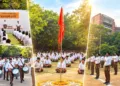
At its national meeting in February 2026, the Samiti reported 4,350 shakhas across 12 regions and 40 provinces, active work in 825 of Bharat’s 1,042 districts, and 2,238 service projects. Its ninetieth-year programme includes training camps and commemorative events that will culminate in its annual meeting in Karnavati (Ahmedabad) from December 24 to 26.
Ninety years after its founding in Wardha, the Rashtra Sevika Samiti remains a significant subject for scholars of gender and nationalism. It has sustained itself across generations through disciplined routines, local networks, a distinctive vocabulary of ideals and a broad portfolio of relief, education, health and livelihood initiatives.