Digital Bharat Shines: UPI transactions hit Rs 143 lakh crore in first half of 2025, transactions jump 35%
September 30, 2026
  • Read Ecopy
  • Circulation
  • Advertise
  • Careers
  • About Us
  • Contact Us
Android AppiPhone AppArattai
Organiser
  • ‌
  • Bharat
    • Assam
    • Bihar
    • Chhattisgarh
    • Jharkhand
    • Maharashtra
    • View All States
  • World
    • Asia
    • Europe
    • North America
    • South America
    • Africa
    • Australia
  • Editorial
  • International
  • Opinion
  • RSS @ 100
  • More
    • World Hindu Congress 2026
    • Op Sindoor
    • Analysis
    • Sports
    • Defence
    • Politics
    • Business
    • Economy
    • Culture
    • Special Report
    • Sci & Tech
    • Entertainment
    • G20
    • Azadi Ka Amrit Mahotsav
    • Vocal4Local
    • Web Stories
    • Education
    • Employment
    • Books
    • Interviews
    • Travel
    • Law
    • Health
    • Obituary
  • Subscribe
    • Subscribe Print Edition
    • Subscribe Ecopy
    • Read Ecopy
  • ‌
  • Bharat
    • Assam
    • Bihar
    • Chhattisgarh
    • Jharkhand
    • Maharashtra
    • View All States
  • World
    • Asia
    • Europe
    • North America
    • South America
    • Africa
    • Australia
  • Editorial
  • International
  • Opinion
  • RSS @ 100
  • More
    • World Hindu Congress 2026
    • Op Sindoor
    • Analysis
    • Sports
    • Defence
    • Politics
    • Business
    • Economy
    • Culture
    • Special Report
    • Sci & Tech
    • Entertainment
    • G20
    • Azadi Ka Amrit Mahotsav
    • Vocal4Local
    • Web Stories
    • Education
    • Employment
    • Books
    • Interviews
    • Travel
    • Law
    • Health
    • Obituary
  • Subscribe
    • Subscribe Print Edition
    • Subscribe Ecopy
    • Read Ecopy
Organiser
  • Home
  • Bharat
  • World
  • Operation Sindoor
  • Editorial
  • Analysis
  • Opinion
  • Culture
  • Defence
  • International Edition
  • RSS @ 100
  • Magazine
  • Read Ecopy
Home Bharat

Digital Bharat Shines: UPI transactions hit Rs 143 lakh crore in first half of 2025, transactions jump 35%

India’s Unified Payments Interface (UPI) continues to lead the country’s digital payments revolution, clocking a 35 percent year-on-year growth in transaction volume during the first half of 2025. The total value of these transactions touched an impressive Rs 143.34 lakh crore, according to the latest Worldline India Digital Payments Report

Shashank Kumar DwivediShashank Kumar Dwivedi
Oct 31, 2025, 11:30 am IST
inBharat
Follow on Google News
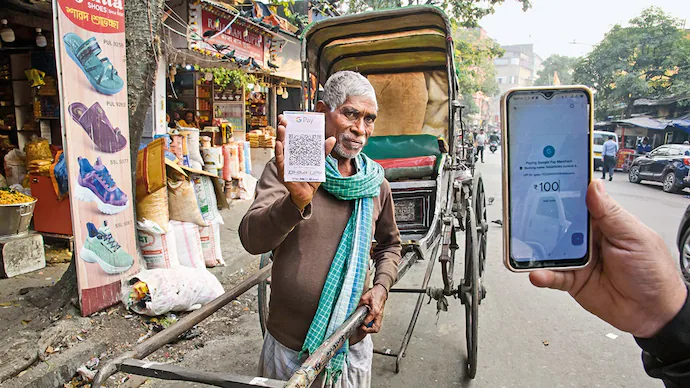
A representative image

A representative image

Facebook
Twitter
WhatsAppTelegramEmail

India’s homegrown digital payments innovation, the Unified Payments Interface (UPI), continues to power the nation’s financial transformation, registering a remarkable 35 percent year on year (YoY) surge in transaction volume to 106.36 billion in the first half (H1) of 2025. According to Worldline’s India Digital Payments Report (1H 2025), released on Wednesday (October 29), the total value of UPI transactions reached an astounding Rs 143.34 lakh crore, a clear indicator that digital payments are no longer a luxury but a way of life for millions of Indians.

What began as a government-backed project under the Made in India and Digital India initiatives has now become one of the most successful public digital infrastructures in the world. UPI’s exponential growth reflects India’s journey toward a less-cash, more-inclusive economy, bridging the gap between urban convenience and rural opportunity.

Shift toward small-value daily transactions

While the sheer size of UPI’s transaction volume is impressive, what stands out is the behavioural transformation it represents. The report notes that the average UPI transaction size fell from Rs 1,478 in H1 2024 to Rs 1,348 in H1 2025. This decline, rather than a sign of slowdown, signals UPI’s deep penetration into India’s grassroots economy.

Today, digital payments are no longer confined to big-ticket purchases or tech-savvy consumers. They have become part of the daily rhythm used to pay for chai at roadside stalls, groceries at local kirana stores, and vegetables from neighbourhood vendors. The falling average transaction value shows that India’s digital revolution has truly gone “mass market.”

Small shops driving big growth

According to the report, much of UPI’s growth can be attributed to what Worldline calls the “Kirana Effect,” a reference to the surge in person-to-merchant (P2M) transactions driven by small and micro businesses.

P2M transactions grew 37 percent to 67.01 billion in the first half of 2025, underscoring how kirana owners, fruit sellers, and small entrepreneurs have become central to India’s digital commerce network. The once cash heavy retail economy has evolved into a dynamic digital ecosystem where even the smallest vendors now accept QR-based payments.

This adoption was facilitated by simplified onboarding processes, minimal transaction costs, and the trust that comes with interoperability across payment platforms like PhonePe, Paytm, Google Pay, and BHIM.

The Kirana Effect has done more than boost digital payments, it has democratized finance. Millions of small traders are now part of the formal economy, creating traceable financial records that help them access credit, insurance, and government benefits.

QR and PoS network expands at record pace

India’s QR-based payment network has also witnessed phenomenal growth, positioning the country as a global leader in merchant digitisation. The number of QR codes deployed across India doubled to 678 million by June 2025, marking a 111% increase since January 2024.

Alongside, the number of Point of Sale (PoS) terminals rose 29 percent to 11.2 million, while Bharat QR deployments reached 6.72 million.

Together, these systems have given India the world’s largest merchant acceptance network, powered by small-business participation and policy support under initiatives like Digital India, PM Vishwakarma Yojana, and RBI’s Payments Vision 2025.

Experts believe this growth is key to India’s target of becoming a $5 trillion digital economy. As Worldline India’s analysts note, “The pace of merchant digitisation in India outstrips most developed markets. UPI has made digital acceptance not just convenient but essential for survival in a competitive retail environment.”

Credit cards turn premium

While UPI dominates everyday transactions, the report highlights a shift in consumer behaviour across card payments.

The number of active credit cards grew 23 percent between January 2024 and June 2025, with monthly spends surpassing Rs 2.2 trillion. Although the average transaction size fell by 6 percent, credit cards are increasingly being used for regular purchases like food delivery, online subscriptions, and retail shopping, a trend earlier reserved for UPI and wallets.

In contrast, debit card usage at PoS terminals fell nearly 8 percent, suggesting that UPI has effectively replaced debit cards as the go-to payment method for small and medium transactions.

This shift reinforces how UPI has not just supplemented but fundamentally reshaped India’s payment hierarchy, blurring the line between “digital convenience” and “financial necessity.”

Mobile payments lead the digital march

Another highlight of the Worldline report is the growing dominance of mobile-based payments, which recorded a 30% year-on-year rise to 98.9 billion transactions, valued at a staggering Rs 209.7 trillion.

The data underscores a crucial trend, India’s digital payments revolution is being driven by mobility. Smartphones, affordable data, and real-time interoperability have transformed the phone into the nation’s most powerful financial instrument.

UPI’s mobile-first design and integration into everyday apps, from messaging platforms to banking interfaces, have made it effortless for users to transact, whether they’re sending money home, paying a utility bill, or tipping a delivery agent.

Made in India shines

Beyond domestic success, UPI’s international footprint continues to expand. The platform has already been integrated in countries like Singapore, France, Nepal, and the UAE, allowing Indian travellers and expatriates to use UPI abroad. Bilateral partnerships under the RBI-NPCI International Payments Framework are paving the way for cross-border interoperability, making UPI a global model for affordable, real-time digital payments.

This “Made in India” innovation is now being studied and replicated worldwide. From African fintech startups to Southeast Asian payment ecosystems, countries are exploring how to adapt the UPI model to local needs, proving that India’s technological leadership extends far beyond its borders.

UPI as the great equaliser

The Worldline India Digital Payments Report (1H 2025) makes one thing clear, UPI is not merely a success story in financial technology; it is a story of inclusion, trust, and national innovation.

By bridging the urban-rural divide, enabling small traders, and simplifying digital access, UPI has become more than a payments system, it is the financial heartbeat of a new India.

As the nation moves toward a fully digital future, UPI stands as the shining symbol of what “Made in India” truly means, technology built by India, for India, now powering the world.

Topics: Worldline reportUPI transaction volumeUPI value 2025mobile payments Indiadigital payments IndiaUPI growth 2025
Share
Tweet
SendShareSend
✮ Subscribe Organiser YouTube Channel. ✮
✮ Join Organiser's WhatsApp channel for Nationalist views beyond the news. ✮
Previous News

Rashtriya Ekta Divas 2025: President Murmu, PM Modi pay tribute to Sardar Patel on his 150th birth anniversary

Next News

NDA releases ‘Sankalp Patra’ for Bihar polls; promises 1 crore jobs to youth, empowerment to women

Related News

A representative image

The UPI success story: How digital finance reached millions not just in Bharat but globally

A representative image

UPI completes 10 years: From a bold digital experiment to world’s largest real-time payment system

A representative image

India conducts 85 percent of its digital transactions via UPI: RBI Governor Sanjay Malhotra

Key policy, digital, and energy moves set the stage for India’s next phase of growth and global integration

India eyes economic leap as NITI Aayog flags GST reforms, UPI reaches Qatar, Russia deepens oil discount for New Delhi

Representative Image

New UPI rules effective from August 1: Daily limits, autopay timing restrictions, biometric payments and more

Load More

Latest News

Asian Games 2026: India Wins Women’s 4x400m Gold; Pahal, Poovamma, Prachi, Vithya Shine

Asian Games 2026: How India’s women’s 4x400m relay team scripted Asian Games Glory; PM Modi hails the team

ABVP-led DUSU submits memorandum to Chief Minister on construction of hostels, safety audits, women’s safety and compensation for families affected by Satya Niketan incident

ABVP-led DUSU submits memorandum to Delhi CM on construction of hostels, safety audits, women’s safety

AI Generated Representative Image

India’s Himalayan Shield against China: Strategic Connectivity, tech & air power, civilian fusion to fortify security

IMK-JMB Expansion Plot? NIA Arrests 13, Searches 16 Locations

IMK-JMB Terror Conspiracy: NIA raids 16 locations, arrests 13 in Assam, Bengal, Keralam

Telangana CM Revanth Reddy Speaking at the Pratidin Conclave of an Assam daily in Delhi on September 29, 2026 (Left)

Telangana: Congress faces fire over CM Revanth Reddy’s Ram-Shiva remarks and North-South divide

Why Did Saleng Sangma Seek Foreign Appeals on FCRA Bill?

FCRA Amendment Bill: Meghalaya Congress MP sought foreign countries intervention to put pressure on government of India

Israel PM Benjamin Netanyahu and the President of UAE Sheikh Mohamed bin Zayed

Israel PM Netanyahu Visits UAE: Decoding the strategic stakes behind the surprise trip amid West Asia conflict

(From R to L)
Advocate Jayanta Kumar Bhowal, Secretary, ABGP West Bengal Prant
Sandip Banerjee, Secretary, ABGP Kolkata District,
Advocate Anjan Sinha, Sangathan Mantri, ABGP West Bengal Prant,
Prof. Dr. Pankaj Kumar Roy, President, ABGP West Bengal Prant,
Tushar Mukherjee, Treasurer, ABGP West Bengal Prant

Akhil Bharatiya Grahak Panchayat slams violent disruption of its programme on consumer awareness at SRFTI in Kolkata

DUSU 2026: Gen Z gives verdict – Credibility is the key

Bhagwan Sahay, Sah Sangathan Mantri of Akhil Bharatiya Vanvasi Kalyan Ashram, addressing the gathering at IGNCA to mark release of Janajati Sanskritik Samagam Special Issue, which highlighted contributions of Janjatiya heroes

The forests have always been centres of knowledge: Bhagwan Sahay

Load More
  • Privacy
  • Terms
  • Cookie Policy
  • Refund and Cancellation
  • Delivery and Shipping

© Bharat Prakashan (Delhi) Limited.
Tech-enabled by Ananthapuri Technologies

  • Home
  • Search Organiser
  • Bharat
    • Assam
    • Bihar
    • Chhattisgarh
    • Jharkhand
    • Maharashtra
    • View All States
  • World
    • Asia
    • Africa
    • North America
    • South America
    • Europe
    • Australia
  • Editorial
  • Operation Sindoor
  • Opinion
  • Analysis
  • Defence
  • Culture
  • Sports
  • Business
  • RSS @ 100
  • Entertainment
  • More ..
    • Sci & Tech
    • Vocal4Local
    • Special Report
    • Education
    • Employment
    • Books
    • Interviews
    • Travel
    • Health
    • Politics
    • Law
    • Economy
    • Obituary
  • Subscribe Magazine
  • Read Ecopy
  • Advertise
  • Circulation
  • Careers
  • About Us
  • Contact Us
  • Policies & Terms
    • Privacy Policy
    • Cookie Policy
    • Refund and Cancellation
    • Terms of Use

© Bharat Prakashan (Delhi) Limited.
Tech-enabled by Ananthapuri Technologies