As leaders wrapped up the yearly ritual of calling for multilateral reforms at the 80th United Nations General Assembly (UNGA) in 2025, spurring another round of dialogues and discussions, it is only fitting to revisit this issue. Most reform debates and discussions are framed around fairness or effectiveness, but by now, everybody knows the current multilateral institutions are neither. What if the case for reform is more fundamental—that we are trying to play an outdated game where the rules no longer hold, making the game a stalemate? If multilateralism is a sport that countries play, it shares the same fundamental components of every sport that define the game. If those fundamental components shift in the abstract, the game itself becomes impossible to play in its current form.
A game with shifting players and teams, and no referee
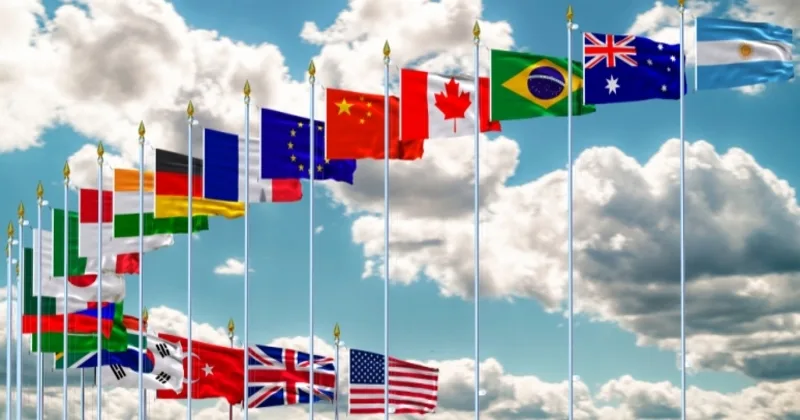
Whether we are in a loosely bipolar world or a multipolar world is up for debate. Claims of multipolarity are not new. In 1997, Russia and China issued a Joint Declaration on a Multipolar World and the Establishment of a New World Order, and 28 years on, we are still discussing the rise of multipolarity. During unipolarity or bipolarity, we did not need grand declarations; it was obvious and irrefutable. Multipolarity will be evident in the same way. Whether we are in a truly multipolar world or not, one thing is clear: power and alignments have shifted across both economic and security lines. As of 2025, BRICS has 11 full members and 10 partner countries, spanning major continents and geopolitical zones: Asia, Africa, the Middle East, and Latin America, representing the Global South and emerging economies. The bloc accounts for about 49.5 percent of the global population, around 40 percent of the global GDP (in PPP terms) and around 26 percent of the global trade, anchoring global growth and shaping economic trajectories.
The bloc also anchors the future of global energy, accounting for 94 percent of the world’s remaining coal pipeline (projects under construction or in pre-construction), holds 40 percent of oil and gas capacity under development, and already generates 51 percent of the global solar electricity. BRICS’ dominance over the next wave of energy supply will increasingly shape global energy markets, setting the pace of the transition and influencing both energy volatility and prices. Additionally, BRICS countries are responsible for about 42 percent of global food production, with the world’s largest rice and wheat producers, India and Russia, being part of BRICS. Their domestic policies alone have caused global price shocks in the past.
Further, the emerging plans for a BRICS Grain Exchange spearheaded by Russia would strengthen the bloc’s ability to influence global grain markets and prices, rivalling current Western-led exchanges and promoting trade in local currencies. All of this makes BRICS not only important players but potential price-setters in global commodities with direct international and domestic impacts, illustrating how shifts in power and economic leverage are now central to global strategies.
While new teams are gaining momentum, old teams are fraying. The transatlantic alliance shows clear cracks, whether through Trump’s threats to disengage from NATO if members fail to meet new defence spending targets or through the reinitiated tariff war under Trump 2.0, to which the allies have responded in kind. For instance, the EU imposed tariffs on US goods exports worth up to 26 billion euros to match the US tariffs affecting more than €18 billion of EU exports. These are not easy issues to resolve, especially given the urgency posed by the perceived Russian threat. European NATO allies face constraints in meeting the new NATO defence spending targets owing to debt and fiscal sustainability pressures. Meanwhile, the US cannot sustain NATO alone, given its own debt and fiscal sustainability issues underscored by Moody’s downgrading of the US credit rating in May 2025 for the first time in over a century. This challenge, therefore, is unlikely to be just a ‘Trump issue’. Further, since the precedents for tariff wars have already been set, they now serve as leverage that the US, regardless of the administration, will likely continue to use. After all, what is the alternative leverage? The traditional distinction between an ‘ally’ and a ‘partner’ has thus blurred, and so has the differentiation between security alliances and economic partnerships.
In terms of unexpected entrants to the game, what has fundamentally changed since the creation of the post-war multilateral institutions is the rise of non-state actors who wield power in ways that can neither be fully understood nor fully accounted for—technology firms, military contractors, global activism networks, NGOs, or media. As a 2024 study highlights, whether it is Greta Thunberg mobilising public attention on climate issues, philanthropic foundations shaping health and agricultural policies across countries, or NGO networks and public-private partnerships influencing domestic bureaucracies and multilateral institutions, such non-state transnational actors now operate as powerful ‘vectors’ of global policymaking on matters previously only reserved for states. Renowned scholar Thomas Weiss refers to such actors as the ‘Third UN’ owing to their significant influence in multilateral agendas (with the ‘First UN’ being the institution itself and the ‘Second UN’ being its bureaucrats)
Tech firms have been particularly consequential in the last decade. Another 2024 study highlights the extraordinary influence of tech firms in both domestic and international arenas—whether enabling state surveillance, as with Palantir in countries like the US, Germany and the United Kingdom, clashing with foreign regulations, as Meta has in transferring EU users’ personal data to US servers under US surveillance laws, or aligning with government strategic objectives, as seen in Baidu and Alibaba’s investments in AI and semiconductors, and Open AI’s support for military use of Gen AI—tech firms actively shape policies as “super policy entrepreneurs”. The power that all these non-state actors enjoy is outside the reach of the traditional accountability mechanisms in the current multilateral institutions – making them both indispensable and disruptive to the global order. Underscoring all these shifts is the absence of a referee in this game. US hegemonic stability underpinned the post-war governance institutions—neither has this assumption stood the test of time, nor has the US played the role of anchoring these systems effectively. It has now largely abandoned them, leaving the game without a referee. Whether it was a fair referee or not is a different question altogether, but the reality is that the system is currently unanchored.
New strategies on an unguarded field, with a broken scoreboard
The strategies of the global governance game have evolved, and so has the field of play. Counter-influencing global markets, engaging in tariff wars, leveraging cross-border surveillance, and shaping transnational agendas through non-state actors have become central tools of power and leverage. Through the entry of new players and the renewed agency of older ones, global agendas are being shaped in ways the original design of multilateral institutions can neither anticipate nor contain.
Yet the “scoring system” remains outdated. Metrics like the SDGs or the Paris Agreement’s climate targets are still pegged to the assumptions and structures of a bygone era. We are far from achieving any of these targets, and without accountability or enforceable consequences, these goals are aspirational at best, which perhaps explains the decreasing buy-in. Redesigning these same metrics over and over again without accounting for the changing realities will neither give them more legitimacy nor momentum. At this stage, clinging to these outdated scoring systems is likely just a sunk cost fallacy.
The one key component missing from this game is its duration. Unlike a typical sport, the ‘game’ of multilateralism has no defined endpoint, which further complicates it, incentivising short-term manoeuvring and amplifying the consequences of the systemic flaws. Multilateralism, as it stands, lacks shared objectives, even between traditional allies and partners. Values of peace and stability, which drove the creation of these post-war institutions, are only understood in moments of crisis. In today’s environment, where the stakes are high, power is diffuse, and players’ strategic—common objectives are undervalued. What appears as peak “game time” is actually systemic chaos because the game has outpaced the system, and global governance is playing catch-up.
Reform debates mirror each actor’s priorities and agendas. The only thing all of them can agree on is that the system needs reform. The widespread dissent and deadlocks are markers that, no matter which way we look at it, nobody wants to play this game anymore or fully trusts the current system.