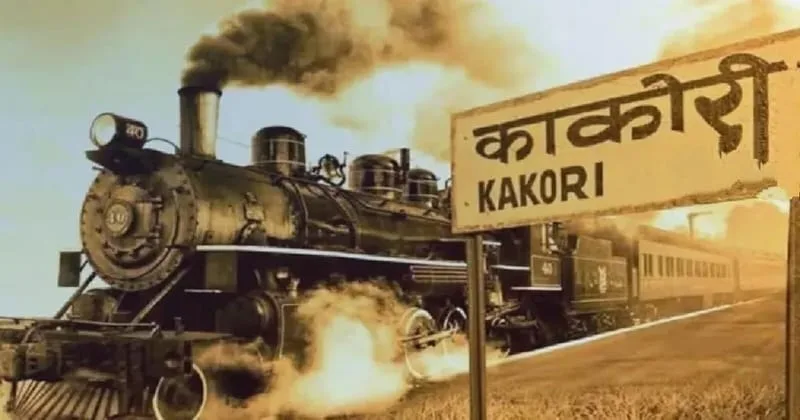
In the annals of India’s freedom struggle, certain episodes stand out not just for their audacity but for the clarity with which they shook the very foundations of British rule. The Kakori Train Robbery, carried out on August 9, 1925, was one such event—a thunderclap in colonial silence, a daring act of defiance orchestrated not by the Indian National Congress or its moderate allies, but by a group of young revolutionaries determined to free their nation by any means necessary. This was no ordinary crime. It was a political act, calculated and courageous, aimed at hitting the British where it hurt: their pride, their treasury, and their sense of invincibility.
The train robbery took place on August 9, 1925, when members of the HRA stopped the 8-Down Saharanpur-Lucknow train at Kakori, near Lucknow. They looted government funds being transported in the train’s strongbox. What makes this incident remarkable is not just its execution, but the revolutionary fervour that motivated it. It was a planned act of rebellion meant to finance future resistance activities. The primary figure behind the Kakori action was Ram Prasad Bismil, a poet, thinker, and revolutionary whose dedication to the cause of Indian freedom was absolute. His writings, in Urdu and Hindi, ignited patriotism and called for youth participation in armed struggle against colonialism.
Alongside Bismil, the movement was led by Ashfaqullah Khan, Thakur Roshan Singh, Rajendra Lahiri, Chandrashekhar Azad, and others. These young men shared a common belief: that India’s liberation could not be achieved solely through petitions and peaceful protests. They saw armed struggle as a legitimate and necessary means to awaken the masses and challenge an empire built on exploitation and repression. Their approach differed significantly from the dominant narrative of the time, represented by leaders like Gandhi and Nehru, who favoured non-violent resistance. While their methods were different, the goal was shared—freedom from British rule.
Bismil was the ideological soul of the movement. His poetry carried revolutionary zeal, and his oratory could electrify a crowd. Yet, despite his significant contributions, his role has often been downplayed in mainstream historical accounts. The Nehruvian and Gandhian schools of historiography, which came to dominate post-independence narratives, largely neglected the stories of armed revolutionaries. This erasure did not reflect their lack of impact, but a discomfort with the militant methods that clashed with the image of a non-violent freedom struggle. As a result, Bismil, Ashfaqullah, and their comrades have remained unsung heroes outside popular memory.
The HRA/HSRA was founded on the principle that economic resources, ideological clarity, and public participation were all essential to any freedom movement. Their emphasis on socialism, equality, and self-sacrifice found expression in acts like Kakori. These revolutionaries were deeply influenced by global ideas and Indian philosophies. They were not just fighters, but intellectuals who sought to build a just, equitable India. Bismil’s writings, for instance, drew from Bankim Chandra Chatterjee’s nationalistic fervour as well as the revolutionary ideals of the Russian and Irish uprisings. He combined spiritual nationalism with rational political action.
The planning of the Kakori robbery was meticulous. The group studied train schedules, coordinated escape routes, and assigned roles with military precision. When the robbery occurred, it was carried out with minimal harm to passengers, underscoring the fact that it was not an act of crime but of rebellion. However, the British administration responded with characteristic ruthlessness. A massive manhunt followed, and several revolutionaries were captured. The subsequent trial, known as the Kakori Conspiracy Case, lasted over a year. It culminated in the death sentences of Ram Prasad Bismil, Ashfaqullah Khan, Rajendra Lahiri, and Thakur Roshan Singh.
Their execution in December 1927 was meant to serve as a warning to others. But instead, it ignited a fire in the hearts of countless Indians. The martyrdom of these revolutionaries became a rallying cry. Bhagat Singh, Chandrashekhar Azad, and others who would later form the HSRA were directly inspired by the sacrifice at Kakori. Bismil’s poetry, especially his immortal lines “Sarfaroshi ki Tamanna ab hamaare dil mein hai,” became the anthem of resistance. The blood of the Kakori martyrs did not quench the thirst for freedom—it only deepened it.
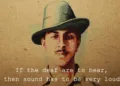
The HSRA, which emerged in the late 1920s, carried forward the revolutionary legacy. It built underground networks, disseminated literature, and planned further actions against British targets. Its most notable act was the bombing of the Central Legislative Assembly in 1929 by Bhagat Singh and Batukeshwar Dutt, aimed at “making the deaf hear.” Though Kakori was not directly under the banner of HSRA, it laid the philosophical and strategic foundation for what HSRA would become. It proved that revolutionaries could organise, plan, and execute missions that would terrify the colonial administration and inspire the youth.
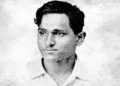
The HSRA was the soul of nationalism in India’s freedom struggle. Composed of fearless young minds like Bhagat Singh, Chandrashekhar Azad, Sukhdev, and others, the HSRA aimed to dismantle British imperialism through armed resistance and ideological revolution. Drawing inspiration from the Kakori martyrs, they infused India’s struggle with unmatched courage and intellect. Their actions, though often suppressed in official narratives, stirred a national awakening and posed a formidable challenge to colonial authority. The HSRA transformed the idea of patriotism into a call for sacrifice, heroism, and unflinching resolve in the face of oppression.
The importance of the Kakori Train Robbery lies not just in its immediate impact but in the psychological blow it dealt to the British. It exposed the vulnerabilities of an empire that claimed invincibility. It showed that Indian youth were willing to die not just for independence, but for dignity, justice, and self-respect. This was not a spontaneous outburst; it was a calculated message. It was as if the revolutionaries declared: “We are no longer afraid.”
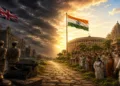
Today, remembering Kakori is more important than ever. It reminds us that India’s freedom was not handed down gently; it was wrested with blood, sacrifice, and fire. It compels us to revisit the stories that lie in the margins of official history—stories of people who did not seek fame but fought for a dream of India that was free, just, and proud. It reminds us that freedom is not merely the absence of foreign rule but the presence of self-belief and dignity.
In ignoring or underplaying figures like Bismil and his associates, we do a disservice not just to them, but to ourselves. Their story is not one of extremism but of idealism. They were not anarchists but visionaries who dreamed of an India built on equality, self-reliance, and unity. They represent a chapter of the freedom struggle that is raw, honest, and immensely powerful.
As India marches forward into its future, it must not forget the railway track at Kakori where a group of young Indians, armed with courage and conviction, challenged an empire. Their legacy belongs not in footnotes but in our collective consciousness. Their names must be uttered with the same reverence as any national hero. For in their fearless defiance, they left behind not just a tale of rebellion but a blueprint for awakening. The Kakori Train Robbery was not just a spark. It was the flame that lit a revolution and Ram Prasad Bismil was not just a name. He was the fire.