NEW DELHI: Navratri 2026 is not just a festival of rituals, fasting and celebrations. The second day of Shardiya Navratri is dedicated to Maa Brahmacharini, the second form of Goddess Durga. Today, all devotees will offer prayers to Maa Brahmacharini and seek her blessings for patience, wisdom, peace and inner strength. For many devotees, it is also a time to look within, seek Maa Durga’s blessings and find the courage to face difficulties in life. Maa Brahmacharini represents the strength that comes from faith, discipline and the determination to keep moving forward, even when the journey becomes difficult. By worshiping her, we learn that strength alone cannot win every battle. Sometimes, patience and faith help us get through the toughest times in life.
All About Maa Brahmacharini
Maa Brahmacharini is worshipped as the goddess of devotion, patience and self-discipline. According to Hindu beliefs, she represents Goddess Parvati during the time when she performed intense penance to marry Lord Shiva. Her journey was not an easy one. She remained devoted to her purpose and continued her tapasya despite hardships. Her unwavering determination is remembered as an example of faith that does not fade when circumstances become unfavourable.
Even in contemporary times, this story has a special meaning. There are times when people work hard for something they deeply desire, whether it is a better future, a peaceful family life, a successful career or the strength to overcome personal struggles. The journey can be long, and the results may not come as quickly as expected. Maa Brahmacharini’s story reminds devotees that patience is not weakness. Her worship reminds us to follow our values, trust our efforts and never lose hope, even when life puts our patience and determination to the test.
Maa Brahmacharini’s Appearance and Spiritual Significance
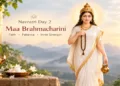
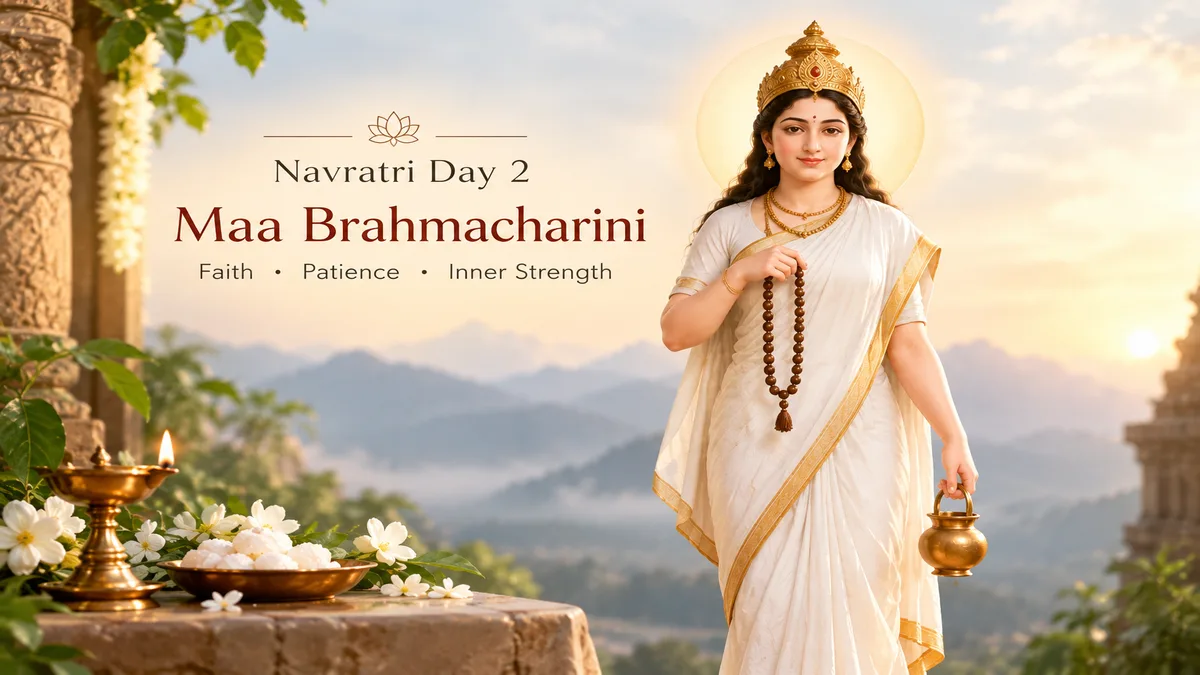
Maa Brahmacharini is commonly depicted wearing a simple white garment, holding a jap mala (rosary) in one hand and a kamandalu (water pot) in the other. Her calm appearance shows devotion, simplicity and spiritual discipline. The rosary represents prayer and continuous remembrance of the divine, while the kamandalu is associated with restraint and the life of an ascetic.
Maa Brahmacharini reminds us that true strength does not always have to be shown through big actions. Sometimes, it lies in silent prayers, difficult choices, fulfilling our daily responsibilities and finding the courage to keep going when life feels heavy. Her form teaches us that even in our hardest moments, patience, faith and a calm heart can help us move forward. Devotees worship her with the belief that her blessings bring patience, concentration, wisdom and the strength to continue on the right path.
Maa Brahmacharini Puja Vidhi for Navratri Day 2
Devotees can worship Maa Brahmacharini at home by following their family traditions and performing the rituals with devotion. The traditional puja vidhi includes the following steps:
- Clean the puja area: Begin your day by bathing and then cleaning the place of worship. Keep the goddess’s picture or idol in a clean space.
- Light a diya: Light an oil or ghee lamp and offer your prayers to Maa.
- Offer flowers: Present fresh flowers to Maa Brahmacharini as a symbol of love and devotion.
- Offer bhog: Sugar, mishri (rock sugar), fruits and other offerings may be presented.
- Chant the mantra: Recite Maa Brahmacharini’s mantra with a calm mind and sincere devotion.
- Perform aarti: Conclude the puja with aarti and pray for peace, strength and well-being for the family.
Some devotees who observe a Navratri fast may follow their usual fasting practices.
Maa Brahmacharini Mantra
Devotees can chant the following mantra while worshipping Maa Brahmacharini on the second day of Navratri.
Mantra:
ॐ देवी ब्रह्मचारिण्यै नमः॥
English transliteration: Om Devi Brahmacharinyai Namah.
It simply means that I bow to Goddess Brahmacharini, the divine form who represents penance, devotion and self-discipline.
Devotees may repeat the mantra 11, 21 or 108 times, according to their personal practice. The prayer can be recited with sincerity and a peaceful mind.
Maa Brahmacharini Bhog and Navratri Day 2 Colour
White is traditionally associated with Maa Brahmacharini and is commonly considered as the colour for the second day of Navratri. It represents peace, purity and simplicity. Devotees may wear white clothing or include the colour in their attire as a symbol of devotion.
As mentioned above, Sugar and mishri are traditional bhog offerings that are made to the goddess. Fruits and other offerings may also be included according to family customs. Rituals may differ from one region or family to another, but the feeling remains the same. Devotees pray to Maa Brahmacharini with a pure heart, express their gratitude and seek her blessings for strength, peace and happiness.
Maa Brahmacharini’s worship is a reminder that life does not always unfold according to our plans. There are moments when our patience is tested, our efforts seem unnoticed and the future feels uncertain. In such times, faith can offer comfort, while discipline helps us continue working towards what matters.
The message of the day is simple yet meaningful: even when the road ahead is difficult, do not let temporary struggles take away your faith, your values or your hope.