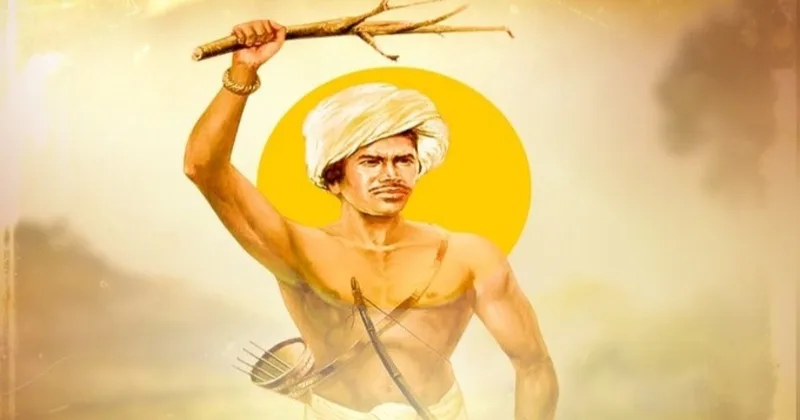
From the soil of the forests arose a flame that illuminated countless hearts,
Fearlessly confronting injustice, oppression, and all dark arts.
Known as Dharti Aaba, the pride of every clan and land,
Birsa Munda lives forever, India’s honour standing grand.
June 9 holds special significance in the history of India’s tribal communities. It marks the day when the great tribal leader, freedom fighter, and pioneer of indigenous consciousness, Bhagwan Birsa Munda, dedicated his life to his motherland and society. Revered as “Dharti Aaba” (Father of the Earth), he remains a symbol of courage, self-respect, and resistance for tribal communities across India. His death anniversary is not merely an occasion to pay tribute but also a time to reflect upon his ideals, struggles, and enduring legacy.
Born on 15 November 1875 in Ulihatu village of present-day Jharkhand, Birsa Munda witnessed firsthand the exploitation, injustice, and oppression faced by tribal communities under British rule. The combined burden of colonial administration, zamindari practices, and moneylenders had made life extremely difficult for indigenous people. In such circumstances, Birsa chose not only the path of resistance but also that of social awakening. He encouraged education, cleanliness, freedom from addiction, unity, and self-respect among his people.
Birsa Munda’s famous slogan, “Abua Dishum, Abua Raj” (“Our Land, Our Rule”), continues to symbolise self-reliance and dignity. He inspired tribal communities to believe that they possessed the strength and capability to protect their culture, traditions, and rights. For this reason, he is remembered not merely as a revolutionary but also as a visionary who spearheaded social and cultural renaissance among indigenous communities.
The “Ulgulan” (The Great Tumult) led by Birsa Munda occupies an important place in India’s freedom struggle. It was not merely a rebellion against British rule but a broader movement aimed at protecting social, economic, and cultural rights. Through his leadership, tribal communities found the courage to unite and resist injustice. Although he passed away on 9 June 1900 in Ranchi Jail, the light of his ideas has never faded.
As India continues to achieve new milestones in development, Birsa Munda’s thoughts remain more relevant than ever. In an age of globalisation and rapid modernisation, preserving cultural identity and indigenous traditions has become a significant challenge. Birsa Munda’s life reminds us of the importance of remaining connected to our roots and taking pride in our heritage.
His life also holds profound relevance for environmental conservation. Tribal societies have traditionally lived in harmony with nature, embracing a philosophy of coexistence. At a time when the world faces challenges such as climate change, pollution, and the excessive exploitation of natural resources, Birsa Munda’s nature-centric worldview offers humanity a path toward sustainable, balanced development.
The principles of social justice and inclusive development are equally evident in his vision. He advocated for the rights of the most marginalised sections of society and fought to ensure dignity and respect for deprived communities. Modern democratic India continues to strive toward these very ideals.
For the younger generation, Birsa Munda’s life serves as a beacon of inspiration. Despite his short life, he demonstrated that determination, courage, and dedication to society can bring about transformative change. Young people can draw lessons from his leadership, resilience, social commitment, environmental consciousness, and cultural pride. Contributing to society and the nation alongside personal success is perhaps the most meaningful message of his life.
The true tribute to Bhagwan Birsa Munda on his death anniversary lies in adopting his ideals in our daily lives, working for the upliftment of marginalised communities, protecting nature, and placing national interest above personal gain. Dharti Aaba’s life teaches us that while remaining vigilant about our rights, we must also fulfil our duties toward society and the nation.
Birsa Munda is not merely a figure of history; he is an eternal symbol of tribal pride, cultural identity, and patriotism. His legacy continues to inspire generations and will remain a guiding force for India’s future. On his death anniversary, the entire nation pays its humble tribute to this great son of India.