Indus Treaty Freeze: India clears Sawalkote hydro project in J&K
June 8, 2026
  • Read Ecopy
  • Circulation
  • Advertise
  • Careers
  • About Us
  • Contact Us
Android AppiPhone AppArattai
Organiser
  • ‌
  • Bharat
    • Assam
    • Bihar
    • Chhattisgarh
    • Jharkhand
    • Maharashtra
    • View All States
  • World
    • Asia
    • Europe
    • North America
    • South America
    • Africa
    • Australia
  • Editorial
  • International
  • Opinion
  • RSS @ 100
  • More
    • Op Sindoor
    • Analysis
    • Sports
    • Defence
    • Politics
    • Business
    • Economy
    • Culture
    • Special Report
    • Sci & Tech
    • Entertainment
    • G20
    • Azadi Ka Amrit Mahotsav
    • Vocal4Local
    • Web Stories
    • Education
    • Employment
    • Books
    • Interviews
    • Travel
    • Law
    • Health
    • Obituary
  • Subscribe
    • Subscribe Print Edition
    • Subscribe Ecopy
    • Read Ecopy
  • ‌
  • Bharat
    • Assam
    • Bihar
    • Chhattisgarh
    • Jharkhand
    • Maharashtra
    • View All States
  • World
    • Asia
    • Europe
    • North America
    • South America
    • Africa
    • Australia
  • Editorial
  • International
  • Opinion
  • RSS @ 100
  • More
    • Op Sindoor
    • Analysis
    • Sports
    • Defence
    • Politics
    • Business
    • Economy
    • Culture
    • Special Report
    • Sci & Tech
    • Entertainment
    • G20
    • Azadi Ka Amrit Mahotsav
    • Vocal4Local
    • Web Stories
    • Education
    • Employment
    • Books
    • Interviews
    • Travel
    • Law
    • Health
    • Obituary
  • Subscribe
    • Subscribe Print Edition
    • Subscribe Ecopy
    • Read Ecopy
Organiser
  • Home
  • Bharat
  • World
  • Operation Sindoor
  • Editorial
  • Analysis
  • Opinion
  • Culture
  • Defence
  • International Edition
  • RSS @ 100
  • Magazine
  • Read Ecopy
Home Bharat

A ‘Watershed’ Moment: India greenlights 1,856 MW Sawalkote Hydro Project on Chenab after Indus Water Treaty freeze

India advances the long-pending 1,856 MW Sawalkote Hydro Project in J&K after suspending the Indus Waters Treaty with Pakistan. This strategic move taps the Chenab River's power and redefines India's approach to regional water management

WEBDESKWEBDESK
Jul 31, 2025, 09:15 am IST
in Bharat, Asia, Jammu and Kashmir, International Edition
Follow on Google News
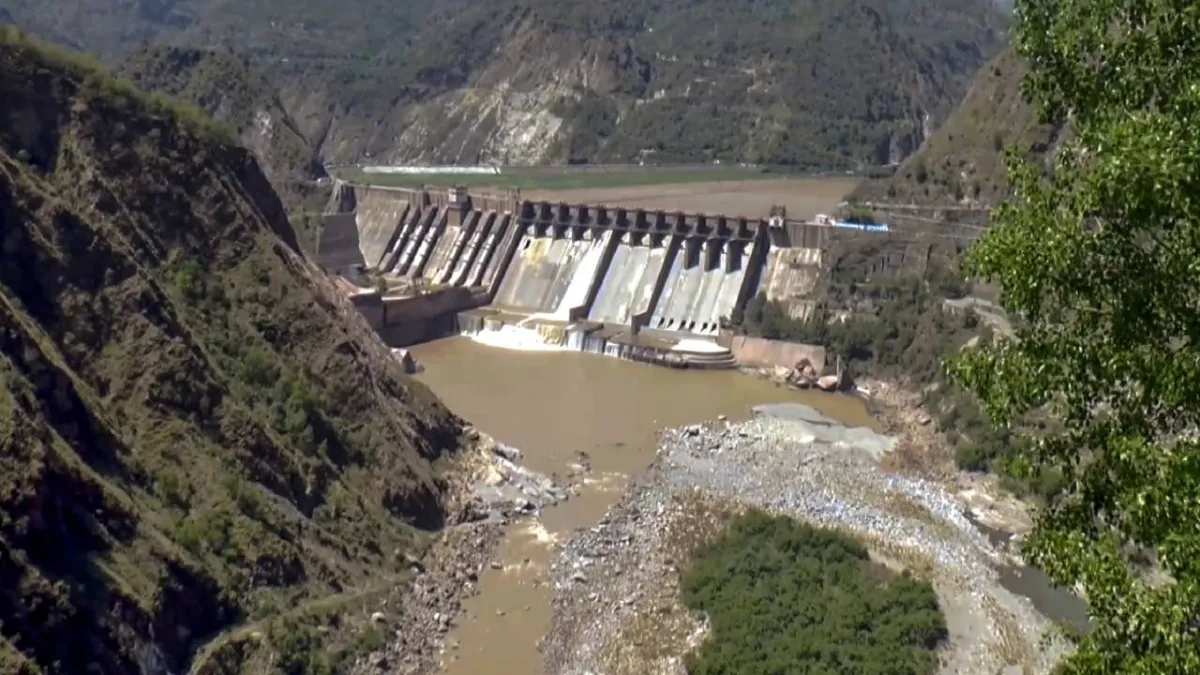
Dam built on the Indus river system

Dam built on the Indus river system

FacebookTwitterWhatsAppTelegramEmail

In what is being hailed as a ‘watershed’ moment in India’s water diplomacy and strategic infrastructure planning, the Union Government has moved forward with the long-awaited 1,856 MW Sawalkote Hydroelectric Project in Jammu and Kashmir. This bold initiative comes months after India formally suspended the Indus Waters Treaty (IWT) with Pakistan on April 22, 2025, a treaty that had remained untouched since its signing in 1960.

The Sawalkote Project is being developed near Sidhu village in the Ramban district, nestled along the Chenab River, which is a key tributary in the Indus basin. The project will span both Ramban and Udhampur districts, approximately 120 km from Jammu and 130 km from Srinagar, positioning it strategically close to both regional hubs.

From 1960s vision to 2025 reality

Originally conceived in the early 1960s by the Central Water Commission (CWC), the Sawalkote Project remained dormant for decades due to political sensitivities and treaty restrictions. Geological surveys and investigations had already begun by the Geological Survey of India between 1962-63 and 1970-71, marking the early scientific foundations of the project. The latest Detailed Project Report (DPR) was submitted in February 2018 by the Sawalkote Consortium, but it’s only now, after the IWT freeze, that actual progress is taking shape.

According to tender documents, the project aims to tap the hydropower potential of the Chenab River in a crucial stretch between the Baglihar Project upstream and the Salal Project downstream.

Engineering marvel on the Chenab

The Sawalkote Hydroelectric Project is designed as a run-of-the-river scheme and will feature state-of-the-art infrastructure, including:

  • A roller-compacted concrete gravity dam, rising 192.5 meters from the deepest foundation point.
  • Three horseshoe-shaped diversion tunnels, measuring 965 m, 1,130 m, and 1,280 m, to manage both monsoon and non-monsoon floods.
  • Flood management capacities of 2,977 cumec (non-monsoon) and 9,292 cumec (monsoon).
  • An underground power house on the left bank of the Chenab River.
  • Eight units of 225 MW each, totalling 1,800 MW, supplemented by a 56 MW auxiliary station to handle environmental flow, total installed capacity: 1,856 MW.
  • The auxiliary power station will use the tailrace water to meet mandatory environmental flow obligations, ensuring ecological balance is maintained even as power generation scales up.

Chenab: The artery of Jammu & Kashmir’s water power

The Chenab River, which flows through both Himachal Pradesh and Jammu & Kashmir, is one of the three primary rivers of the region, the other two being the Indus and the Jhelum. The Chenab River basin lies within the Western Himalayas, with over 10,000 km square of catchment area in India permanently above the snowline, making it ideal for sustained hydroelectric power generation.

The upper half of the Chenab basin is situated between the Great Himalayas and the Pir Panjal Range, while the lower half stretches between the Pir Panjal and the Dhaula Dhar/Shivalik ranges—a topography that naturally supports high-volume water flow with strong velocity.

Strategic implications amid Indus Waters Treaty freeze

The decision to fast-track the Sawalkote project has added to Pakistan’s diplomatic discomfort, especially after India’s historic move to suspend the IWT in April 2025, citing continuous cross-border terror and violation of trust. The Treaty, brokered by the World Bank in 1960, had given Pakistan exclusive rights over the waters of the Indus, Jhelum, and Chenab but allowed India limited non-consumptive use for hydropower projects.

Now, India’s assertive approach signals a paradigm shift in water strategy, treating water resources not merely as a subject of bilateral agreement but as a sovereign strategic asset.

India’s Hydro push: Beyond Sawalkote

The Sawalkote project is not an isolated case. India has been ramping up several hydroelectric initiatives on western rivers in recent years, including Ratle, Kiru, Kwar, and Pakal Dul, all on the Chenab or its tributaries. The Sawalkote plant, once completed, will become Jammu & Kashmir’s largest hydroelectric project, surpassing even Baglihar in capacity.

With the Chenab flowing from Himachal into Jammu and Kashmir, and eventually into Pakistan, India’s use of its upstream potential aligns with both economic and national security objectives, especially after years of restraint under the Indus regime.

As tendering begins and construction looms, Sawalkote stands not just as a symbol of technological achievement, but also as a firm geopolitical signal. In the context of changing regional equations and energy self-reliance, the Sawalkote Hydro Project could very well be the pivot of a new water doctrine for India.

It remains to be seen how Pakistan will respond diplomatically, but for India, the message is clear: “No more business as usual on water sharing.”

Topics: Jammu Kashmir Hydro PowerRamban DistrictIndia Pakistan Water DisputeChenab riverSawalkote Hydro ProjectIndus Waters Treaty Suspension
ShareTweetSendShareSend
✮ Subscribe Organiser YouTube Channel. ✮
✮ Join Organiser's WhatsApp channel for Nationalist views beyond the news. ✮
Previous News

How are Indian educated Muslim youth falling for Ghazwa-e-Hind and Jihadi propaganda?

Next News

Operation Sindoor Debate: Shah says “no Hindu can ever be a terrorist”, slams congress for linking 26/11 to Hindutva

Related News

Six gates of the Salal Dam are set to be opened as NHPC Limited launches its first post-treaty desilting drive on the Chenab, aiming to revive power output in Jammu and Kashmir

Ops Sindoor Rolls On: Fresh blow to Pakistan as NHPC opens Salal gates, India steps up Chenab power push

As India recalibrates its river strategy after Pahalgam, Pakistan grapples with shrinking policy space, rising debt, and demographic pressure.

Operation Sindoor intensifies as India set to stop Ravi River flow to Pakistan, deepening Islamabad’s economic crisis

J&K CM Omar Abdullah

Working with Centre on Tulbul Barrage, drinking water supply project for Jammu city from Chenab: Omar Abdullah

Baglihar dam on Chenab river. (Representative Image)

After Indus Water Treaty suspension, India pushes Chenab hydropower with Rs 5,129 crore Sawalkot tender

PM Narendra Modi

India warns Pakistan of ‘Painful consequences’ over repeated war threats and anti-India rhetoric

After Nuclear Threats, Pakistan Comes Begging for Indus Waters

Days after nuclear threats, Pakistan comes begging for Indus Waters Treaty revival

Load More

Latest News

Pakistan Prime Minister Shehbaz Sharif face the brunt as Punjab draws excess water from Indus basin and Sindh suffers from scarcity

Pakistan: Indus water drifts to Punjab & erupts political rift; Acute crisis in Dadu canal & drought in Sindh

Cobra Commandos land in Manipur to curb insurgency and restore peace

CoBRA Commandos Deployed in Manipur: CRPF draws red line for insurgents, Promises decisive action

North 24 Parganas: A large crowd of Bangladeshis residing in West Bengal gathers at the Hakimpur border crossing in the Basirhat subdivision of North 24 Parganas district to cross over to Bangladesh

Unnatural Demographic Change: Hint that would create a heat

Odisha: RSS Sangh Shiksha Varg concludes in Sambalpur; Dr. Mahapatra cites century-long effort to unite hindu society

‘TMC Will Not Survive’: Sukhendu Sekhar Ray Warns of Bigger Revolt as Bengal Rebellion Threatens to Reach Parliament

‘TMC will not survive’: MP Sukhendu Sekhar Ray warns MLA revolt could soon engulf parliament

Former Chief Minister Siddaramaiah and his wife Parvathi is accused in MUDA site allotment case

Karnataka: Congress govt under fire over Yathindra’s appointment amid pending MUDA-linked controversy

High Level Committee on Demographic Change: Fructification of sustained efforts

Gaurdian Journalist Hannah Ellis-Petersen covering the protest of the Cockroach Janata Party(CJP)

Guardian Journalist Ellis-Petersen amplifies Cockroach Party protest: Exposing anti-India propaganda of western media

A large crowd of Bangladeshis residing in West Bengal gathers at the Hakimpur border crossing in the Basirhat subdivision of North 24 Parganas district to cross over to Bangladesh

Unnatural Demographic Change: Securing Bharat against the silent invasion

Prime Minister Narendra Modi

BJP’s Victory with Vision: An idea of India that is Indian

Load More
  • Privacy
  • Terms
  • Cookie Policy
  • Refund and Cancellation
  • Delivery and Shipping

© Bharat Prakashan (Delhi) Limited.
Tech-enabled by Ananthapuri Technologies

  • Home
  • Search Organiser
  • Bharat
    • Assam
    • Bihar
    • Chhattisgarh
    • Jharkhand
    • Maharashtra
    • View All States
  • World
    • Asia
    • Africa
    • North America
    • South America
    • Europe
    • Australia
  • Editorial
  • Operation Sindoor
  • Opinion
  • Analysis
  • Defence
  • Culture
  • Sports
  • Business
  • RSS @ 100
  • Entertainment
  • More ..
    • Sci & Tech
    • Vocal4Local
    • Special Report
    • Education
    • Employment
    • Books
    • Interviews
    • Travel
    • Health
    • Politics
    • Law
    • Economy
    • Obituary
  • Subscribe Magazine
  • Read Ecopy
  • Advertise
  • Circulation
  • Careers
  • About Us
  • Contact Us
  • Policies & Terms
    • Privacy Policy
    • Cookie Policy
    • Refund and Cancellation
    • Terms of Use

© Bharat Prakashan (Delhi) Limited.
Tech-enabled by Ananthapuri Technologies