Who are turning India into a “protest hub”?
October 11, 2026
  • Read Ecopy
  • Circulation
  • Advertise
  • Careers
  • About Us
  • Contact Us
Android AppiPhone AppArattai
Organiser
  • ‌
  • Bharat
    • Assam
    • Bihar
    • Chhattisgarh
    • Jharkhand
    • Maharashtra
    • View All States
  • World
    • Asia
    • Europe
    • North America
    • South America
    • Africa
    • Australia
  • Editorial
  • International
  • Opinion
  • RSS @ 100
  • More
    • World Hindu Congress 2026
    • Op Sindoor
    • Analysis
    • Sports
    • Defence
    • Politics
    • Business
    • Economy
    • Culture
    • Special Report
    • Sci & Tech
    • Entertainment
    • G20
    • Azadi Ka Amrit Mahotsav
    • Vocal4Local
    • Web Stories
    • Education
    • Employment
    • Books
    • Interviews
    • Travel
    • Law
    • Health
    • Obituary
  • Subscribe
    • Subscribe Print Edition
    • Subscribe Ecopy
    • Read Ecopy
  • ‌
  • Bharat
    • Assam
    • Bihar
    • Chhattisgarh
    • Jharkhand
    • Maharashtra
    • View All States
  • World
    • Asia
    • Europe
    • North America
    • South America
    • Africa
    • Australia
  • Editorial
  • International
  • Opinion
  • RSS @ 100
  • More
    • World Hindu Congress 2026
    • Op Sindoor
    • Analysis
    • Sports
    • Defence
    • Politics
    • Business
    • Economy
    • Culture
    • Special Report
    • Sci & Tech
    • Entertainment
    • G20
    • Azadi Ka Amrit Mahotsav
    • Vocal4Local
    • Web Stories
    • Education
    • Employment
    • Books
    • Interviews
    • Travel
    • Law
    • Health
    • Obituary
  • Subscribe
    • Subscribe Print Edition
    • Subscribe Ecopy
    • Read Ecopy
Organiser
  • Home
  • Bharat
  • World
  • Operation Sindoor
  • Editorial
  • Analysis
  • Opinion
  • Culture
  • Defence
  • International Edition
  • RSS @ 100
  • Magazine
  • Read Ecopy
Home Politics

Who are turning India into a “protest hub”?

The greatest danger of wokeism is not that it creates protests. It is that it turns grievance into permanent political identities. A healthy democracy requires empathy & the courage to condemn wrongdoing without generalising it and the maturity to disagree without treating them into hatred. India's young generation deserves an intellectual culture that teaches them to think critically

Diganta ChakrabortyDiganta Chakraborty
Oct 11, 2026, 03:30 pm IST
inPolitics, Bharat, Analysis
Follow on Google News
Facebook
Twitter
WhatsAppTelegramEmail

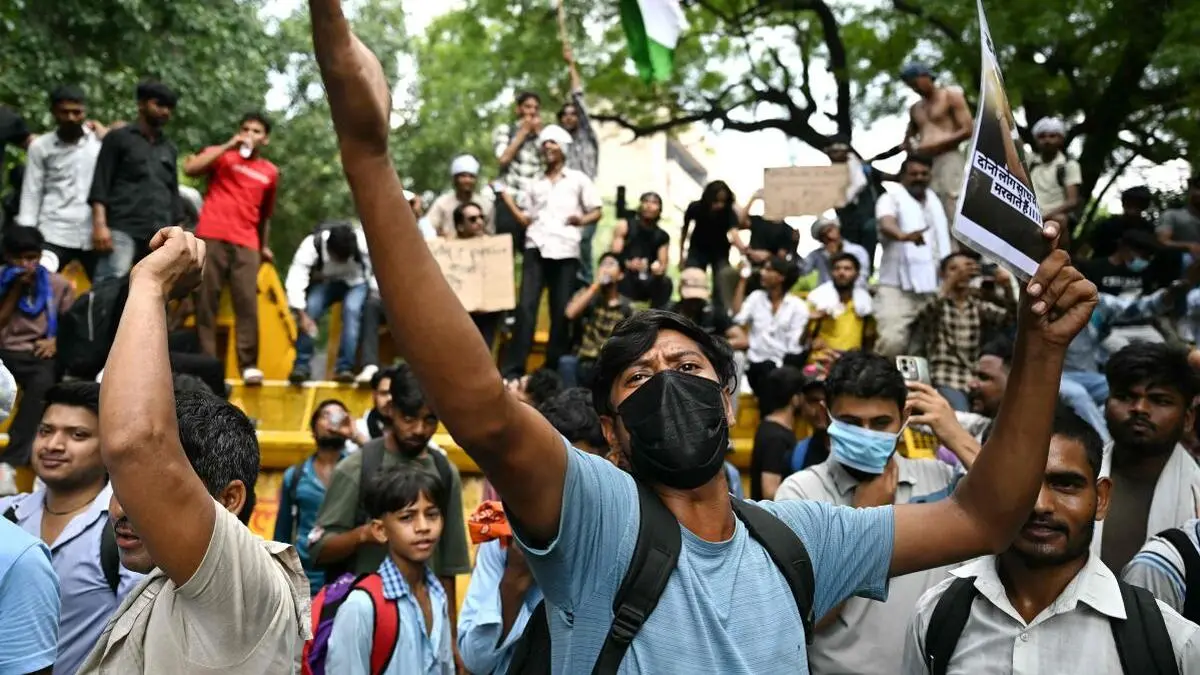
India is a democracy and protest is an important part of democratic life. From the freedom struggle to contemporary movements, public demonstrations have often forced governments and institutions to listen. A society where citizens cannot question authority cannot call itself truly democratic. But in recent years, protest seems to have become more than a democratic instrument. It is increasingly becoming a permanent feature of public life.

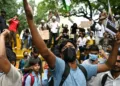
From Gen Z demonstrations and campus movements to campaigns around gender, identity and social justice, every grievance appears capable of becoming a street movement. Many of these causes are genuine and deserve attention. The concern begins when legitimate grievances are turned into broader campaigns of social hostility.

The question India should now be asking is not whether people have the right to protest. They do. The question is whether some groups are deliberately turning every sensitive issue into an opportunity to divide society. The recent discourse around women’s safety provides an important example. There is no justification for rape, sexual assault or harassment. These are serious crimes and perpetrators must be punished through due process. Women have every right to demand safety, justice and institutional accountability. Their anger is understandable, and society should listen to it.

But opposition to sexual violence should not become hostility towards men as a whole. When slogans or campaigns begin portraying an entire gender as the problem, the focus shifts from the criminal act to collective blame. That is neither fair nor productive. A rapist is responsible for rape; millions of men who have committed no such crime cannot be treated as morally responsible for it simply because they belong to the same gender.

The fight against sexual violence is also not exclusively a women’s fight. Men are part of the same society and are often directly involved in combating these crimes. Male police officers investigate cases, male prosecutors pursue them, male judges deliver verdicts, and male officers have sometimes confronted dangerous criminals accused of horrific crimes. The IPS officer involved in the encounter of the accused in the Hyderabad rape-and-murder case was himself a man.

That does not diminish women’s suffering. It simply establishes an important principle, the enemy is the crime, not an entire gender. This distinction is increasingly being lost in an age of social-media outrage. Digital platforms reward the strongest emotion rather than the strongest argument. A provocative slogan can reach millions of people faster than a carefully reasoned explanation. Consequently, complex social problems are often reduced to simple binaries: men versus women, privileged versus oppressed, establishment versus people.

Such binaries may be effective for mobilisation, but they rarely solve the underlying problem. The growing influence of Gen Z activism makes this issue even more relevant. Young Indians are politically aware, confident and willing to challenge established institutions. That should be welcomed. Every generation has the responsibility to question what it inherits. But questioning institutions is different from treating every institution as inherently corrupt.

Activism is different from permanent agitation. And demanding reform is different from creating an identity around opposition itself. A protest should ultimately answer a simple question: What change do you want? If the answer is stronger laws, better policing, safer public spaces, faster courts or greater accountability, society can debate those demands. But if the movement gradually shifts towards blaming an entire social group, humiliating opponents or creating permanent hostility, it has moved beyond the original grievance.

One of the more worrying developments in contemporary India is the tendency of “wokeism” to capture almost every social incident and interpret it through a predetermined ideological framework. A crime becomes a gender war. A disagreement becomes oppression. A social problem becomes evidence of systemic discrimination. Instead of examining each incident on its facts, there is often an immediate attempt to fit it into a larger narrative of victim versus oppressor.

This is dangerous because it leaves little space for nuance. The problem is not that society is becoming more sensitive to injustice. Greater awareness of injustice is a positive development. The problem begins when sensitivity is replaced by ideological certainty and when the conclusion is decided before the facts are examined.

For India’s young people, particularly, this can be deeply damaging. Social media exposes them to a constant stream of outrage, where the loudest and most emotionally charged interpretation often receives the greatest attention. Young minds can gradually be conditioned to view society through permanent binaries: men versus women, privileged versus oppressed, liberal versus conservative, or one community versus another. Such thinking may generate engagement, but it does not produce responsible citizens.

India’s youth need the confidence to question traditions, institutions and authority. But they also need the intellectual discipline to question their own assumptions. They must learn that supporting women does not require hating men, opposing discrimination does not require collective blame, and demanding reform does not require rejecting everything that exists.

The greatest danger of wokeism is therefore not simply that it creates protests. It is that it can turn identity and grievance into permanent political identities. Once people begin seeing themselves primarily as victims or others primarily as oppressors, social trust becomes increasingly difficult.

A healthy democracy requires empathy, but it also requires proportion. It requires the courage to condemn wrongdoing without generalising it and the maturity to disagree without treating disagreement as hatred. India’s young generation deserves an intellectual culture that teaches them to think critically, not one that teaches them whom to blame before they have understood what happened.

Topics: IndiaDemocracyProtestspoliticsWokeismGen Z
Share
Tweet
SendShareSend
✮ Subscribe Organiser YouTube Channel. ✮
✮ Join Organiser's WhatsApp channel for Nationalist views beyond the news. ✮
Previous News

India rebukes UN Human Rights body remarks on CJP protest; Slams interference in domestic affairs & double standards

Next News

India’s EV sales hit record 3.33 lakh units in September, a 74 percent jump: FADA

Related News

Representative Image

India’s EV sales hit record 3.33 lakh units in September, a 74 percent jump: FADA

MEA slams Office of the UN High Commissioner for Human Rights for unacceptable interference in India's domestic affairs

India rebukes UN Human Rights body remarks on CJP protest; Slams interference in domestic affairs & double standards

Akie Abe, wife of former Japanese Prime Minister late Shinzo Abe met RSS Sarkaryavah Dattatreya Hosabale

Wife of late Shinzo Abe, Akir Abe meet RSS Sarkaryavah Dattatreya Hosabale; discuss Bharat-Japan ties

India issued a sharp warning to Pakistan & asserted that it will not bow to nuclear blackmail

India slams Pakistan at UN: ‘Will not bow to nuclear blackmail’; Warns against using nukes as instruments of statecraft

Raghoo Puri, the Indian delegate at the UN

Indian delegate at UN Raghoo Puri mauls Pakistan over terrorism: Calls Shehbaz Govt as illegitimate ‘Form 47’ regime

The SIR controversy has raised questions over street pressure on constitutional institutions and judicial decision-making

Democracy or Mobocracy: Can street pressure influence constitutional institutions and judicial outcomes in India?

Load More

Latest News

PM Modi inaugurates Sudha Gopalakrishnan Brain Centre, launches human brain-mapping mission at IIT Madras

Representative Image

India’s EV sales hit record 3.33 lakh units in September, a 74 percent jump: FADA

Who are turning India into a “protest hub”?

MEA slams Office of the UN High Commissioner for Human Rights for unacceptable interference in India's domestic affairs

India rebukes UN Human Rights body remarks on CJP protest; Slams interference in domestic affairs & double standards

Saurav Das, Abhijit Dipke and Ashutosh Ranka

Abhijit Dipke, Saurav Das & Ashutosh Ranka released on 50K surety; Condition to maintain peace & good behaviour imposed

Navratri 2026: Divinity and dignity

Love Jihad: When fake identity turns into murderous trap; Beware of Sinister plans!

Supreme Court Verdict on SIR: Vote chori, electoral housekeeping & opposition’s fake political narrative!

Union Minister for Coal and Mines, G Kishan Reddy

Telangana: G Kishan Reddy hits back at Kharge over ‘muzzled democracy’ remark: ‘Congress must look at its own past’

French riot police stand guard as flames and thick black smoke rise during violent street clashes, highlighting the escalating tensions surrounding student protests and public unrest

French student protesters sing rap glorifying Jihadists behind Toulouse and Paris Islamic terror attacks: Probe

Load More
  • Privacy
  • Terms
  • Cookie Policy
  • Refund and Cancellation
  • Delivery and Shipping

© Bharat Prakashan (Delhi) Limited.
Tech-enabled by Ananthapuri Technologies

  • Home
  • Search Organiser
  • Bharat
    • Assam
    • Bihar
    • Chhattisgarh
    • Jharkhand
    • Maharashtra
    • View All States
  • World
    • Asia
    • Africa
    • North America
    • South America
    • Europe
    • Australia
  • Editorial
  • Operation Sindoor
  • Opinion
  • Analysis
  • Defence
  • Culture
  • Sports
  • Business
  • RSS @ 100
  • Entertainment
  • More ..
    • Sci & Tech
    • Vocal4Local
    • Special Report
    • Education
    • Employment
    • Books
    • Interviews
    • Travel
    • Health
    • Politics
    • Law
    • Economy
    • Obituary
  • Subscribe Magazine
  • Read Ecopy
  • Advertise
  • Circulation
  • Careers
  • About Us
  • Contact Us
  • Policies & Terms
    • Privacy Policy
    • Cookie Policy
    • Refund and Cancellation
    • Terms of Use

© Bharat Prakashan (Delhi) Limited.
Tech-enabled by Ananthapuri Technologies