Operation Sindoor: India set to stop Ravi River flow to Pakistan
June 4, 2026
  • Read Ecopy
  • Circulation
  • Advertise
  • Careers
  • About Us
  • Contact Us
Android AppiPhone AppArattai
Organiser
  • ‌
  • Bharat
    • Assam
    • Bihar
    • Chhattisgarh
    • Jharkhand
    • Maharashtra
    • View All States
  • World
    • Asia
    • Europe
    • North America
    • South America
    • Africa
    • Australia
  • Editorial
  • International
  • Opinion
  • RSS @ 100
  • More
    • Op Sindoor
    • Analysis
    • Sports
    • Defence
    • Politics
    • Business
    • Economy
    • Culture
    • Special Report
    • Sci & Tech
    • Entertainment
    • G20
    • Azadi Ka Amrit Mahotsav
    • Vocal4Local
    • Web Stories
    • Education
    • Employment
    • Books
    • Interviews
    • Travel
    • Law
    • Health
    • Obituary
  • Subscribe
    • Subscribe Print Edition
    • Subscribe Ecopy
    • Read Ecopy
  • ‌
  • Bharat
    • Assam
    • Bihar
    • Chhattisgarh
    • Jharkhand
    • Maharashtra
    • View All States
  • World
    • Asia
    • Europe
    • North America
    • South America
    • Africa
    • Australia
  • Editorial
  • International
  • Opinion
  • RSS @ 100
  • More
    • Op Sindoor
    • Analysis
    • Sports
    • Defence
    • Politics
    • Business
    • Economy
    • Culture
    • Special Report
    • Sci & Tech
    • Entertainment
    • G20
    • Azadi Ka Amrit Mahotsav
    • Vocal4Local
    • Web Stories
    • Education
    • Employment
    • Books
    • Interviews
    • Travel
    • Law
    • Health
    • Obituary
  • Subscribe
    • Subscribe Print Edition
    • Subscribe Ecopy
    • Read Ecopy
Organiser
  • Home
  • Bharat
  • World
  • Operation Sindoor
  • Editorial
  • Analysis
  • Opinion
  • Culture
  • Defence
  • International Edition
  • RSS @ 100
  • Magazine
  • Read Ecopy
Home Bharat

Operation Sindoor intensifies as India set to stop Ravi River flow to Pakistan, deepening Islamabad’s economic crisis

India has stepped up Operation Sindoor, moving to halt Ravi River flows to Pakistan after the Pahalgam terror attack, signalling a sharper strategic response. As water pressure mounts, Pakistan faces a deepening economic crisis marked by IMF dependence, slowing growth, and an unchecked population surge

Dr Vishnu AravindDr Vishnu Aravind
Feb 18, 2026, 08:00 am IST
in Bharat, World, South Asia, Asia, International Edition
Follow on Google News
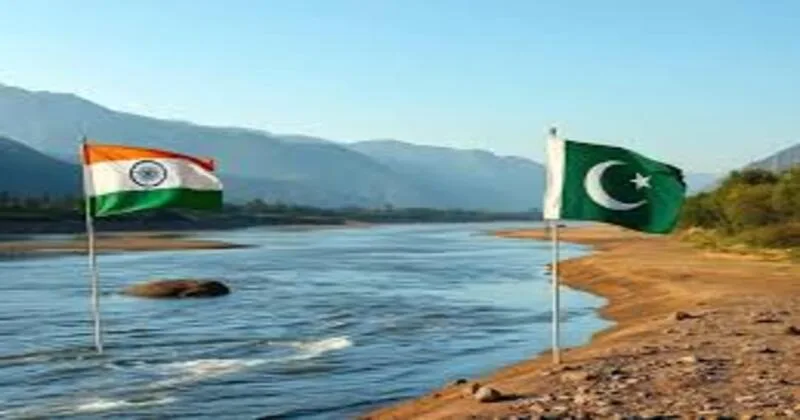
As India recalibrates its river strategy after Pahalgam, Pakistan grapples with shrinking policy space, rising debt, and demographic pressure.

Representative Image

FacebookTwitterWhatsAppTelegramEmail

New Delhi/Islamabad: India will continue its decisive “Operation Sindoor” against Pakistan, launched in retaliation for the Pahalgam terror attack. Prime Minister Narendra Modi had earlier issued a stark warning that “water and blood do not flow together,” signalling a shift toward tougher strategic measures. Soon after, India withdrew from the Indus Waters Treaty, delivering a major geopolitical blow to Pakistan. This was followed by the announcement of a massive hydroelectric project on the Chenab River in J&K, a move widely seen as further tightening pressure on Islamabad.

Now, India is preparing to block water flow on the Ravi River ahead of the summer season. Previously, excess Ravi water had been released into Pakistan, significantly supporting its agriculture-driven economy. That practice has now ended. Jammu and Kashmir Minister Ahmed Rana confirmed that surplus water previously sent across the border will instead be retained to meet summer requirements in Kathua and Samba districts. Pakistan has raised objections at multiple international forums over India’s withdrawal from the Indus Waters Treaty, but New Delhi has remained unmoved. Under the World Bank-brokered 1960 agreement, India holds full rights over the eastern rivers, including the Ravi and Sutlej, while Pakistan controls the western rivers: the Indus, Chenab, and Jhelum. However, India suspended cooperation following the Pahalgam attack, making clear that relations will not normalise until Pakistan completely abandons its policy of supporting terrorism.

Reports also indicate that Pakistan sought technical details about India’s Chenab hydropower project, but New Delhi declined to share information.

Also Read: PM Modi, Macron seal ‘Special Global Strategic Partnership’ as India, France ink 20+ deals across defence, AI and trade

The impact could be severe. Agriculture accounts for roughly 25 per cent of Pakistan’s GDP, and nearly 80% of irrigation water originates from the Indus river system. Losing dependable access to Chenab and Ravi flows represents a serious shock to Pakistan’s farming sector, and its broader economy. Strategists believe this “water pressure” could eventually force Pakistan to reconsider its stance toward India.

Debt, IMF control, and a nation running on loans

As India tightens strategic screws, Pakistan continues to sink deeper into economic distress. The country has been surviving on borrowed money, with much of its fiscal policy effectively overseen by the International Monetary Fund. Even minor decisions now require IMF approval. A striking example involves contraception. Prime Minister Shahbaz Sharif recently proposed reducing taxes on condoms to make them affordable and help curb Pakistan’s soaring birth rate. But the plan backfired.

Pakistan currently imposes an 18% tax on contraceptives. When Sharif requested IMF permission to lower this levy, the Fund flatly rejected the appeal, stating that any such change could only be considered in the next financial year’s budget.

This episode highlights Pakistan’s shrinking economic sovereignty.

Despite receiving massive IMF assistance to manage its crisis, the country remains trapped in a cycle of debt and austerity. Domestic policy flexibility is limited, while inflation, unemployment, and currency pressures continue to strain ordinary citizens.

A leading Pakistani media outlet recently warned that economic recovery is impossible without curbing corruption and political interference. The article stressed that unless politicians fundamentally change their approach to governance, sustainable growth will remain out of reach. Yet instead of structural reforms taking centre stage, attention has shifted to remarks made by Pakistan’s finance minister that laid bare the depth of the crisis.

Population Explosion: Aurangzeb’s stark warning

Pakistan Finance Minister Muhammad Aurangzeb has now identified what he calls the root cause of the country’s prolonged economic troubles: uncontrolled population growth.

Aurangzeb warned that Pakistan cannot achieve meaningful development while its population continues to expand at the current pace. If trends persist, he said, the country could soon cross 400 million people, raising serious questions about governance, employment, and social stability.

The government, he admitted, already struggles to provide jobs for its existing population of around 250 million.
Aurangzeb urged citizens to support family planning efforts, stressing that the state alone could not manage the demographic pressure. He also called for increased private investment as a pathway toward recovery.

In a notable comparison, the finance minister suggested adopting Bangladesh’s population-control model. While Pakistan often looks to Bangladesh as a benchmark for economic growth and taxation reforms, Aurangzeb asked why the same country is not studied for its success in managing demographic expansion.

Turning to technology, he said Pakistan’s future depends heavily on IT exports. Current figures stand at about $3–4 billion annually, with hopes of increasing that to $8–10 billion. However, available statistics suggest that Pakistan’s ambitions in this sector still trail far behind those of regional competitors.

Meanwhile, reports indicate Pakistan, now among countries with the world’s highest birth rates, has failed to stabilise contraceptive prices. The 18 per cent tax on birth-control products remains intact due to IMF restrictions, making family planning less accessible for millions.

With IMF loans propping up the economy, Pakistan must seek prior approval for nearly every fiscal adjustment. This dependence underscores how deeply external lenders now shape the country’s domestic policies. As India applies strategic pressure through water management and infrastructure development, Pakistan faces a mounting convergence of crises, shrinking agricultural security, ballooning debt, and a population growing faster than its economy. Whether Islamabad can reverse course through reform, investment, and demographic control remains uncertain. For now, the twin forces of geopolitics and internal instability continue to tighten their grip, leaving Pakistan with diminishing room to manoeuvre.


Topics: IMFPrime Minister Narendra ModiChenab riverOperation Sindoor
ShareTweetSendShareSend
✮ Subscribe Organiser YouTube Channel. ✮
✮ Join Organiser's WhatsApp channel for Nationalist views beyond the news. ✮
Previous News

Arunachal Pradesh: Joint operations by Army-IAF continue to douse forest fire in Walong for fifth consecutive day

Next News

Feb 18, 1946 Naval Revolt that shook foundation of the British Raj 80 years ago; Continued legacy of Azad Hind Fauz

Related News

Myanmar President U Min Aung Hlaing and Prime Minister Narendra Modi

PM Modi pushes for democracy in Myanmar; Naypyidaw vows action against insurgents threatening India’s national security

Myanmar President U Min Aung Hlaing and Prime Minister Narendra Modi

India-Myanmar boosts trade via Rupee-Kyat mechanism; Pushes connectivity projects as gateway to Southeast Asia

Uttar Pradesh CM Yogi Adityanath warns those of dire consequences if they disrespect gau mata

Uttar Pradesh CM Yogi Adityanath says “Gaumata is Rashtramata”, warns against cow slaughter posts

Israel Prime Minister Benjamin Netanyahu and Prime Minister Narendra Modi(File Photo)

PM Netanyahu & Israel’s Bonhomie with India: The discomfort of Congress as Bharat-Israel bond deepens

Beyond the Thucydides Trap: Why the rise of India differs fundamentally from China

Two Karmayogis making Uttar Pradesh Trillion-Dollar Destiny: Brick by Brick, Shrine by Shrine

Load More

Latest News

B. Nagendra, Congress MLA and former minister in Karnataka

Karnataka: CBI files chargesheets against Nagendra, Congress leader, ex-minister, 29 others in Valmiki Corporation scam

Representative Image (This is an AI generated image)

From Class 10 to Ayurvedic Doctor: Central Sanskrit University unveils new pathway to BAMS

Heera Group founder Nowhera Shaik (File Photo)

Telangana: ED arrests Nowhera Shaik’s aide in Heera Group Sharia-compliant Rs 3000 Cr investment scam

Governor of Karnataka Thaawarchand Gehlot administered the Oath of Office and Secrecy to Chief Minister D.K. Shivakumar on June 3, 2026

DK Shivakumar takes oath as Karnataka CM, invokes Ajjayya in ceremony

TMC Leader Abhishek Banerjee attacked in Sonarpur

The Judgement Beyond the Ballot: Bengal’s Sonarpur, political memory, and accountability

Change of Guard in Punjab BJP: Challenges, opportunities and the road ahead

Sacrilege, state interference and the Sikh question in Punjab

After Schools, Vande Mataram Must For West Bengal Madarsas

West Bengal Madrasas Sing Vande Mataram: 1,600 madrasas comply with state govt order despite opposition criticism

Image of Dawood Aide Huzaifa, who is believed to be a close associate of Munna Jhingada

Dawood aide Huzaifa held in Mumbai crackdown; Probe focuses on Pakistan-linked recruitment network

Islamists to Launch Keralam’s First Sharia Gym in Palakkad — No Music, Hijab Must; A ‘Taliban’-Inspired Fitness Club

Load More
  • Privacy
  • Terms
  • Cookie Policy
  • Refund and Cancellation
  • Delivery and Shipping

© Bharat Prakashan (Delhi) Limited.
Tech-enabled by Ananthapuri Technologies

  • Home
  • Search Organiser
  • Bharat
    • Assam
    • Bihar
    • Chhattisgarh
    • Jharkhand
    • Maharashtra
    • View All States
  • World
    • Asia
    • Africa
    • North America
    • South America
    • Europe
    • Australia
  • Editorial
  • Operation Sindoor
  • Opinion
  • Analysis
  • Defence
  • Culture
  • Sports
  • Business
  • RSS @ 100
  • Entertainment
  • More ..
    • Sci & Tech
    • Vocal4Local
    • Special Report
    • Education
    • Employment
    • Books
    • Interviews
    • Travel
    • Health
    • Politics
    • Law
    • Economy
    • Obituary
  • Subscribe Magazine
  • Read Ecopy
  • Advertise
  • Circulation
  • Careers
  • About Us
  • Contact Us
  • Policies & Terms
    • Privacy Policy
    • Cookie Policy
    • Refund and Cancellation
    • Terms of Use

© Bharat Prakashan (Delhi) Limited.
Tech-enabled by Ananthapuri Technologies