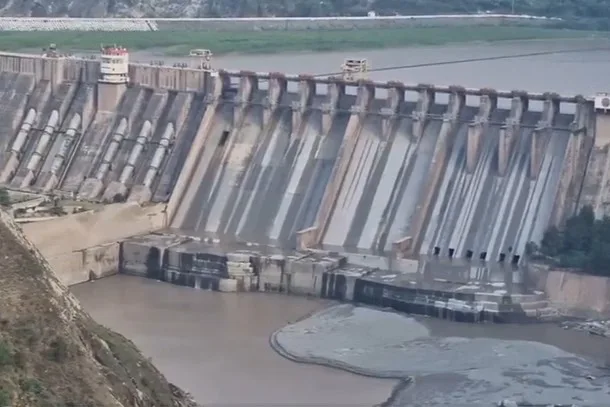
India has taken a major step to accelerate hydropower development on the Chenab River by floating a Rs 5,129 crore tender for the Sawalkot Hydroelectric Project in Jammu and Kashmir. The move is being seen as part of New Delhi’s broader push to maximise the use of water resources allocated to India, especially after the suspension of Indus Waters Treaty-related engagements
The National Hydroelectric Power Corporation, a Navratna public sector enterprise under the Government of India, has invited bids for large-scale civil construction works at the Sawalkot project site in Ramban district. Once completed, the project is expected to become the largest hydroelectric installation in Jammu and Kashmir and a key contributor to India’s renewable energy capacity.
On 5 February, NHPC issued online e-tenders for extensive civil works required for the execution of the Sawalkot Hydroelectric Project. The tender, valued at Rs 5,129 crore, covers construction activities across multiple locations within the project area.
The scope of work includes the construction of diversion tunnels, adits, coffer dams, access tunnels, approach roads, and associated dam structures. These works form the backbone of the hydropower project and are essential for managing river flow, facilitating underground construction, and ensuring long-term operational safety.
The Sawalkot Hydroelectric Project is planned as a run-of-river scheme on the Chenab River near Sidhu village in Ramban district. The project site is located about 120 kilometres from Jammu and roughly 130 kilometres from Srinagar, placing it in a strategically significant and geographically challenging region.
With an installed capacity of 1,856 megawatts, Sawalkot is among the largest hydropower projects proposed in the Chenab basin. The electricity generated from the project is expected to significantly strengthen power availability in Jammu and Kashmir while contributing surplus renewable energy to the national grid.
The Sawalkot project is being implemented in two distinct phases with a combined estimated investment of Rs 22,704.8 crore. In the first phase, the project is designed to generate 1,406 megawatts of electricity, while the second phase will add an additional 450 megawatts to the grid.
This phased approach allows NHPC to manage construction risks, optimise financing, and ensure gradual integration of power generation capacity. It also enables better coordination of civil, mechanical, and electrical works across the complex terrain of the Chenab valley.
NHPC has planned a year-round construction schedule for the Sawalkot project to ensure timely completion. According to project planning documents, full construction activity will be carried out during non-monsoon months, while surface-level works will continue at about 50 per cent capacity during the monsoon season.
Underground works, including tunnelling and cavern construction, are planned to continue throughout the year regardless of weather conditions. This approach is expected to reduce delays and maintain steady progress, particularly given the long gestation period typical of large hydropower projects.
The timing of the tender has drawn attention due to its linkage with India’s decision to suspend Indus Waters Treaty proceedings following the Pahalgam attack. With the suspension of treaty-related mechanisms, the Indian government has greater flexibility to fast-track hydropower projects on western rivers such as the Chenab.
While India has always maintained that its hydropower projects comply with treaty provisions, officials see the current situation as an opportunity to accelerate stalled or delayed projects and fully utilise India’s share of river waters.
The Sawalkot project is being viewed as a strategic assertion of India’s rights over its allocated water resources, while remaining within the framework of run-of-river design principles.
The Forest Advisory Committee has already granted in-principle approval for the diversion of 847 hectares of forest land required for the construction of the Sawalkot Hydroelectric Project. This clearance was a critical milestone, as forest and environmental approvals have historically been a major source of delay for infrastructure projects in the Himalayan region.
NHPC is required to comply with stipulated conditions related to compensatory afforestation, biodiversity conservation, and environmental management during construction and operation. Officials say that environmental safeguards have been built into the project design to minimise ecological impact while enabling large-scale power generation.
Local residents and stakeholders in Ramban district see the Sawalkot project as a major economic opportunity for the region. Once construction activity gains momentum, the project is expected to generate substantial direct and indirect employment, ranging from skilled engineering jobs to local labour and service roles.
Improved road connectivity, better infrastructure, and increased economic activity linked to the project are also expected to benefit adjoining areas. Over time, the project could contribute to long-term regional development by attracting ancillary industries and improving access to electricity.
The Sawalkot Hydroelectric Project was first conceived in the 1980s, but remained stalled for decades due to a combination of financial constraints, environmental concerns, and regional security issues. Multiple attempts to revive the project were made over the years, but progress remained slow.
The issuance of the current high-value tender signals a renewed political and administrative push to finally execute the project at scale. Once completed, Sawalkot is expected to surpass existing hydropower installations and become the single largest power project in Jammu and Kashmir.