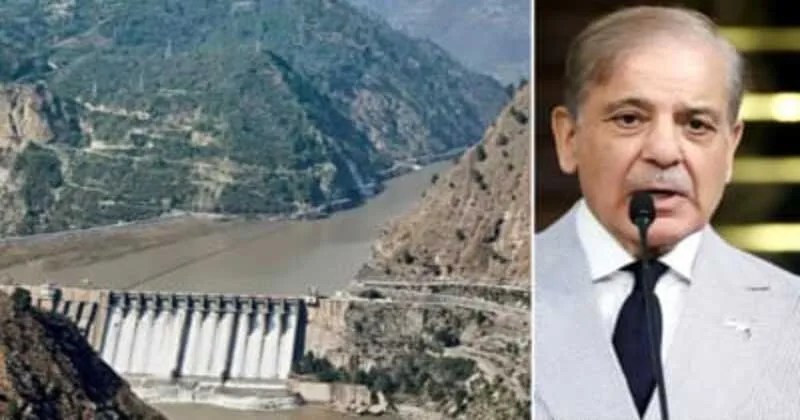
News Delhi: India’s decision to withdraw from the Indus Waters Treaty following the Pahalgam terror attack last year marked a major strategic setback for Pakistan. Soon after exiting the agreement, New Delhi moved to revive several long-pending infrastructure projects that had remained frozen for decades under treaty restrictions. Under the original arrangement, Pakistan exercised control over the Indus, Jhelum and Chenab rivers, while India managed the Ravi, Beas and Sutlej. With the treaty no longer in force, India began accelerating dam construction and water management projects, including major initiatives on the Chenab River. The latest move comes from National Hydroelectric Power Corporation (NHPC), which has launched a desilting operation at the Salal Dam on the Chenab. The effort is expected to significantly enhance the dam’s storage capacity and improve power generation. This marks the first operational intervention at the Salal Dam since India withdrew from the Indus Waters Treaty.
Desilting drive to restore capacity
As part of the project, six gates of the dam will be opened to flush out accumulated silt, and the tendering process for the work has already begun. Earlier, India lacked the authority to open these gates under treaty provisions, leading to decades of sediment build-up. Officials said the dam’s original installed storage capacity of 284 million cubic metres had shrunk dramatically to just 9.91 million cubic metres due to prolonged non-desilting. This erosion of capacity severely curtailed electricity generation. Following India’s withdrawal from the treaty, authorities managed to raise storage levels to about 14 million cubic metres, but stress that much more can be recovered once the cleaning process is complete.
While precise projections on increased electricity output are not yet available, officials confirmed that generation will rise once desilting is finished. They also noted that the ability to open the dam gates itself represents a major operational breakthrough. The Salal hydroelectric project has a total generation capacity of 690 megawatts. Beyond Salal, NHPC’s board has approved an investment of Rs 5,703 crore for two additional hydroelectric ventures in Jammu and Kashmir, Uri-1 and Dulhasti-2.
If the agreements are finalised, construction is expected to begin in March this year, signalling a renewed push for hydropower development in the region. NHPC shares were initially expected to gain momentum following the announcement. The stock opened higher in early trading but later slipped by around half a percent. Market sentiment was dampened after an arbitral tribunal directed the company to pay Rs 227 crore in compensation to Hindustan Construction Company in connection with the Krishnaganga hydroelectric project. Despite the temporary dip in share prices, officials see the new investments and operational freedom at Salal as a turning point, strengthening India’s energy security while reshaping regional water dynamics after decades of constraints.