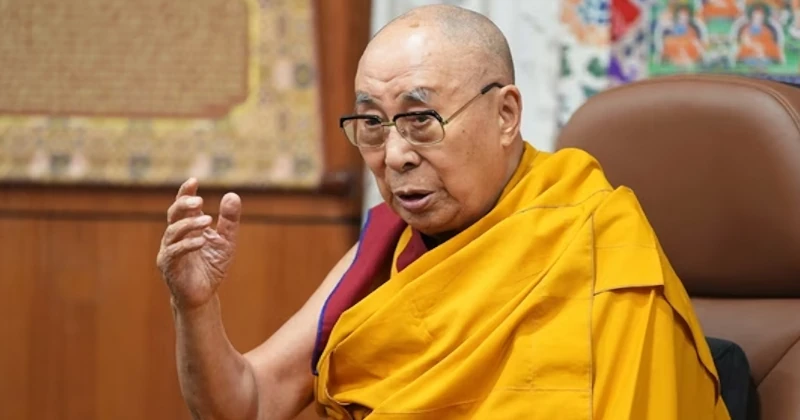
Tibetan spiritual leader and Nobel Peace Laureate, His Holiness the 14th Dalai Lama offered prayers and extended heartfelt blessings to over 200 devotees from nine countries—including elderly Tibetan exiles and children with special needs at his residence in Shiwatsel, Leh, Ladakh, on July 15, 2025.
The event marked His Holiness’s first public audience during his ongoing visit to Ladakh, which began on July 12. The revered spiritual leader’s interaction went beyond ceremonial gestures, carrying a profound message of compassion, resilience, and resistance against cultural erasure under Chinese rule.
After granting an audience at his residence to over 200 devotees from nine countries—including elderly Tibetans and children with special needs—His Holiness the Dalai Lama offered his prayers and extended heartfelt good wishes to all, at Shiwatsel, Leh, Ladakh, India, on July 15,… pic.twitter.com/1BPEsVJHH4
— Dalai Lama (@DalaiLama) July 15, 2025
Addressing the diverse group of followers who had come from across the globe, His Holiness expressed deep gratitude for the unwavering devotion of the Tibetan diaspora and supporters of Buddhism. He then offered his prayers for their well-being and inner peace before delivering a message that underscored the urgent need to protect Tibetan identity and preserve its spiritual legacy.
“When I reached the Tibetan border with India [in 1959], I decided I would have to put all my effort into building institutions that would preserve what we used to have. We have done quite well,” he said, referring to the post-exile rebuilding of Tibetan Buddhism on Indian soil.
The Dalai Lama’s words carried a quiet but unmistakable rebuke of the Chinese Communist regime’s oppressive control over religious life in Tibet. He acknowledged the rising interest in Buddhism within China but firmly stated that meaningful spiritual discourse is impossible without freedom.
“In China, the political situation is not stable, but interest in Buddhism is growing. I have received many messages inviting me to visit China, but I feel it would be difficult to teach about Buddhism in a country where there is no freedom. I feel it’s more effective to teach about Buddhism in India.”
His remarks, made from the safety of democratic India, struck a chord with many, especially amid growing global concern over China’s continued crackdown on Tibetan religious institutions, cultural practices, and language.
Further reinforcing the historical and cultural unity of the broader Himalayan region, His Holiness reminded the people of Ladakh of their intrinsic connection to Tibet. “You people of the Himalayan region share a religion and culture with us, especially our language and literature. I have done all I can to revive and strengthen the bonds between us.”
His message served as both an affirmation of shared heritage and a subtle call to action—an appeal to Himalayan communities to stand firm in the face of external attempts to dilute or erase centuries of spiritual and cultural legacy.
His Holiness’s visit to Ladakh this year comes after a two-year gap and is expected to last for over six weeks. Unlike previous visits routed through Delhi and civilian airports, the Dalai Lama was flown directly from Dharamshala to Ladakh aboard an Indian Air Force aircraft, landing at the Leh military airport at around 10:30 AM on July 12.
Upon arrival, he was received by a delegation of senior monks, political dignitaries, and community leaders. His journey from the airport to Shiwatsel Palace was marked by a seven-kilometre stretch of celebration—thousands of Ladakhis and Tibetans lined the roads, offering khatas (ceremonial scarves), burning incense, and showering flowers in a moving display of devotion.
At the Shiwatsel Palace, traditional mandala offerings were presented to the Tibetan spiritual leader by Ladakh’s leadership, reaffirming the region’s deep reverence for him and its cultural ties to Tibet.