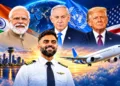
The 51st G7 Summit, the 57th annual meeting of the G7, was held in a hilly resort in Alberta, Canada, known as Kananaskis, on June 16-17, 2025. Besides the seven permanent members of the Group (which was eight before the exclusion of Russia), the Summit was also attended by some other important nations of the world. The Group of Seven, also known as G7, is by and large an informal grouping of the global advanced economies like the UK, the US, Germany, France, Japan, Italy, Canada and the European Union. To discuss international economic and geopolitical issues, the grouping’s members meet annually and formalise their collective position in this regard.
India was invited to attend the G7 Summit for the first time in 2003. Since its initial attendance, it has received invitations to participate in the global elite’s high-level meetings, primarily sponsored by the advanced countries. India is being invited, reflecting its rising global influence and responsibilities. It is the third-largest international defence spender, and India’s GDP equals that of the UK and exceeds that of Canada, Italy, and France. India’s vibrant democratic framework makes it a crucial strategic partner for the G7 in addressing pressing global affairs and other interconnected issues of concern.
The invitation to India and the renewed bonhomie between India and Canada need to be seen in the context of last year’s strained relationship between the two, due to Justin Trudeau’s immature and undiplomatic approach towards issues concerning both Canada and India. Prime Minister Narendra Modi attended the Summit this time in Canada in the background of the Pahalgam terror incident, followed by ‘Operation Sindoor’ and the military escalating acts of Pakistan, which got a befitting reply from India. India’s responses to the reactionary moves of Pakistan were technically of a higher intensity, making it clear to the world and especially Pakistan that every terror act will have a very high price to pay. India’s proactive approach paid rich dividends in favour of India in the narrative-building domain.
The narrative constructed over the last two months by the Indian nation-state has consistently presented a compelling picture of India. The state of India has recently witnessed several developments that significantly impact geopolitics. Islamic terrorism in Pahalgam-Kashmir was an important negative development in the context of India and the Indian interests & assets throughout the globe. The state of India responded to the terror unleashed by the state of Pakistan in the most befitting manner under the name of ‘Operation Sindoor’. However, Pakistan ensured that India’s action was responded to. Still, by its unwarranted escalation, India responded disproportionately to its attacks, thus incapacitating Pakistan’s ability to prolong the unwanted action taken by it. Lessons learnt by Pakistan led it to plead for ‘de-escalation & ceasefire’ before some world powers, and its DGMO requested his counterpart in India to stop further military hostilities, which continued for 3-4 days.
Although the military hostilities ceased, the diplomatic and political narratives gained ground, along with the connected actions incidental thereto. India went ahead very fast and sent seven teams of parliamentarians to more than 30 countries to make India’s position about the whole gamut of ‘Operation Sindoor’ amply clear. The government of India also revised some key doctrines regarding its foreign policy during and after Operation Sindoor. The biggest change that the nation-state of India took was ‘to treat all acts of terror as an act of war’. The earlier doctrines like ‘terror and talks won’t go together’ were essentially a major positive policy doctrine consolidated in and after 2014, which continues to guide India unabated. Then the new doctrine that inspired the state of India to suspend the Indus Water Treaty is known as ‘water and blood don’t flow together’.
These major policy shifts, particularly those related to Pakistan, have a profound impact on our stance regarding geopolitics. We continue to be guided by the policy adopted earlier by our nation-state, which does not permit any sort of external intervention in matters related to our domestic or external affairs. The Prime Minister himself and the External Affairs Ministry made it crystal clear that the deescalation of military hostilities between India and Pakistan had nothing to do with anyone’s intervention; thus, they dispelled the artificial notion that some third party was involved in any way in the scenario. The teams sent by India to various nations also reiterated this position everywhere to bring facts to light, along with the actual and factual position regarding the Pahalgam terror incident in which 26 Hindus were butchered after making sure that they were non-Muslims.
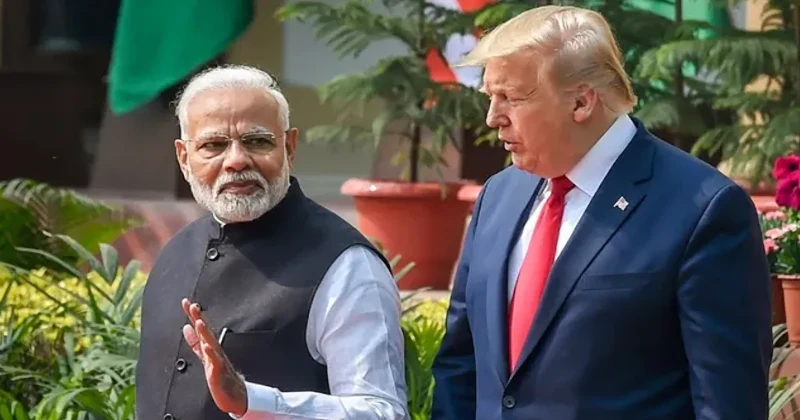
When US President Donald Trump left the G7 Summit early, he wanted India’s Prime Minister, Narendra Modi, to visit the US after the Summit. PM Modi politely refused to do so, citing his earlier engagements in Croatia and at home. During a phone call from the US while PM Modi was in Canada, Trump discussed several important issues with him, including the Indo-Pakistani issue. PM Modi made it very clear to Trump that India doesn’t accept any sort of intervention in its affairs by anyone. Immediately after the phone call, the External Affairs Ministry released its version publicly regarding the phone conversation between PM Modi and President Trump, clarifying the matter to the world in an unambiguous manner. This was indeed a very smart move, diplomatically and politically speaking.
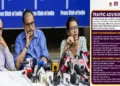
Vikram Misri, the Secretary in the Ministry of External Affairs, explained the matter on behalf of the government in a televised broadcast in New Delhi. The Al Jazeera news channel carried the following report in this connection on June 18 2025:
“Indian Prime Minister Narendra Modi has made it clear to United States President Donald Trump that a ceasefire between India and Pakistan after four-day conflict in May was achieved through talks between the two militaries and not US mediation, a top diplomat in New Delhi says”.
“PM Modi told President Trump clearly that during this period, there was no talk at any stage on subjects like India-US trade deal or US mediation between India and Pakistan,” Indian Foreign Secretary Vikram Misri said in a press statement on Wednesday. “Talks for ceasing military action happened directly between India and Pakistan through existing military channels, and on the insistence of Pakistan”.
“Prime Minister Modi emphasised that India has not accepted mediation in the past and will never do,” he said. Misri said the two leaders spoke over the phone late on Tuesday, at Trump’s insistence, after they were unable to meet on the sidelines of the G7 summit in Canada, which PM Modi attended as a guest. The call lasted 35 minutes. Trump had said last month that the nuclear-armed South Asian neighbours agreed to the ceasefire after talks mediated by the US, and that the hostilities ended after he urged the countries to focus on trade instead of war. There was no immediate comment from the White House on the Modi-Trump call”.
“Pakistan has previously said the ceasefire was agreed after its military returned a call the Indian military had initiated on May 7. In an interview with Al Jazeera in May, Pakistan’s Foreign Minister Ishaq Dar rejected claims that Washington had mediated the truce and insisted that Islamabad had acted independently.
The above report and similar ones have been published and publicised extensively in the global media and social media over the last week or so, which has put to rest the speculation that President Trump initiated in this regard. After he failed to implement a truce on the fronts of Israel & Hamas and Russia & Ukraine, Trump went for a gamble on the Indo-Pak sector, which India’s PM punctured at the right time. He probably expected India to remain silent on the development, which didn’t happen in practice. However, Trump is Trump; he repeated his ‘claim’ in this regard 18th time since the suspension of the conflict till date, making sure that what he couldn’t achieve in his three earlier attempts might be achieved in the scenario between the Iran and Israel war. His fourth gamble in a row, probably or apparently, is for a Nobel prize. The good thing is that he recently announced a possible ‘big trade deal’ with India in a televised programme.
The lead taken by the government of India regarding its position needed to be elevated to a new international level by implementing certain social initiatives with socio-political impact. In this connection, the Indian diaspora throughout the globe has begun to play a pivotal role, considering the current scenario involving India’s global interests. The developments in this regard are expected to bear results very shortly. What is important to emphasise is that PM Modi has set the record straight, keeping in view the entire geopolitical scenario, and has done so well and effectively.