Jharkhand: How four missionaries shaped Ranchi’s religious landscape 179 years ago
June 14, 2026
  • Read Ecopy
  • Circulation
  • Advertise
  • Careers
  • About Us
  • Contact Us
Android AppiPhone AppArattai
Organiser
  • ‌
  • Bharat
    • Assam
    • Bihar
    • Chhattisgarh
    • Jharkhand
    • Maharashtra
    • View All States
  • World
    • Asia
    • Europe
    • North America
    • South America
    • Africa
    • Australia
  • Editorial
  • International
  • Opinion
  • RSS @ 100
  • More
    • Op Sindoor
    • Analysis
    • Sports
    • Defence
    • Politics
    • Business
    • Economy
    • Culture
    • Special Report
    • Sci & Tech
    • Entertainment
    • G20
    • Azadi Ka Amrit Mahotsav
    • Vocal4Local
    • Web Stories
    • Education
    • Employment
    • Books
    • Interviews
    • Travel
    • Law
    • Health
    • Obituary
  • Subscribe
    • Subscribe Print Edition
    • Subscribe Ecopy
    • Read Ecopy
  • ‌
  • Bharat
    • Assam
    • Bihar
    • Chhattisgarh
    • Jharkhand
    • Maharashtra
    • View All States
  • World
    • Asia
    • Europe
    • North America
    • South America
    • Africa
    • Australia
  • Editorial
  • International
  • Opinion
  • RSS @ 100
  • More
    • Op Sindoor
    • Analysis
    • Sports
    • Defence
    • Politics
    • Business
    • Economy
    • Culture
    • Special Report
    • Sci & Tech
    • Entertainment
    • G20
    • Azadi Ka Amrit Mahotsav
    • Vocal4Local
    • Web Stories
    • Education
    • Employment
    • Books
    • Interviews
    • Travel
    • Law
    • Health
    • Obituary
  • Subscribe
    • Subscribe Print Edition
    • Subscribe Ecopy
    • Read Ecopy
Organiser
  • Home
  • Bharat
  • World
  • Operation Sindoor
  • Editorial
  • Analysis
  • Opinion
  • Culture
  • Defence
  • International Edition
  • RSS @ 100
  • Magazine
  • Read Ecopy
Home Bharat

Jharkhand: How four missionaries shaped Ranchi’s religious landscape 179 years ago

On June 25, 1846, the first baptism in the region took place. A young girl was baptized and named Martha. The following day, five more children were baptized. Over the years, the number of baptisms grew, including individuals from various tribal communities

WEBDESKWEBDESK
Dec 24, 2024, 03:00 pm IST
in Bharat, Jharkhand
Follow on Google News
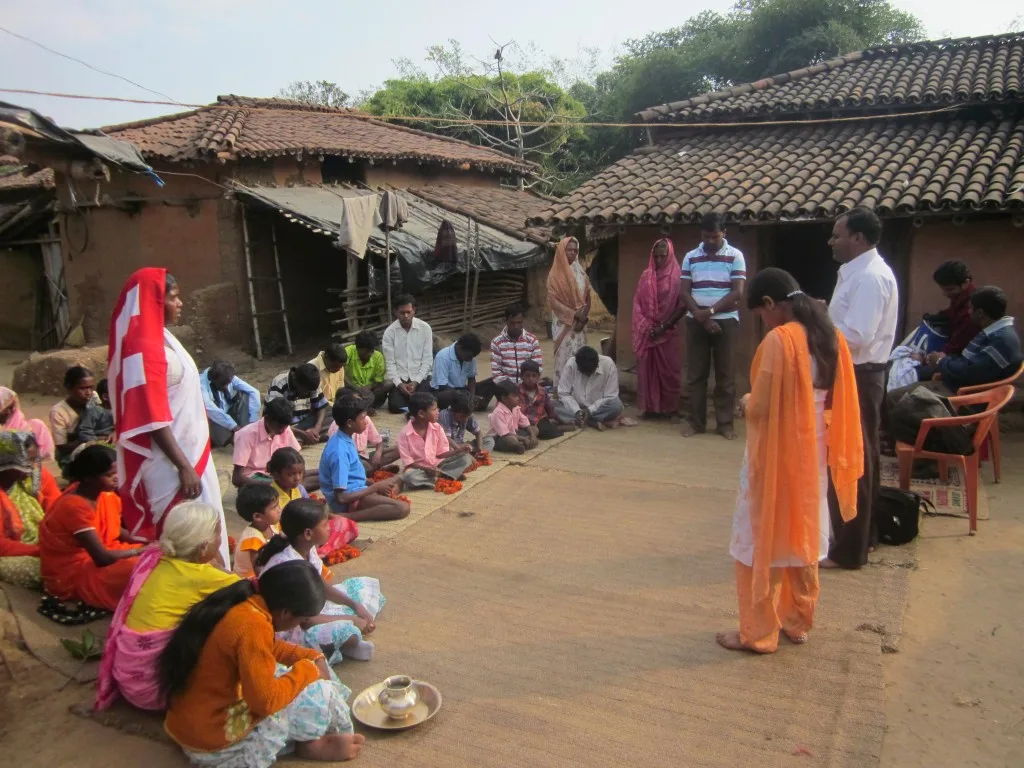
Missionary activities in Jharkhand (Photo: St Paul Mission Jharkhand)

Missionary activities in Jharkhand (Photo: St Paul Mission Jharkhand)

FacebookTwitterWhatsAppTelegramEmail

As Christmas approaches, Ranchi, the capital of the tribal-dominated state of Jharkhand, is illuminated with festive decorations that rival those seen in predominantly Christian countries. These elaborate embellishments, reportedly part of government initiatives, have sparked discussions, especially in the context of Ranchi’s historical connection to Christianity.

In light of these developments, let us delve into the journey of four German missionaries who arrived in Ranchi 179 years ago, introducing Christianity to this region and leaving an indelible mark on its socio-religious fabric.

Rev. Emil Shutz, Rev. Fredrick Wach, Rev. August Banth, and Rev. Theodore Yanke set out from Berlin in 1844, intending to preach the gospel in Burma. However, circumstances led them to Kolkata, where they encountered Jharkhand’s tribal labourers. Captivated by the simplicity and resilience of the tribal communities, they decided to bring their mission to Chhotanagpur.

Rise in Missionary Activities and Changing Tribal Identity

Over the decades, Ranchi has witnessed a significant expansion of missionary initiatives. From educational institutions to healthcare facilities, the reach of these efforts has been extensive. However, this has also coincided with a notable shift in religious identity among Jharkhand’s tribal communities. Reports suggest that a substantial number of tribals have embraced Christianity, moving away from their traditional religious practices.

Ground report by Organiser reveals that missionary activities have extended from the plains to the hilltops, with an increasing number of tribals identifying as Christians.

Organiser’s Findings on Ground

Organiser’s on-ground reporting in Jharkhand highlights a significant rise in missionary activities in recent years. Educational institutions, churches, and social outreach programs are at the forefront of this expansion, influencing the socio-religious landscape of the region. This phenomenon has sparked debates about cultural assimilation, religious freedom, and the impact of external influences on tribal identity.

Missions from Germany to Ranchi

The missionaries began their journey from Berlin’s Bethlehem Church on July 10, 1844. Their mission was to spread the gospel among the Karen tribes in Mergui, Burma. However, their plans changed due to a war between the British and Sikhs in northern India. Consequently, they stayed in Kolkata, residing at the Bible Society premises, awaiting divine guidance.

During their stay in Kolkata, the missionaries came into contact with Jharkhand’s tribal labourers, who worked as porters. Struck by the simplicity and earnestness of these people, the missionaries decided to focus their evangelical efforts in Chhotanagpur. On February 25, 1845, they left Kolkata for Ranchi, travelling by bullock cart.

Arrival and Early Work in Ranchi

The missionaries reached Ranchi on November 2, 1845, after a brief stay in Bankura to learn Hindi. Recognising the linguistic diversity of Chhotanagpur, they chose Hindi as their medium of communication. Upon their arrival, they began serving the local population through evangelism, education, and healthcare.

Reaching Ranchi on November 2, the missionaries began their evangelical efforts, establishing schools, churches, and healthcare services. The first significant milestone came with the foundation of the Gossner Evangelical Lutheran (GEL) Church on November 18, 1851. This church not only served as a religious centre but also symbolised the growing influence of missionary activities in the region.

The first worship house was built at Bethesda Mission Station on December 1, 1845. This modest structure became a center for prayer and community gatherings.

The First Baptisms and Growing Congregations

On June 25, 1846, the first baptism in the region took place. A young girl was baptized and named Martha. The following day, five more children were baptized. Over the years, the number of baptisms grew, including individuals from various tribal communities. Notable baptisms included:

  • Four Oraon individuals on June 9, 1850.
  • Two Munda brothers on October 26, 1851.
  • Nine Bengalis on October 1, 1855.
  • A Santhal individual on June 22, 1864.
  • Two Khadia brothers on June 8, 1866.
  • The first member of the Ho community on May 10, 1868.

The growing congregation led to the establishment of churches in Domba (1847), Lohardaga (1848), Govindpur (1850), and Chaibasa (1864), among other locations.

Foundation of the GEL Church

On November 18, 1851, the foundation of the first GEL Church was laid. Construction was completed on December 24, 1855. The church became a beacon of faith, surviving significant challenges, including the Sepoy Mutiny of 1857, during which four cannonballs struck the building. The marks of these attacks remain visible on the upper portion of the church.

The GEL Church continues to honour its traditions, such as placing an open Bible under the cross, a practice originating from the Lutheran Church in the 16th century.

As Ranchi shines in festive grandeur, the city’s history and its ongoing socio-religious transformation offer a reminder of the complexities of cultural and religious interplay in a rapidly changing world.


 

Topics: RanchiMissionary activities in JharkhandMissionary conversion in RanchiGerman Churched in RanchiTribals in RanchiJharkhand
Share1TweetSendShareSend
✮ Subscribe Organiser YouTube Channel. ✮
✮ Join Organiser's WhatsApp channel for Nationalist views beyond the news. ✮
Previous News

“We will strike Houthis just as we did to Haniyeh”: Israel admits key assassinations, role in Assad’s overthrow

Next News

MHA constitutes tribunal to review ULFA’s Unlawful Association status following ban extension

Related News

A large crowd of Bangladeshis residing in West Bengal gathers at the Hakimpur border crossing in the Basirhat subdivision of North 24 Parganas district to cross over to Bangladesh

Unnatural Demographic Change: Securing Bharat against the silent invasion

Champai Soren demands inquiry into 'Delisting' and Church-Held land issues in Jharkhand

Jharkhand’s Tribal Identity Under Threat? Champai Soren seeks probe into conversions and church land holdings

Odisha Police Director General of Police Y.B. Khurania addressing media persons

Odisha: The state gains maoist-free tag; Vigilance intensified along Jharkhand border to thwart resurgence

Migrant workers from Jharkhand share their horror tale of exploitation in Tamil Nadu

Migrant Horror in Tamil Nadu: Adivasi Labourers from Jharkhand allege assault and unpaid wages by factory unit

Representative image

Love Jihad in Jharkhand: Shahid Anwar allegedly tricks Hindu woman, marries her & pressures her to convert

Representative Image

From Ore to Chip: Jharkhand’s quiet power in East India’s semiconductor corridor

Load More

Latest News

West Asia Conflict: 3 Days, 3 Tankers & 3 Deaths; How US muscle flexing is fueling humanitarian crisis in Hormuz?

PoJK: Hostage of Islamabad-Rawalpindi nexus to seek hegemony; Trapped in politics with zero ambitions for progress

Significance of Sanatan Dharma in Digital Era: A guide to ensure ethical practices & serve humanity

Beyond False Binaries: Tribal faith, conversion and the real challenges before adivasi India

12 years of Modi Government: A new era of nation building

PoJK Protests: A reality check on Pakistani atrocities & violence in the occupied territory

Prime Minister Narendra Modi addressing the NDA leaders meeting, marking his becoming India’s longest-serving elected prime minister and the completion of 12 years of the NDA government, at
Bharat Mandapam, in New Delhi

12 years of Modi Government: Golden chapter of stability, continuity and decisive leadership

A representative image generated via AI

Hindu Hate Watch-A Weekly Tracker: 59 cases of abuse, threats, violence and anti-Hindu incidents reported across Bharat

Kolkata airport to relocate 136-year-old Bankra Mosque near runway, expansion and safety upgrades to follow

West Bengal: Kolkata airport to relocate 136-year-old Bankra Mosque as runway safety, expansion plans move forward

Bharat Innovates: PM Modi pitches India as global problem-solver; President Macron vows stronger Indo-French tech ties

Load More
  • Privacy
  • Terms
  • Cookie Policy
  • Refund and Cancellation
  • Delivery and Shipping

© Bharat Prakashan (Delhi) Limited.
Tech-enabled by Ananthapuri Technologies

  • Home
  • Search Organiser
  • Bharat
    • Assam
    • Bihar
    • Chhattisgarh
    • Jharkhand
    • Maharashtra
    • View All States
  • World
    • Asia
    • Africa
    • North America
    • South America
    • Europe
    • Australia
  • Editorial
  • Operation Sindoor
  • Opinion
  • Analysis
  • Defence
  • Culture
  • Sports
  • Business
  • RSS @ 100
  • Entertainment
  • More ..
    • Sci & Tech
    • Vocal4Local
    • Special Report
    • Education
    • Employment
    • Books
    • Interviews
    • Travel
    • Health
    • Politics
    • Law
    • Economy
    • Obituary
  • Subscribe Magazine
  • Read Ecopy
  • Advertise
  • Circulation
  • Careers
  • About Us
  • Contact Us
  • Policies & Terms
    • Privacy Policy
    • Cookie Policy
    • Refund and Cancellation
    • Terms of Use

© Bharat Prakashan (Delhi) Limited.
Tech-enabled by Ananthapuri Technologies