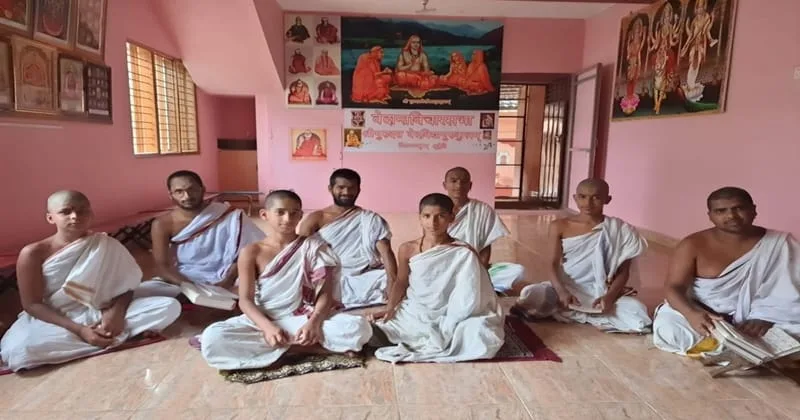
The Vedas, one of the world’s oldest and most enduring cultural traditions, encompass various texts and interpretations. The Rig Veda is a collection of sacred hymns, while the Samaveda arranges hymns from the Rig Veda and other sources into musical compositions. The Yajur Veda contains prayers and sacrificial formulas used by priests, and the Atharva Veda includes mantras to ward off evil. The Vedas not only illuminate the history of Hinduism but also offer valuable insights into the early development of artistic, scientific, and philosophical concepts, including the concept of zero.
The tradition of Vedic chanting, including the Samaveda, has been globally recognised for its cultural significance. In 2008, UNESCO inscribed the Vedic chanting from India on the Representative List of the Intangible Cultural Heritage of Humanity. The Rig Veda was also included in the UNESCO Memory of the World Register in 2007, further highlighting the importance of the Vedic tradition on the global stage.
The Origin
The foundational fabric of Sanatana Dharma and its practices has evolved from the Vedic tradition. Bhagawan Vedavyasa organised the immense body of Vedic wisdom into four distinct Vedas: Rig, Yajur, Atharva, and Sama. Before this earnest effort, sages such as Vishwamitra, Vasishta, and Vamadeva had realised and composed many of the hymns that form the core of these scriptures. Vedavyasa imparted the Vedic knowledge to his five principal disciples: Paila (Rig Veda), Vaisampayana (Yajur Veda), Jaimini (Sama Veda), Subantu (Atharva Veda), and Romaharshana (Itihasa and Puranas). These disciples later enriched the tradition through their interpretations and commentaries. Thanks to the contributions of Vedavyasa and his disciple Jaimini, we have the Samaveda in its current form.
Meaning of “Sama”
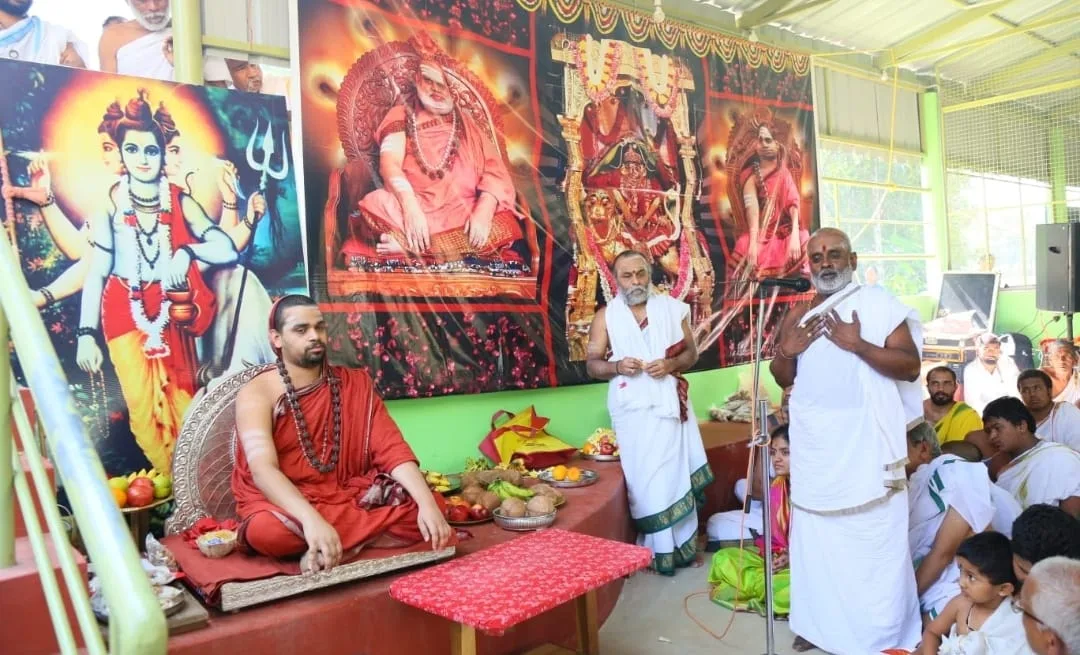
The word “Sama” is commonly understood to mean “Stuti” or a musical composition in the form of praise. This establishes the Samaveda’s unique and close connection with music, a feature scholars have long appreciated and celebrated.
Panini derives the word “Sama” from the root “sam,” meaning “to soothe or provide comfort.” This interpretation suggests that the melodies of the Samaveda, whether chanted or heard, have a calming effect, soothing the heart and bringing peace to the mind. Another derivation traces the word to the root “syati,” meaning “to destroy worries,” emphasising the Veda’s power to alleviate mental distress through its musical harmony. Alternatively, some associate “syati” with “sorrow” or “pain,” implying that mastering the Samaveda is a challenging and rigorous endeavour. Additionally, the term conveys that the gods are delighted by the chanting of the Samaveda.
In Bhagavadgita Chapter 10 verse 22, Sri Krishna says.
वेदानां सामवेदोऽस्मि meaning “Of the Vedas I am the Sama Veda.”
Samhita and recensions
According to Patanjali’s Mahabhashya, the Samaveda originally had one thousand recensions. Similarly, the Vishnu Purana and Caranavyuha also mention one thousand Sakhas or branches of the Samaveda. However, of these, only three—Jaiminiya, Kauthuma, and Ranayaniya—have been preserved.
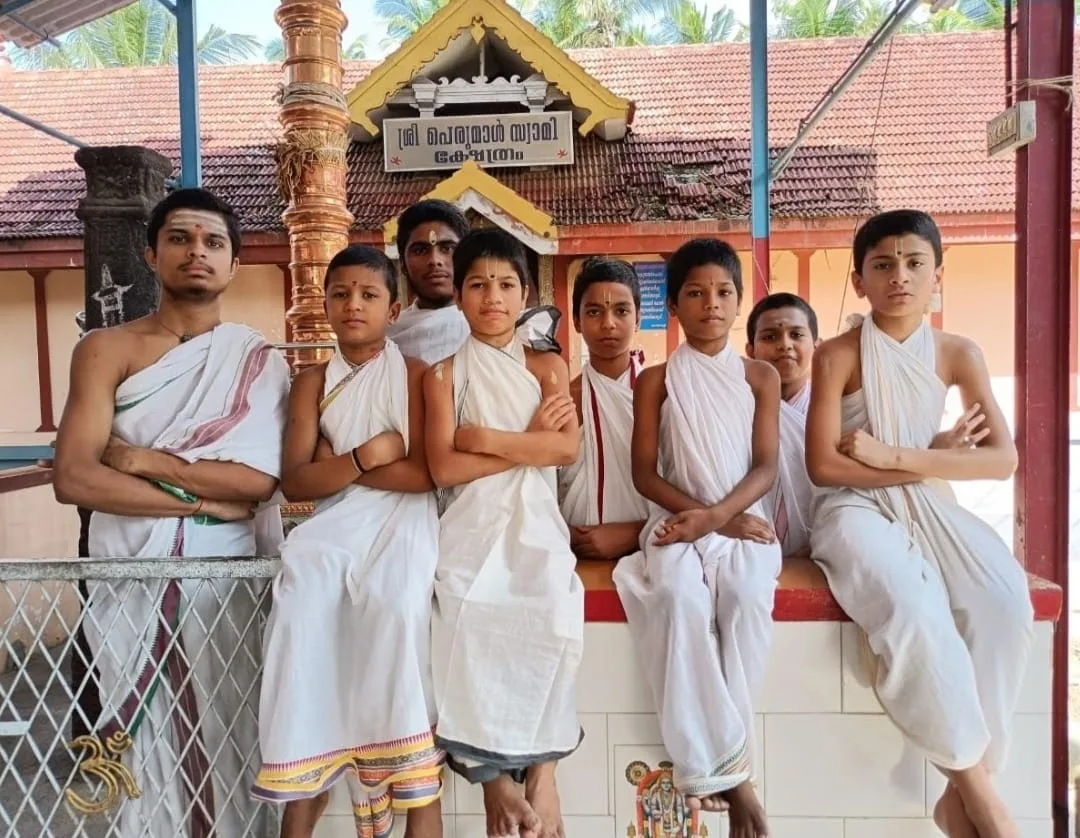
The Kauthuma and Ranayaniya Sakhas of the Samaveda are still practised in regions such as Karnataka, Maharashtra, Andhra Pradesh, and Bengal. Kauthuma is also called Chandoga, while Jaiminiya is known by the alternate name Talavakara. There is minimal textual variation between the Kauthuma and Ranayaniya branches; however, notable differences exist in the accents used during chanting. Compared to the Kauthuma and Ranayaniya Sakhas, the Jaiminiya Sakha differs significantly in the arrangement of its text, the sequence of ṛks (hymns), the division of chapters, and the style of chanting. The Jaiminiya Sakha has two primary branches: one followed by the Namboothiris of Kerala and the other practised by Tamil Brahmins.
Samaveda Samhitha has 1875 verses and 1771 verses from the Rig Veda. Only 99 verses in the Sama Veda are not found in Rig Veda, thus regarded to be of Sama Veda itself.
The Gana rendition
Dr CM Neelakhandan is a former Professor of Sanskrit Sahithya, Sri Sankaracharya Sanskrit University Kalady, Ernakulum, Kerala. In the last five decades, his area of research has been the Sama Veda, particularly that of Namboothiris of Kerala. He observes that the oral Gana tradition of the Samaveda is highly distinctive, intricate, and deeply musical. The methods of oral chanting vary slightly across the existing Sakhas—Jaiminiya, Kauthuma, and Ranayaniya. Additionally, regional differences influence the chanting traditions, svaras (musical notes), and accentual nuances. The Kerala Namboothiris, for instance, have a unique style of chanting the Samaveda that is not observed elsewhere.
Regional presence
In Karnataka’s Gokarna and Uttara Kannada districts, Samaveda scholars adhere to the Ranayaniya and Jaimini traditions. Vidwan Rama Murthy Shrouthi, a revered Sama Veda guru, runs Sri Gurudatta Vedavidhya Gurukulam, a traditional Vedapatashala on the banks of the Tungabhadra river near Sringeri in Karnataka. Under his mentorship, thousands of students have mastered the Samaveda and continue to practice across Bharat. Specialising in the Kauthuma Shakha, he currently trains twelve dedicated disciples.
In Bengaluru, Shri Kadaba Sheshanna, along with Shri Gowripathi, founded Drahyana Prathisthana in 1980 to make the Samaveda Samhita and Prayoga texts accessible in Kannada, which were previously available only as handwritten copies. Over two decades, they published over 15 books, including the Samhitas with Sayana Bhashya, Vidhi texts, Prayogas, and Naradiya Shiksha. These publications provided contextual meanings for all mantras used in rituals, emphasising the significance of the Prayogas. After Shri Sheshanna passed away at the age of 95, his legacy continues through younger Samavedins who are republishing his works, presenting Sama Veda Suktas on YouTube, and developing an exhaustive website featuring Samaveda content, including texts and audio resources. Udipi, Tirupati, and Tanjavoor in Tamil Nadu have Vedapatashalas teaching Samaveda down south.
Kerala-the losing roots
Twenty-one Namboothiri families traditionally practised the Samaveda in Kerala, primarily in Central and Southern Kerala. However, aside from five families in Panjal village of Thrissur district, the others ceased this practice years ago. Notably, in 1975 and 2011, this village hosted the world’s oldest living Vedic ritual, Athirathram, marking a significant cultural event.
Among these families, descendants of one such family, Dr. Sivakaran and his brother Krishnan from the Tottam family, are now Kerala’s remaining Namboothiri Sama Veda practitioners. Dr Sivakaran, who runs a Vedapatashala with four students currently pursuing their studies, expresses concern over finding disciples from authorised families.
Aware of the looming extinction of Kerala Namboothiri Sama Veda chanting, Dr. C.M. Neelakhandan, then a professor at Sri Sankaracharya University, initiated audio and video recordings in 1995 under the university’s aegis at Kalady, documenting the expertise of the five remaining Vedic practitioners, all in their 80s and 90s.
Following his retirement, Dr. KA Ravindran took over the project and completed it in 2015. The digitally recorded Samaveda chanting is now preserved and available upon request from Sri Sankaracharya University.
Dr. K. A. Ravindran initially published the first edition of the Jaiminiya Samaveda of Kerala Namboothiris in Malayalam script, featuring an extensive study and introduction in Malayalam. Later, he expanded the work with Dr Neelakhandan to include the text in Nagari script, an English transliteration, and a simplified English translation of the Mantras.
In the village of Kodunthirappully near Palakkad, Kerala, a Vedapatashala operates following the Jaiminiya Samaveda tradition of Tamil heritage. Vidwan Shailesh Deshpande, originally from Maharashtra, has ten disciples training in the Vedapatashala established 22 years ago.
Time for action
Vidwan Ramamurthy Shrouthi voices a common concern regarding the lack of support for the remaining Vedapatashalas and the declining number of enrolled students. “Students fear that Vedic learning will not provide a sustainable livelihood in the future. Without active government support and a serious commitment to reviving the Vedas, it is challenging for individuals to achieve this independently,” he laments. It is a pressing call to act immediately, lest the unbroken oral tradition of the Vedic heritage is lost forever.