Uttarakhand: Waqf Board properties surge to over 5,000, raising concerns over demographic and cultural shifts
September 6, 2026
  • Read Ecopy
  • Circulation
  • Advertise
  • Careers
  • About Us
  • Contact Us
Android AppiPhone AppArattai
Organiser
  • ‌
  • Bharat
    • Assam
    • Bihar
    • Chhattisgarh
    • Jharkhand
    • Maharashtra
    • View All States
  • World
    • Asia
    • Europe
    • North America
    • South America
    • Africa
    • Australia
  • Editorial
  • International
  • Opinion
  • RSS @ 100
  • More
    • Op Sindoor
    • Analysis
    • Sports
    • Defence
    • Politics
    • Business
    • Economy
    • Culture
    • Special Report
    • Sci & Tech
    • Entertainment
    • G20
    • Azadi Ka Amrit Mahotsav
    • Vocal4Local
    • Web Stories
    • Education
    • Employment
    • Books
    • Interviews
    • Travel
    • Law
    • Health
    • Obituary
  • Subscribe
    • Subscribe Print Edition
    • Subscribe Ecopy
    • Read Ecopy
  • ‌
  • Bharat
    • Assam
    • Bihar
    • Chhattisgarh
    • Jharkhand
    • Maharashtra
    • View All States
  • World
    • Asia
    • Europe
    • North America
    • South America
    • Africa
    • Australia
  • Editorial
  • International
  • Opinion
  • RSS @ 100
  • More
    • Op Sindoor
    • Analysis
    • Sports
    • Defence
    • Politics
    • Business
    • Economy
    • Culture
    • Special Report
    • Sci & Tech
    • Entertainment
    • G20
    • Azadi Ka Amrit Mahotsav
    • Vocal4Local
    • Web Stories
    • Education
    • Employment
    • Books
    • Interviews
    • Travel
    • Law
    • Health
    • Obituary
  • Subscribe
    • Subscribe Print Edition
    • Subscribe Ecopy
    • Read Ecopy
Organiser
  • Home
  • Bharat
  • World
  • Operation Sindoor
  • Editorial
  • Analysis
  • Opinion
  • Culture
  • Defence
  • International Edition
  • RSS @ 100
  • Magazine
  • Read Ecopy
Home Bharat

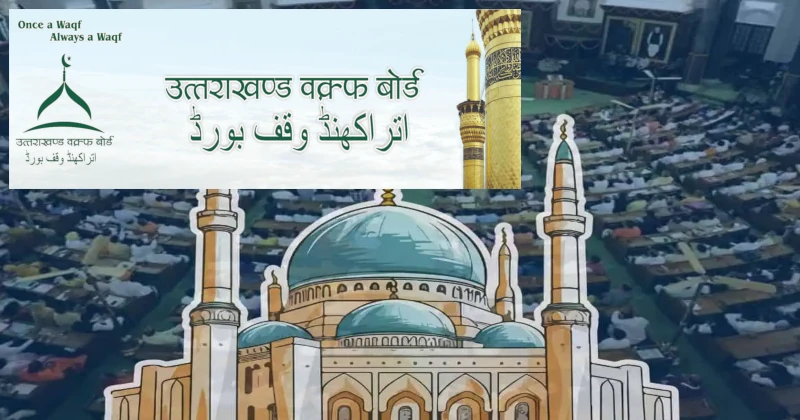
Uttarakhand: Waqf Board properties surge to over 5,000, raising concerns over demographic and cultural shifts

The rapid increase in Waqf Board properties in Uttarakhand, now surpassing 5,000, has raised concerns over a shifting demographic and cultural landscape. Critics fear this growth, alongside encroachments on government land, could lead to long-term political and social challenges in the state

WEBDESKWEBDESK
Nov 12, 2024, 07:30 pm IST
inBharat, Uttarakhand
Follow on Google News
Facebook
Twitter
WhatsAppTelegramEmail

Uttarakhand, traditionally known as “Devbhoomi” (Land of the Gods), has long been a region rich in religious significance, attracting millions of pilgrims annually to its temples, shrines, and spiritual landmarks. However, in recent years, the state has seen an unexpected and rapid increase in Waqf Board properties, sparking a heated debate over its demographic, political, and cultural implications. These changes are now being framed as part of a broader shift in the religious and cultural fabric of the region, which some critics believe could lead to future social and political challenges.

Doubling of Waqf Board properties in two decades

The Uttarakhand Waqf Board, responsible for managing properties belonging to the Muslim community, was established in 2003. At that time, the Waqf Board inherited approximately 2,078 properties from the Uttar Pradesh Waqf Board, which included mosques, madrasas, graveyards, and other religious institutions. However, the transfer was not complete — 450 files concerning certain properties were not passed along from the UP Waqf Board, creating disputes over their ownership and management.

Fast forward 21 years, and the number of Waqf Board properties in Uttarakhand has more than doubled, with a total of 5,183 properties now listed. This sharp increase in the number of properties has fueled concerns about the growing influence of these religious sites within the state. In addition to the registered properties, there are also pending cases involving 205 properties currently in local courts. This significant growth of Waqf properties has raised alarms about the potential political and cultural shifts accompanying such changes, especially with regard to the Muslim population in the region.

The distribution of Waqf properties across Uttarakhand reveals a marked difference between urban and rural areas. According to the data, there are notable discrepancies in the number of mosques and graveyards across districts. While urban centers have witnessed an increase in mosques, rural and hilly districts have seen a higher concentration of graveyards.

In some of the state’s hilly areas, the number of mosques remains relatively small. For example, Chamoli has only one mosque, Rudraprayag has just one, and Uttarkashi has one mosque as well. Other districts such as Tehri, Pauri, Almora, Bageshwar, and Pithoragarh report modest numbers of mosques, while the number of graveyards in these districts surpasses that of mosques. On the other hand, more urbanised and populated districts such as Nainital, Haridwar, and Dehradun have experienced a notable increase in mosques. Haridwar alone has 322 mosques under the Waqf Board, while Dehradun and Udham Singh Nagar also report large numbers.

In addition to religious buildings, the Waqf Board in Uttarakhand also oversees a wide array of other properties, including 12 schools, 70 Idgahs (open areas for congregational prayers), 32 Imambaras (places for religious gatherings), 1024 houses, and 1711 shops. Furthermore, agricultural plots and other land parcels have also been registered under the Waqf Board. The sheer scale of these properties points to the growing influence and footprint of the Muslim community in the region.

In addition to the properties listed under the Waqf Board, there is growing concern about the significant number of religious structures — including mosques, madrasas, and graveyards — that are not officially registered with the Board. These properties are believed to have been constructed on government-owned or public land through encroachment or illegal occupation. Some critics allege that powerful land mafias or influential individuals within the Muslim community may have played a role in facilitating these encroachments.

The rise in unregistered religious structures is particularly concerning given the scale of development in the region. Several madrasas, for instance, have been reported to be transforming into mosques over time. The Waqf Board officially lists 100 madrasas, but over 400 other madrasas are reportedly registered with the Madrasa Board. There are also reports of over 201 mazaras (tombs of saints) listed in the Waqf Board. Alarmingly, it is suggested that some of these madrasas and mazaras are evolving into mosques, thus expanding the religious infrastructure in ways that may not always be visible in the official records.

The involvement of influential figures and land mafias in these encroachments, alongside the increasing numbers of unregistered religious properties, has led to accusations of illegal land grabs and irregularities in land management. The issue is further complicated by disputes over whether these properties truly belong to the Waqf Board or whether they are actually government-owned lands being misused or illegally occupied.

The rapid expansion of Waqf properties, coupled with the increasing Muslim population, has sparked fears about potential cultural and political consequences in Uttarakhand. Critics argue that the rise in religious properties — especially mosques, madrasas, and other Islamic institutions — signals a concerted effort to alter the region’s demographic and cultural landscape.

Topics: Waqf BoardUttarakhand Waqf BoardWaqf Board properties
Share
Tweet
SendShareSend
✮ Subscribe Organiser YouTube Channel. ✮
✮ Join Organiser's WhatsApp channel for Nationalist views beyond the news. ✮
Previous News

Once VIP for Congress Govt terrorist Yashin Malik is begging today for mercy

Next News

Unity in Diversity: The path to a unified Bharat 

Related News

Tamil Nadu Assembly

Tamil Nadu: TVK government announces 11 minority welfare measures; Hindu Munnani demands equal treatment

Former Waqf Board CEO B.M. Jamal

Keralam: Complaint against Congress leader, Ex-Waqf Board CEO, over alleged EVM hacking fraud in 2026 election

MP leads nation in Waqf Reforms, appoints two Hindus to State Board

Madhya Pradesh becomes first state to appoint two Hindu members to Waqf Board under new law

Dr Surendra Jain, Joint General secretary, VHP

VHP Demands Audit of Waqf Properties Amid Encroachment Claims: “Land should go to rightful owner,” says Surendra Jain

UDF Government Faces Heat in Kerala as Waqf Board Digs In Over 404-Acre Munambam Land

Munambam Waqf Dispute in Keralam: Opposition slams CM Satheesan for “passing the buck”

Lokayukta complainant attacked over alleged Waqf fund misuse case in Raichur

Waqf Fund Misuse in Karnataka: Whistleblower attacked after filing Lokayukta complaint in Raichur

Load More

Latest News

Rahul Gandhi and Aassan Maulaana (File Photo)

Tamil Nadu: Ex-Congress MLA Aassan Maulaana disqualified for three years by ECI over newspaper advertisement expenses

Representative Image

Jhiram Valley Massacre: Chhattisgarh NIA court convicts all 10 accused, sentencing fixed for September 16

Krishna Janmashtami celebrations in Manipur

Amid conflict, Manipur finds joy in Krishna: Janmashtami celebration through Ras Leela

"SRCC Alumni Are OGs": PM Narendra Modi Leverages Youth Lingo

‘OGs’ and ‘Dhurandhar’: PM Modi brings Gen Z lingo to SRCC centenary celebrations, contrasts pre-2014 era

PM Modi at SRCC

SRCC@100: PM Modi hails India’s Atmanirbharata, manufacturing, startups & national security; Urges youth to dream big

PM Narendra Modi addressing the gathering at SRCC

“Homeopathic pill exposed Dimagi Naxals”: PM Modi addresses SRCC centenary celebrations

Ladakh: 36 dams planned on Indus after Upshi pilot project; Aids to irrigate large tracts of land, a boon to farmers

PM Modi at SRCC

SRCC @100| Sach ki hoonkar ke aage, jhooth ki goonj tikegi nahi: PM Modi slams opposition as India ends fragile 5 tag

PM Narendra Modi addressing the gathering at SRCC

From ‘Glass Full’ vision to centenary milestone: PM Narendra Modi returns to SRCC 13 years later

PM Modi’s metro ride on way to SRCC centenary celebrations; Interacts with Gen Z, connects with aspirations of youth

Load More
  • Privacy
  • Terms
  • Cookie Policy
  • Refund and Cancellation
  • Delivery and Shipping

© Bharat Prakashan (Delhi) Limited.
Tech-enabled by Ananthapuri Technologies

  • Home
  • Search Organiser
  • Bharat
    • Assam
    • Bihar
    • Chhattisgarh
    • Jharkhand
    • Maharashtra
    • View All States
  • World
    • Asia
    • Africa
    • North America
    • South America
    • Europe
    • Australia
  • Editorial
  • Operation Sindoor
  • Opinion
  • Analysis
  • Defence
  • Culture
  • Sports
  • Business
  • RSS @ 100
  • Entertainment
  • More ..
    • Sci & Tech
    • Vocal4Local
    • Special Report
    • Education
    • Employment
    • Books
    • Interviews
    • Travel
    • Health
    • Politics
    • Law
    • Economy
    • Obituary
  • Subscribe Magazine
  • Read Ecopy
  • Advertise
  • Circulation
  • Careers
  • About Us
  • Contact Us
  • Policies & Terms
    • Privacy Policy
    • Cookie Policy
    • Refund and Cancellation
    • Terms of Use

© Bharat Prakashan (Delhi) Limited.
Tech-enabled by Ananthapuri Technologies