Brihadeeswara Temple: The chola dynasty’s 1000-year-old masterpiece that defies time, gravity, and imagination
December 13, 2025
  • Read Ecopy
  • Circulation
  • Advertise
  • Careers
  • About Us
  • Contact Us
Android AppiPhone AppArattai
Organiser
  • ‌
  • Bharat
    • Assam
    • Bihar
    • Chhattisgarh
    • Jharkhand
    • Maharashtra
    • View All States
  • World
    • Asia
    • Europe
    • North America
    • South America
    • Africa
    • Australia
  • Editorial
  • International
  • Opinion
  • RSS @ 100
  • More
    • Op Sindoor
    • Analysis
    • Sports
    • Defence
    • Politics
    • Business
    • Economy
    • Culture
    • Special Report
    • Sci & Tech
    • Entertainment
    • G20
    • Azadi Ka Amrit Mahotsav
    • Vocal4Local
    • Web Stories
    • Education
    • Employment
    • Books
    • Interviews
    • Travel
    • Law
    • Health
    • Obituary
  • Subscribe
    • Subscribe Print Edition
    • Subscribe Ecopy
    • Read Ecopy
  • ‌
  • Bharat
    • Assam
    • Bihar
    • Chhattisgarh
    • Jharkhand
    • Maharashtra
    • View All States
  • World
    • Asia
    • Europe
    • North America
    • South America
    • Africa
    • Australia
  • Editorial
  • International
  • Opinion
  • RSS @ 100
  • More
    • Op Sindoor
    • Analysis
    • Sports
    • Defence
    • Politics
    • Business
    • Economy
    • Culture
    • Special Report
    • Sci & Tech
    • Entertainment
    • G20
    • Azadi Ka Amrit Mahotsav
    • Vocal4Local
    • Web Stories
    • Education
    • Employment
    • Books
    • Interviews
    • Travel
    • Law
    • Health
    • Obituary
  • Subscribe
    • Subscribe Print Edition
    • Subscribe Ecopy
    • Read Ecopy
Organiser
  • Home
  • Bharat
  • World
  • Operation Sindoor
  • Editorial
  • Analysis
  • Opinion
  • Culture
  • Defence
  • International Edition
  • RSS @ 100
  • Magazine
  • Read Ecopy
Home Bharat

Brihadeeswara Temple: The chola dynasty’s 1000-year-old masterpiece that defies time, gravity, and imagination

The Brihadeeswara Temple, built by Rajaraja Chola I in 1010 AD, is a 1000-year-old architectural marvel that showcases the brilliance of Dravidian craftsmanship and Chola-era innovation. This UNESCO World Heritage Site stands as a testament to ancient engineering, with its towering structure, intricate sculptures, and mysterious underground passages

WEBDESKWEBDESK
Oct 15, 2024, 09:00 am IST
in Bharat, Culture, Tamil Nadu
Follow on Google News
FacebookTwitterWhatsAppTelegramEmail

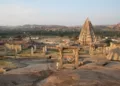
Rising majestically over the ancient city of Thanjavur, Tamil Nadu the Brihadeeswara Temple is a symbol of the Chola dynasty’s artistic genius, architectural innovation, and deep devotion to Bhagwan Shiva. Built in 1010 AD by Rajaraja Chola I, this UNESCO World Heritage Site, also known as Peruvudaiyar Kovil, remains one of the greatest architectural wonders of the world, captivating visitors with its sheer scale, craftsmanship, and intriguing mysteries.

From its towering vimana to its underground passages, the temple is a marvel of design and engineering that has stood the test of time for over 1000 years. As a living testament to the might and ingenuity of the Cholas, the Brihadeeswara Temple continues to inspire awe, even in the modern era.

The sheer scale of the Brihadeeswara Temple is staggering. At 216 feet, the temple’s main tower, or vimana, was one of the tallest man-made structures in the world at the time of its construction. To put this into perspective, when it was completed, no other temple in India came close to its monumental size. In fact, it remained the largest temple complex in India for centuries.

One of the most astounding aspects of the temple’s construction is its method. The entire structure was built using an interlocking system where massive blocks of granite were fitted together without any mortar or binding material. Despite being exposed to the elements and surviving six earthquakes over the last millennium, the temple remains as steady as ever, with zero degree inclination. When compared to other structures like Big Ben or the Leaning Tower of Pisa—both of which show signs of tilting—this feat becomes even more extraordinary.

The temple’s construction involved the use of 130,000 tons of granite, which had to be transported from quarries located 60 kilometers away. An army of 3,000 elephants was employed to move these colossal stones, showcasing the scale and ambition of the project. What’s more, despite the temple’s size, no foundation was dug—a revolutionary feat of engineering that has left historians and architects puzzled.

Perhaps the most iconic feature of the Brihadeeswara Temple is the enormous kumbam (the bulbous apex structure) that sits atop the main tower. Weighing an astonishing 80 tons, the kumbam is carved from a single block of granite. How this massive stone was transported to the top of the 216-foot tower has been the subject of debate for centuries.

Some suggest that levitation technology was used, a theory that has sparked numerous myths and legends. However, the more accepted theory involves the construction of a massive 6.5-kilometer-long ramp, which extended from the plains to the top of the tower. Elephants were likely used to haul the stone up the ramp—a feat that mirrors the techniques used in building the Great Pyramids of Giza. This method, though seemingly simple, was a remarkable engineering solution, reflecting the ingenuity of the Chola architects.

Adding to the temple’s mystique are the many underground passages that are said to lie beneath the temple complex. These passages, most of which have been sealed off, are believed to have served as escape routes for the Chola royals in times of danger. According to local legends, there could be as many as 100 underground tunnels snaking beneath the temple grounds. While these passages remain unexplored, their existence has added to the temple’s aura of intrigue and mystery.

Another awe-inspiring feature of the temple is the gigantic statue of Nandi, the sacred bull of Bhagwan Shiva. Standing 13 feet tall and stretching 16 feet wide, the statue is carved from a single stone, making it one of the largest monolithic Nandi statues in India. This formidable sculpture greets visitors as they approach the temple, setting the tone for the grandeur that awaits inside.

The Brihadeeswara Temple is not just a religious structure; it is also a testament to the wealth and power of the Chola dynasty. Inscriptions found on the temple walls detail the vast riches that were offered to the temple, including gold, jewels, and silver. Records also mention 400 devadasis—female dancers dedicated to Bhagwan Shiva—who performed sacred dances within the temple complex.

The temple’s frescoes and murals, particularly those depicting Rajaraja Chola I, are some of the most important surviving examples of Chola-era painting. These vivid artworks not only depict the king’s military conquests and divine visions but also offer a window into the everyday lives and rituals of the Chola period. Though some murals were later altered by the Nayaka rulers in the 17th century, the surviving fragments provide a valuable glimpse into the temple’s history.

The Brihadeeswara Temple set a new standard for South Indian temple architecture. Prior to its construction, temple complexes were smaller and less ornate. With Brihadeeswara, the Cholas introduced a new era of grand temple design, characterized by larger and more elaborate gopurams (gateways) that eventually became the hallmark of Dravidian temples.

The scale of the sculptures and the architectural features of the temple also reflect a shift in cultural and religious expression. The temple’s towering shrine, heavy doorways, and intricate sculptures marked a move towards a more monumental and symbolic representation of devotion to Bhagwan Shiva.

While many ancient structures have fallen into ruin, the Brihadeeswara Temple remains a “living” temple, where daily rituals and prayers are still performed. Despite the passage of a thousand years, the temple’s spiritual energy remains undiminished, attracting pilgrims, tourists, and scholars from across the world.

Designated as a World Heritage Site in 1987, along with the Gangaikonda Cholapuram and Airavatesvara temples, the Brihadeeswara Temple stands as a proud symbol of Tamil heritage and the lasting legacy of the Chola Empire. Its architectural brilliance and the mysteries it holds continue to capture the imagination of all who visit, making it not just a historical site, but a timeless wonder.

Rajaraja Chola I envisioned a structure that would transcend time, and the Brihadeeswara Temple has fulfilled that vision. From its awe-inspiring scale to its innovative construction techniques, the temple is a marvel of human achievement. It has stood as a silent witness to the rise and fall of empires, the march of time, and the unbroken continuity of faith.

For over a thousand years, the Brihadeeswara Temple has defied time, standing as a beacon of Chola ingenuity and devotion.

Topics: UNESCO world heritage siteThanjavurBrihadeeswara TempleRajaraja Chola IChola dynasty
ShareTweetSendShareSend
✮ Subscribe Organiser YouTube Channel. ✮
✮ Join Organiser's WhatsApp channel for Nationalist views beyond the news. ✮
Previous News

Odisha: Radha-Damodar Besha of Bhagwan Jagannath at Puri Mandir; Celebration of divine love of Radha & Bhagwan Krishna

Next News

Red Terror: Maoist couple carrying a cumulative reward of Rs 10 lakh surrender before police in Gadchiroli

Related News

Matter of immense joy": PM Modi as UNESCO's 20th Intangible Cultural Heritage session commences in India

“Matter of immense joy”: PM Modi as UNESCO’s 20th Intangible Cultural Heritage session commences in India

India to lead the world in living heritage: Red Fort set to host 20th UNESCO ICH committee Session

Representative image by AI

Tamil Nadu: Fifteen students detained after 12th standard student dies after brutal attack by schoolmates in Thanjavur

India lights up UNESCO: Deepawali nominated for Intangible Heritage list amid global spotlight

103 gold coins from the 13th-century Chola-Pandya era unearthed at Kovilur Sivan Mandir

Historic Discovery in Tamil Nadu: 103 Chola-Pandya gold coins found during Kovilur Sivan Mandir restoration

An ASI team at work at Veerakurichi hillock near Kambur in Madurai district

Tracing Tamil Roots: ASI epigraphists unearth inscriptions decoding Chola kings’ patronage & land grants

Load More

Comments

The comments posted here/below/in the given space are not on behalf of Organiser. The person posting the comment will be in sole ownership of its responsibility. According to the central government's IT rules, obscene or offensive statement made against a person, religion, community or nation is a punishable offense, and legal action would be taken against people who indulge in such activities.

Latest News

Prime Minister Narendra Modi and US President Donald Trump

PM Modi-President Trump phone call: Underscores strategic pragmatism by India and geopolitical rectification by the US

RSS Sarsanghchalak Dr. Mohan Bhagwat unveiled the grand statue of Swatantrayaveer Savarkar and inaugurated the ‘Veer Savarkar Prerna Park’ in the Andaman and Nicobar Islands.

Legacy of Veer Savarkar calls for unity, not division: RSS Sarsanghchalak Dr Mohan Bhagwat at Andaman

Representative Image

India and Greece holds maiden Maritime Security Dialogue; Explores deeper cooperation across key sectors

First digital Census in 2027: Cabinet clears Rs 11,718-crore plan, caste enumeration included

Representative Image of Maoists

Chhattisgarh: 10 Maoists carrying cumulative reward of Rs 33 lakhs surrender in Sukma

Union Home Minister Amit Shah

Amit Shah calls Andamans ‘sacred land of sacrifice’ as Port Blair marks 115 years of Savarkar’s ‘Sagara Pran Talmalala’

Accused in the Zubeen Garg murder case

Zubeen Garg Murder Case: Assam police SIT submits 2500 pages chargesheet; Invokes murder charges against 4 accused

Lieutenant Governor Manoj Sinha handed over appointment letters to 41 Next of Kins (NoKs) of victims of terrorism

J&K: LG hands over compassionate appointment letters to next of kins of terror victim families

Former Pakistan ISI Chief Faiz Hameed

Authoritarian rule of Pakistan military continues: Former ISI Chief Faiz Hameed sentenced to 14 years imprisonment

Jal Shakti Minister C.R. Patil Launches Sujalam Bharat App

Jal Shakti Minister launches Sujalam Bharat App to transform digital governance of rural water supply across Bharat

Load More
  • Privacy
  • Terms
  • Cookie Policy
  • Refund and Cancellation
  • Delivery and Shipping

© Bharat Prakashan (Delhi) Limited.
Tech-enabled by Ananthapuri Technologies

  • Home
  • Search Organiser
  • Bharat
    • Assam
    • Bihar
    • Chhattisgarh
    • Jharkhand
    • Maharashtra
    • View All States
  • World
    • Asia
    • Africa
    • North America
    • South America
    • Europe
    • Australia
  • Editorial
  • Operation Sindoor
  • Opinion
  • Analysis
  • Defence
  • Culture
  • Sports
  • Business
  • RSS @ 100
  • Entertainment
  • More ..
    • Sci & Tech
    • Vocal4Local
    • Special Report
    • Education
    • Employment
    • Books
    • Interviews
    • Travel
    • Health
    • Politics
    • Law
    • Economy
    • Obituary
  • Subscribe Magazine
  • Read Ecopy
  • Advertise
  • Circulation
  • Careers
  • About Us
  • Contact Us
  • Policies & Terms
    • Privacy Policy
    • Cookie Policy
    • Refund and Cancellation
    • Terms of Use

© Bharat Prakashan (Delhi) Limited.
Tech-enabled by Ananthapuri Technologies