Ancient India: A golden age of women’s power
June 24, 2026
  • Read Ecopy
  • Circulation
  • Advertise
  • Careers
  • About Us
  • Contact Us
Android AppiPhone AppArattai
Organiser
  • ‌
  • Bharat
    • Assam
    • Bihar
    • Chhattisgarh
    • Jharkhand
    • Maharashtra
    • View All States
  • World
    • Asia
    • Europe
    • North America
    • South America
    • Africa
    • Australia
  • Editorial
  • International
  • Opinion
  • RSS @ 100
  • More
    • Op Sindoor
    • Analysis
    • Sports
    • Defence
    • Politics
    • Business
    • Economy
    • Culture
    • Special Report
    • Sci & Tech
    • Entertainment
    • G20
    • Azadi Ka Amrit Mahotsav
    • Vocal4Local
    • Web Stories
    • Education
    • Employment
    • Books
    • Interviews
    • Travel
    • Law
    • Health
    • Obituary
  • Subscribe
    • Subscribe Print Edition
    • Subscribe Ecopy
    • Read Ecopy
  • ‌
  • Bharat
    • Assam
    • Bihar
    • Chhattisgarh
    • Jharkhand
    • Maharashtra
    • View All States
  • World
    • Asia
    • Europe
    • North America
    • South America
    • Africa
    • Australia
  • Editorial
  • International
  • Opinion
  • RSS @ 100
  • More
    • Op Sindoor
    • Analysis
    • Sports
    • Defence
    • Politics
    • Business
    • Economy
    • Culture
    • Special Report
    • Sci & Tech
    • Entertainment
    • G20
    • Azadi Ka Amrit Mahotsav
    • Vocal4Local
    • Web Stories
    • Education
    • Employment
    • Books
    • Interviews
    • Travel
    • Law
    • Health
    • Obituary
  • Subscribe
    • Subscribe Print Edition
    • Subscribe Ecopy
    • Read Ecopy
Organiser
  • Home
  • Bharat
  • World
  • Operation Sindoor
  • Editorial
  • Analysis
  • Opinion
  • Culture
  • Defence
  • International Edition
  • RSS @ 100
  • Magazine
  • Read Ecopy
Home Bharat

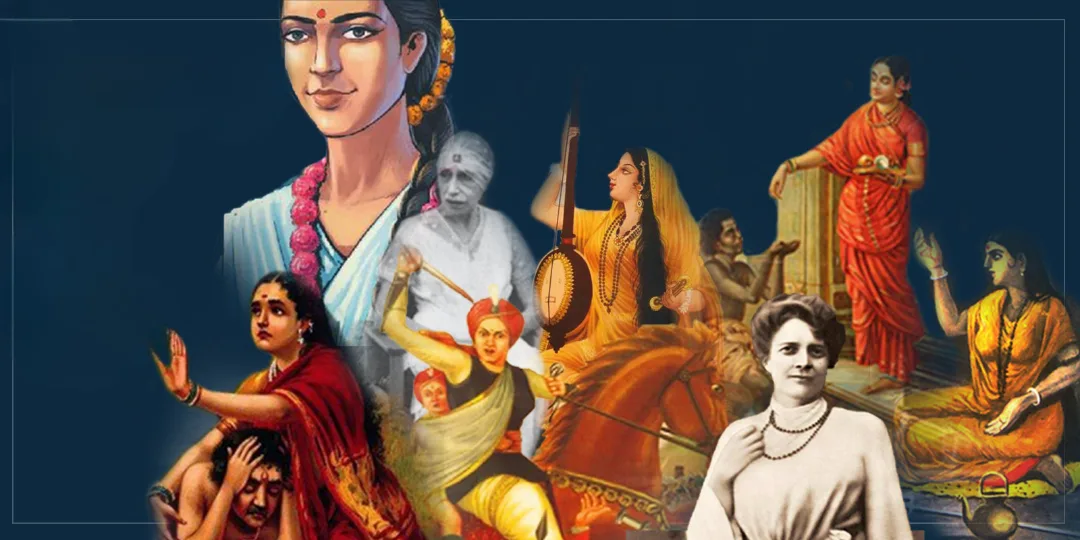
Ancient India: A golden age of women’s power

There is evidence of women engaging in trade in the Deccan region in the first century BCE. A seal bearing the name of a woman has been recovered from this region, indicating that women engaged in trade during this period. Even during the Chola dynasty, women held respectable positions in South India. They held administrative positions

Shubham KewaliyaShubham Kewaliya
Mar 8, 2026, 08:30 am IST
in Bharat, Analysis, Opinion, Culture
Follow on Google News
FacebookTwitterWhatsAppTelegramEmail

Women’s empowerment is a pressing issue in the 21st century. It’s heartening to note that women’s participation has been increasing in every field in the past few decades, but it still doesn’t seem fair to say that women and men are at completely equal levels today.

India is one of the world’s oldest civilizations. Was the status of women in India secondary from the very beginning, or was the situation different in ancient times? Indian society has practices like Sati, the ghunghat, etc. Were these evils prevalent in India since the ancient times? It is essential to understand the truth about both aspects.

India’s earliest civilization flourished 5,000 years ago on the banks of the Saraswati and Indus rivers. The archaeological remains from this civilization indicate that women were held in a respectable position during that period. Among the human terracotta figurines found at various sites of this civilization, the largest number are of women. These figurines have been unanimously identified as Mother Goddesses. Many scholars even believe that the society was matriarchal. These figurines of Mother Goddess depict both gentle and fierce forms. Their large number indicates that women enjoyed a prominent presence in society.

It is also worth noting that India’s oldest text, the Rigveda, describes the creation of Vedic hymns by a woman named Ghosha. This indicates that women were also learned. Chariots and swords were found alongside women’s burials at the Sinauli archaeological site, which came to light a few years ago. This proves that 4,000 years ago, Indian women were likely participating in warfare alongside men.

After the second urbanization of India (600 BCE), various dynasties ruled the subcontinent. One of the most famous was the Satavahana dynasty. Satavahana rulers used their mothers’ names before their names, such as Gautamiputra Satakarni, Vasishthiputra Pulumavi, etc. Furthermore, a queen from this dynasty, Naganika, built a cave temple at Naneghat, which is mentioned in the inscriptions. All this evidence points to the prestige of women during the Satavahana period. The world-famous Sanchi Stupa also mentions 350 female donors. Most of these women came from ordinary families. This clearly indicates that women in that era possessed their own property and were decision makers.

There is also evidence of women engaging in trade in the Deccan region in the first century BCE. A seal bearing the name of a woman has been recovered from this region, indicating that women engaged in trade during this period. An inscription has been found at Kolar in Karnataka, inscribed in memory of a highly educated woman named Savinirmadhi. At the top of the inscription, Savinirmadhi is depicted holding a manuscript. Both these archaeological evidences indicate the active participation of women in trade and education in ancient India.

Also Read: Cultural Heritage Restored: Thirumangai Alvar bronze returned by Ashmolean Museum to its Mandir in Tamil Nadu

Even during the Chola dynasty, women held respectable positions in South India. They held administrative positions. During the reign of the Chola ruler Aditya I, there is archival evidence of 500 students studying at a gurukul located at Vedal under the guidance of a female teacher named Kanakavira.

Indian society is often alleged of having practiced Sati since the Vedic period. It is noteworthy that the first mention of Sati in India dates back to 510 AD. The wife of a general named Goparaj committed Sati after his martyrdom. This proves that Sati did not exist in India before the sixth century CE. The idea that Sati existed in the Vedic period is a mere fantasy. Women were held in a respectable position during the Vedic period.

As for the issue of veiling, neither the terracotta sculptures of the Saraswati civilization nor the female statues in Khajuraho and other Hindu temples show women wearing veils anywhere. This is clear evidence that the practice of veiling was not a part of Indian culture until the 12th and 13th centuries; it was the influence of medieval invasions. The above archaeological evidence indicates that women enjoyed respect in ancient Indian society. To say that Indian society has discriminated against women since its inception is unfair. The growing gender discrimination in India is the result of external aggression. This Women’s Day let us all try and remove every facet of inequality present in and around us and bring in the glorious period which existed in Ancient India.


Topics: Indus Valley CivilisationWomen Empowermentancient indiaChola dynasty
ShareTweetSendShareSend
✮ Subscribe Organiser YouTube Channel. ✮
✮ Join Organiser's WhatsApp channel for Nationalist views beyond the news. ✮
Previous News

Telangana: 130 Maoists surrender with 124 weapons; Rs 4.18 crore rehabilitation announced, no more guerrilla force

Next News

The Ayatollah and India: A history Congress doesn’t want you to remember

Related News

People practicing Yoga

International Yoga Day: Beyond the mat, rediscovering Yoga’s timeless essence

WB govt has announced two female battalions named after Matangini Hazra and Rani Shiromani

WB: Suvendu govt announces two women SPRF battalions honouring freedom fighters Matangini Hazra & Rani Shiromani

A massive 200-kg Shivling recovered from the waters of the Ganga in Varanasi

Hidden Beneath the Ganga for 2,500 Years? 200 kg Shivling discovery draws thousands of devotees in Kashi

The terracotta dice that challenges historical assumptions and highlights India's millennia-old civilisational heritage

How a 4,500-year-old terracotta dice is reviving the debate on India’s civilisational continuity & Vedic heritage

A flag hoisting ceremony at the Maa Bhagwati Mandir in Ayodhya’s Ram Janmabhoomi complex drew a large gathering of devotees and women

Ayodhya: Dhwajarohan ceremony at Maa Bhagwati Mandir: Sadhvi Ritambara raises issue of Love jihad and cow protection

The Pashupati Seal of the indus valley civilisation and the continuity of India’s shaivite spiritual traditions

Pashupati Seal of Mohenjo-daro: The 4,300-year-old symbol of India’s unbroken spiritual & civilisational continuity

Load More

Latest News

President Droupadi Murmu confers the Padma Shri on former civil servant R.V.S. Mani on June 23, 2026.

Former MHA official RVS Mani honoured with Padma Shri for contributions to internal security

Tamil Nadu: Temple funds only for temple property; TVK govt concedes before Madras High Court

Keralam’s former Industries Secretary, Mohammed Haneesh IAS (Right Side)

Keralam Cashew Scam: Former Industries Secretary Md Haneesh apologises before High Court after contempt proceedings

Tamil Nadu: Assembly Speaker directs all bureaucrats to strictly follow warrant of precedence after Mayor-MLA row

Kamakhya Mandir

Kamakhya Mandir’s Ambubachi Mela: The ancient tradition that honours the menstruation of mother Earth

Amazon in dock for mocking Hindu Gods

Amazon File: From Ganesha to Aryabhata-Has Amazon India become a platform for Anti-Hindu narratives?

The West Bengal Budget 2026–27 aims to drive growth through infrastructure, industry, innovation and welfare

Reimagining Bengal: How the West Bengal Budget 2026–27 seeks to balance growth, welfare & economic transformation

Pratiraksha is Gujarat Police's Aadhaar-based verification platform designed to identify illegal workers and prevent identity fraud in industrial sectors

Pratiraksha: How Gujarat police uses Aadhaar verification to secure industrial workforce against identity fraud

Israel-Iran crisis has highlighted not only shifting dynamics of West Asia but also growing confidence of India's foreign policy

India, Israel and the rise of strategic autonomy in an era of global geopolitical realignment

Saleem and Jaleel arrested in forced religious conversion case

Karnataka Conversion Case: Forced conversion of Hindu woman and minor son sparks outrage; Saleem and Jaleel arrested

Load More
  • Privacy
  • Terms
  • Cookie Policy
  • Refund and Cancellation
  • Delivery and Shipping

© Bharat Prakashan (Delhi) Limited.
Tech-enabled by Ananthapuri Technologies

  • Home
  • Search Organiser
  • Bharat
    • Assam
    • Bihar
    • Chhattisgarh
    • Jharkhand
    • Maharashtra
    • View All States
  • World
    • Asia
    • Africa
    • North America
    • South America
    • Europe
    • Australia
  • Editorial
  • Operation Sindoor
  • Opinion
  • Analysis
  • Defence
  • Culture
  • Sports
  • Business
  • RSS @ 100
  • Entertainment
  • More ..
    • Sci & Tech
    • Vocal4Local
    • Special Report
    • Education
    • Employment
    • Books
    • Interviews
    • Travel
    • Health
    • Politics
    • Law
    • Economy
    • Obituary
  • Subscribe Magazine
  • Read Ecopy
  • Advertise
  • Circulation
  • Careers
  • About Us
  • Contact Us
  • Policies & Terms
    • Privacy Policy
    • Cookie Policy
    • Refund and Cancellation
    • Terms of Use

© Bharat Prakashan (Delhi) Limited.
Tech-enabled by Ananthapuri Technologies