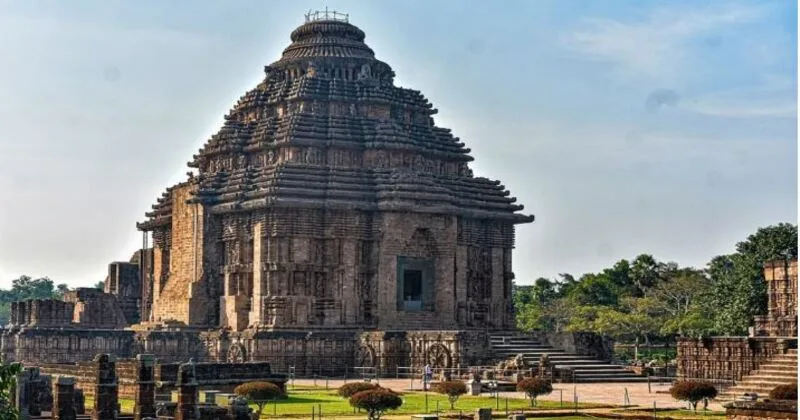
Bhubaneswar: The Archaeological Survey of India (ASI) has initiated a carefully planned operation to remove sand from the Jagamohan (assembly hall) of the iconic Konark Sun Temple. Officials emphasize that the process is being conducted under strict safety and scientific monitoring.
The excavation work, which commenced on the auspicious occasion of Akshaya Tritiya, involves creating a narrow passage through the western wall of the structure to facilitate the manual removal of sand. According to ASI officials, the sand extraction process—inside the Jagamohan, which has been sealed for over 120 years—is expected to be completed in approximately three months.
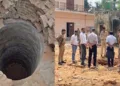
To execute the operation, engineers are constructing a controlled passage measuring about 6 feet by 5 feet between the first and second “pidha” (tiers) of the temple’s western façade. Through this opening, sand will be carefully removed manually to avoid placing stress on the ancient structure. In the initial phase, four skilled workers have engaged in excavation without using heavy machinery. By the fourth day, they had completed digging a section measuring around 2 feet in width and 4 feet in length.
A dedicated monitoring team has been deployed to oversee the process at every stage, ensuring precision and safeguarding the monument’s structural integrity. Engineers have also established a working platform to transport the excavated sand using trolleys, while drilling work is being conducted slowly to minimize vibrations.
The project has received approval from the ASI Director General and technical clearance from the Indian Institute of Technology Madras, which performed a detailed assessment and concluded that removing the sand would not pose any threat to the temple’s stability. Previously, two core drillings were conducted on the western wall using advanced diamond drilling techniques under vibration-free conditions. Two additional core drillings are planned as part of the ongoing structural evaluation.
Historical records indicate that during the British era, sand was filled into the Jagamohan between 1901 and 1904 to prevent the structure from collapsing after it had weakened due to weathering and lightning strikes. The sand was introduced through a tunnel located about 80 feet above the lower level of the first tier and was later sealed with a stone wall.
Over the decades, the sand inside the structure compacted unevenly, creating voids and raising concerns about internal stress on the stone blocks and iron beams. Preliminary estimates suggest that several meters of sand accumulated within the chamber, making its removal a highly sensitive and time-consuming task.
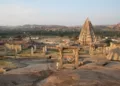
Built in the 13th century by Ganga dynasty king Langula Narasingha Dev I, the Konark Sun Temple is an architectural marvel dedicated to Surya Devata. While the main sanctum and Natya Mandap have collapsed over time, the Jagamohan remains the primary surviving structure of the temple complex.
A UNESCO World Heritage Site and a major tourist attraction, the temple draws millions of visitors each year. Although some conservationists have expressed concerns about the risks involved in removing the sand from such an ancient monument, ASI officials maintain that the operation is being conducted with the utmost caution.
“This is not a routine excavation but a scientific conservation effort aimed at ensuring the long-term stability of the monument,” an ASI official stated.