
The Netherlands on May 16 officially handed over the 11th-century Anaimangalam copper plates to India, marking a major step in the return of historically significant artefacts taken away during the colonial period. The development coincided with Prime Minister Narendra Modi’s visit to the Netherlands during the second leg of his five-nation diplomatic tour.
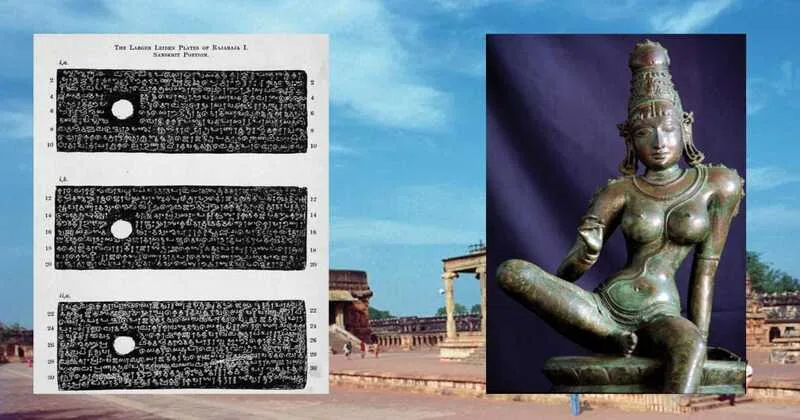
The inscriptions, popularly referred to in Europe as the Leiden Plates, are considered among the most valuable surviving records from the Chola period and had remained in Dutch custody for over a century. Their return followed years of diplomatic discussions involving the Indian government, Dutch authorities and Leiden University, where the artefacts were preserved.
Dating to the reign of Rajaraja Chola I between 985 and 1014 CE, the copper inscriptions record grants of land revenue and taxes to the Chudamani Vihara, a Buddhist monastery established in Nagapattinam by Sri Mara Vijayotunga Varman, ruler of the Srivijaya kingdom in present-day Indonesia.
Insight into Chola maritime influence and religious coexistence
Historians regard the plates as an important source for understanding the maritime networks, trade connections and cultural exchanges that linked South India with Southeast Asia during the height of Chola influence.
The inscriptions also highlight the religious pluralism of the period, documenting support extended by Hindu rulers to Buddhist institutions. Scholars say the records reflect a long-standing Indian tradition of coexistence and patronage across faiths. Researchers have also connected the inscriptions to broader intellectual and cultural interactions across Asia during the medieval period. Historical accounts note that the Buddhist scholar Dipankara Srijana, known as Atisa, travelled to Indonesia, while Chinese pilgrims travelling to Nalanda Mahavihara often passed through Southeast Asia before arriving in India.
The Anaimangalam copper plates are remarkable both for their historical value and physical scale. The collection consists of 21 large and three smaller copper sheets weighing close to 30 kilograms, held together by a circular copper ring bearing the royal Chola seal.
Although the original grant was issued during Rajaraja Chola I’s reign, historians say the inscriptions were later engraved onto copper plates by his son, Emperor Rajendra Chola I, to ensure the decree remained permanently preserved.
Experts describe the inscriptions not simply as administrative records, but as evidence of the cosmopolitan and commercially connected character of medieval South India.
Journey from the Coromandel Coast to Europe
The Chola dynasty rose to prominence after ruler Vijayalaya captured Thanjavur around 850 CE, ushering in one of the most prosperous phases in Tamil history. The era witnessed the construction of major architectural monuments, including the Brihadisvara Temple, commissioned by Rajaraja Chola I toward the end of the 10th century. Dedicated to Bhagwan Shiva, the Mandir remains one of India’s most celebrated architectural landmarks and is recognised as a UNESCO World Heritage Site.
The Chola period also became renowned for its bronze sculptures, admired globally for their artistic sophistication and craftsmanship. Historians believe the copper plates were taken to the Netherlands during Dutch colonial control over the Coromandel Coast in the 18th century. Records suggest the artefacts came into European possession through Dutch official Florentius Camper, reportedly with the assistance of a Christian missionary active in India when Nagapattinam was under Dutch East India Company administration. The Dutch East India Company shifted its Coromandel headquarters from Pulicat to Nagapattinam in 1690, and it was during this period that the inscriptions were moved into Dutch possession.
In 1862, the plates became part of Leiden University’s collections through the estate of Professor Hendrik Arent Hamaker and were subsequently housed within the university library’s Asian archives.
Return after years of diplomatic efforts
For decades, the artefacts remained stored in secure vaults and were largely accessible only to scholars and researchers through special requests. The inscriptions gained wider recognition among Tamil historians, epigraphists and readers through Ponniyin Selvan, the celebrated Tamil historical novel based on the Chola period. India had consistently pursued the return of the plates through diplomatic channels involving the Dutch government and Leiden University.
The restitution process gained momentum after the Netherlands adopted a policy in 2022 dealing with the return of colonial-era artefacts and cultural objects. Subsequent provenance studies carried out by the Independent Colonial Collections Committee and Leiden University Libraries concluded that the Anaimangalam copper plates rightfully belonged in India and should be repatriated. The return of the inscriptions has been widely viewed as a landmark moment in India-Netherlands cultural cooperation and as the restoration of an important part of India’s civilisational heritage.