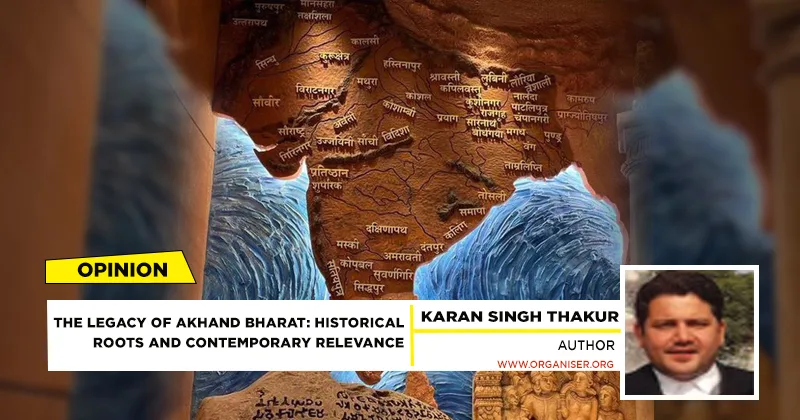
The notion of Akhand Bharat, or “Undivided India,” embodies a profound historical narrative that reflects the subcontinent’s rich cultural heritage and interconnectedness. This concept, which envisions a unified India encompassing its diverse regions and communities, traces its origins back to ancient times when shared values and traditions fostered a sense of collective identity. In the current global context, the legacy of Akhand Bharat holds significant relevance, prompting discussions about national integrity, cultural unity, and the importance of collaboration amidst diversity. As India faces contemporary challenges, revisiting the principles of Akhand Bharat offers valuable insights for promoting harmony and strengthening the bonds that unite its people.
1. Historical Roots of Akhand Bharat
Ancient Civilizations: The concept of Akhand Bharat can be traced back to ancient civilizations that flourished in the Indian subcontinent, including the Indus Valley Civilization and Vedic traditions. These cultures laid the groundwork for a shared heritage.
Epic Narratives: The Mahabharata and Ramayana highlight the cultural and geographical expanse of Bharat, illustrating how ancient kingdoms interacted and influenced one another. Regions mentioned, like Gandhara (modern-day Afghanistan) and Yavana (parts of Iran), indicate that the notion of Bharat extended beyond modern borders.
Southeast Asia (Myanmar, Thailand, Cambodia, Indonesia): The influence of Indian epics the Ramayana deeply shaped the cultural and religious fabric of these regions. Temples, art, dance, and literature from these countries continue to reflect Indian cultural roots, as seen in the Ramayana performances in Malaysia and Wayang Kulit (shadow puppetry) in Indonesia.
Tibet and Akhand Bharat: A Spiritual and Cultural Bond
Tibet has been an integral part of Akhand Bharat’s civilizational landscape, connected through the Silk Route and the spread of Buddhism. The exchange of spiritual knowledge, trade, and cultural practices created a profound bond between India and Tibet, with Indian Buddhist masters like Padmasambhava deeply influencing Tibetan Buddhism. These ties reflect a shared cultural heritage that transcends modern political borders, keeping Tibet and India united through a lasting legacy of spiritual and philosophical exchange.
Cultural Exchange: The spread of Hinduism and Buddhism into Southeast Asia (Indonesia, Malaysia, Thailand, Cambodia) during the first millennium CE demonstrates India’s cultural influence and the interconnectedness of civilizations.
2. Akhand Bharat as a Cultural Reality
Akhand Bharat is not just about political unity but represents the cultural and spiritual oneness that existed across the vast Indian subcontinent and beyond:
Cultural Unity: Ancient India, through its Dharmic philosophies (Hinduism, Buddhism, Jainism), spread its ideas, values, and culture across Asia. The Indian epics, spiritual texts, and even architectural forms became part of the cultural identities of various nations from Afghanistan, Tibet to Cambodia and Malaysia.
Spiritual Integration: The essence of Sanatana Dharma and the teachings of Lord Rama, Lord Krishna, Buddha, and Mahavira transcended territorial boundaries. The spiritual teachings found resonance far beyond the geographic borders of India, helping foster a sense of civilizational unity.
3. Cultural and Religious Spread
Hinduism and Buddhism: The ancient Indian empires (Maurya, Gupta) actively promoted trade and cultural exchange, leading to the establishment of Indian cultural practices in foreign lands. The temples, art, and literature of Southeast Asian nations reflect significant Indian influence.
Angkor Wat: Built in the 12th century, this Cambodian temple dedicated to Lord Vishnu symbolizes the enduring impact of Indian culture and its integration into Southeast Asian society.
Cultural Festivals: Various festivals in Southeast Asia, such as Diwali in Malaysia and the Wayang Kulit (shadow puppet) performances in Indonesia, highlight the continued relevance of Indian traditions.
4. Historical Events and Political Unity
Medieval Period: The establishment of various kingdoms, such as the Cholas and Mughals, continued to reflect a cultural unity that transcended regional boundaries. Despite political fragmentation, the shared cultural ethos of Bharat remained strong.
Colonial Era: British colonial rule introduced new political boundaries, dividing the Indian subcontinent and its people. However, the freedom struggle saw leaders from various regions unite under a common cause, emphasizing the idea of a united India.
5. Partition and Its Impact
The Partition of 1947: The division of British India into India and Pakistan was a watershed moment that shattered the idea of Akhand Bharat. Millions were displaced, and communal tensions arose, leaving lasting scars on the collective memory of the people.
Cultural Resilience: Despite the partition, cultural ties remained strong across the subcontinent. Festivals, cuisine, and shared histories continued to resonate among people on both sides of the border.
6. Modern Perspectives on Akhand Bharat
Political Discourse: In contemporary India, the idea of Akhand Bharat resurfaces in political and cultural discussions, often invoking historical unity and cultural heritage. It reflects aspirations for a cultural renaissance that transcends political boundaries.
Cultural Events: Efforts to revive cultural ties with neighboring countries, such as promoting the Ramayana in Thailand and celebrating Hindu festivals in countries with Indian diaspora, showcase the enduring connection and cultural unity among people.
Southeast Asian Connections: Malaysia’s Hindu temples and celebrations, as well as the Ramayana performances in Thailand, reinforce the idea that Akhand Bharat continues to exist as a cultural reality.
7. The Future of Akhand Bharat
Cultural Diplomacy: Initiatives aimed at enhancing cultural exchanges between India and its neighbors are essential for fostering a sense of unity. This includes promoting tourism, education, and collaborative cultural projects.
Digital Connectivity: The rise of digital platforms allows for the sharing of cultural narratives, art, and traditions across borders, fostering a sense of shared identity and heritage among the Indian diaspora and neighboring countries.
Conclusion
The concept of Akhand Bharat is rooted in the historical, cultural, and spiritual legacy of the Indian subcontinent. From ancient civilizations to contemporary aspirations, the idea encompasses a profound sense of unity that transcends modern political boundaries. While the political landscape has changed, the cultural connections forged over centuries continue to resonate, emphasizing the shared heritage of the peoples of this region. The journey of Akhand Bharat from its historical roots to its modern interpretations illustrates a vibrant tapestry of civilization that remains relevant in today’s globalized world.