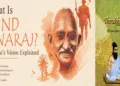

“If we wish to maintain democracy not merely in form, but also in fact, what must we do? The first thing in my judgement we must do is to hold fast to constitutional methods of achieving our social and economic objectives. It means we must abandon the bloody methods of revolution. It means that we must abandon the method of civil disobedience, non-cooperation and satyagraha. When there was no way left for constitutional methods for achieving economic and social objectives, there was a great deal of justification for unconstitutional methods. But where constitutional methods are open, there can be no justification for these unconstitutional methods. These methods are nothing but the Grammar of Anarchy and the sooner they are abandoned, the better for us”. —Dr Babasaheb BR Ambedkar, (in his last speech in Constituent Assembly Debates On November 25, 1949
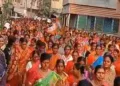
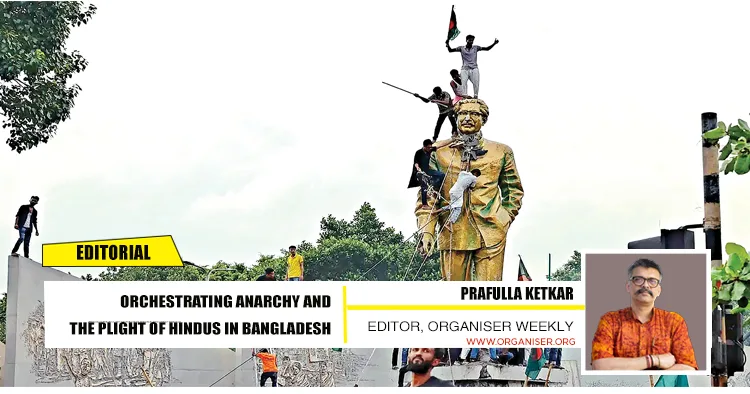
In a ‘black swan’, an unpredictable turn of events started as student protests against the quota system in Bangladesh, resulting in the ouster of Prime Minister Sheikh Hasina, who had secured a fourth consecutive term in the January 7, 2024 elections. The protest was started and labelled as ‘democratic’ and ‘peaceful’ and immediately turned violent, and the apparent target was the minority communities, especially Hindus. According to the Bangladesh Hindu Buddhist Christian Unity Council, after the August 5 dramatic resignation of the Bangladesh Prime Minister, there have been over 200 attacks on Hindus spread over 52 districts, mainly targeting their houses, business establishments and women. Properties, houses and temples belonging to the Hindu community have been burned, looted, or vandalised by the Islamists, taking the benefit of the anarchic situation. Even before the political upheaval, Kajal Roy, a Hindu councillor from the Awami League in Rangpur, was killed along with his nephew on August 4 by the Jihadi elements. If the protests were all about quotas, why are the minorities, especially Hindus, on target? To answer this question, we need to understand the historical context of the issue.
The British first tried to divide Bharat, the Bengal province, on religious lines in 1905 by creating East and West Bengal territories. The entire Bharat fought against it tooth and nail and forced the colonial rule to nullify the unnatural Partition by 1911 with a unified struggle and common slogan of Vande Mataram. The British later successfully used the Muslim League and separate electorate bogie to encourage Islamic fundamentalism. From 1937 to 1947, the Muslim League ruled Bengal, and since then, the situation in the entire region has been of communal onslaught against the Hindu community. The Direct Action Day of August 16, 1946, was the first known starting point of a series of massacres, though the State-sponsored discrimination was started much earlier. After the unplanned Partition of Bharat in 1947, the Eastern front saw a similar kind of violence, forcing migration as happened on the Western front, as both sides were now given to the Muslim population as Pakistan. The focus remained on the Punjab and Jammu-Kashmir side as the number of refugees was, and the resistance against the Islamist violence was also loud.
The Partition was expected to end the Hindu-Muslim animosity and communal violence permanently. On the contrary, in the partitioned parts of Bharat, the Hindu population has been on the receiving end, with a depleting population. In erstwhile East Pakistan, the Barisal Riots and Sitakunda Hindu pilgrims massacre, Rajshahi ethnic cleansings of Hindus in 1962, and post-Hazratbal killings in Jammu-Kashmir 1964 are just a few examples of the continued persecution of Hindus in East Pakistan. In 1971, when the trouble started between East and West Pakistan over the leadership and language issues, the Bengali identity superseded the Islamic identity in the Eastern part, but from Adityapur to Akhira massacres, from Bagbati to Baria and from Satanikhil to Sendia against Hindus were on the receiving end for perpetuating Hindu-Bengali identity in ‘Pakistan’. Pakistani Army, along with the fundamentalist Razakars supported by it, abducted and raped thousands of Hindu women and killed thousands of men. Due to the refugee crisis in the bordering areas, Bharat helped out the Mukti Bahini, the Bangladesh Forces fighting for liberation from Pakistan that transformed East Pakistan into Bangladesh in 1971. Again, the hope that the Hindu-Muslim issue would be settled on the Eastern border remained futile.
Since liberation from Pakistan in 1971, Bangladesh experienced at least 30 military coups and counter-coups until now and also experienced direct military rule from 1977 to 1981 and between 1981 and 1990. Society in general and the Armed Forces in particular remained committed to Islamic fundamentalism and Sharia law, where democracy, Constitution and minority rights do not have any place.
After the assassination of Sheikh Mujib in 1975 by Islamists, declaration of Bangladesh as an Islamic state in 1982, reaction to Ram Janmabhoomi movement in 1989 and 1992, Jamaat-e-Islami (JeI) supported Bangladesh Nationalist Party (BNP) defeating Awami League in 2001, in February 2013, when the International Crimes Tribunal sentenced Delwar Hossain Sayeedi, vice-president of the Jamaat, to death for war crimes committed during the 1971 Bangladesh Liberation War and in October 2021, when a video was circulated where Quran was kept under a temple idol’s feet during the Durga Puja festival, each time Hindus became a whipping boy of the Islamists in Bangladesh.
When they forcefully migrated to Bharat, the Islamists, along with the Communists and Congress, opposed the facilitation of their citizenship in the form of CAA. The same groups would stand by the illegal migration of Bangladeshi and Rohingya Muslims for all the constitutional benefits.
The recent protests stemmed from resentment over a quota system according to which 56 per cent of Government positions in Bangladesh were reserved for various groups, including 30 per cent for the descendants of the 1971 freedom fighters. Awami League being at the forefront of the Bangladesh Liberation War, its supporters remained the beneficiaries of this policy, which the BNP and Jamaat opposed. Meanwhile, Bangladesh became a crucial strategic playground in the US-China rivalry for supremacy in Bay of Bengal. Both powers tried their best to discredit the election process in Bangladesh, and the US used all the diplomatic means to influence the 2019 and 2024 elections.
Fuelling protests in the name of democracy has been the favourite ploy of Western powers. In the end, they ultimately orchestrate anarchy and pave the way for the Islamist-Left combined forces to take over the system. The same pattern is emerging in Bangladesh. The victims are again Hindus.
Another country with a relatively better economic record and stable constitutional process has been destabilised for the strategic interests of global powers. Will it strengthen the democracy and human rights situation? The answer is NO. Only the Islamists will gain space, China will continue to have strategic leverage, and the Army will directly or indirectly call the shots.
Prime Minister Modi, in his Independence Day speech, rightly raised the issue and gave a call for normalcy and to ensure the safety of Hindus, the minorities in Bangladesh. Vishva Hindu Parishad (VHP) is playing a critical role in raising the voice against Hindu atrocities. Rashtriya Swayamsevak Sangh (RSS) has also raised the concern. Various Hindu organisations are protesting internationally for the rights of the global minority, who continue to be victims of the Partition of Bharat. All sections of society need to come together and stand up for the Hindus in Bangladesh. The Government of Bharat and international agencies should also use all diplomatic means to pressurise the interim Government in Bangladesh to protect the minorities. Internally, we should remain vigilant as attempts to fuel the protest industry and discredit elections are also happening in Bharat. Prime Minister said, “As we grow stronger and gain more attention, challenges are bound to increase”. We should not allow external forces to benefit from our internal political differences. As Dr Ambedkar warned in his famous speech, known as ‘Grammar of Anarchy’, when the Constitutional means are available, other protests would lead to anarchy. All democrats should fight this trend of using selective issues, fuelling protests, manipulating media and technology as misinformation tools and challenging democracy in the name of democratic protests. This subversion of electoral democracy through street politics will always be used against Hindus by the Islamist-Left cabal.