How Akhilesh Yadav used Mayawati's social engineering of 2007 to rise from 5 Lok Sabha seats to 37
June 4, 2026
  • Read Ecopy
  • Circulation
  • Advertise
  • Careers
  • About Us
  • Contact Us
Android AppiPhone AppArattai
Organiser
  • ‌
  • Bharat
    • Assam
    • Bihar
    • Chhattisgarh
    • Jharkhand
    • Maharashtra
    • View All States
  • World
    • Asia
    • Europe
    • North America
    • South America
    • Africa
    • Australia
  • Editorial
  • International
  • Opinion
  • RSS @ 100
  • More
    • Op Sindoor
    • Analysis
    • Sports
    • Defence
    • Politics
    • Business
    • Economy
    • Culture
    • Special Report
    • Sci & Tech
    • Entertainment
    • G20
    • Azadi Ka Amrit Mahotsav
    • Vocal4Local
    • Web Stories
    • Education
    • Employment
    • Books
    • Interviews
    • Travel
    • Law
    • Health
    • Obituary
  • Subscribe
    • Subscribe Print Edition
    • Subscribe Ecopy
    • Read Ecopy
  • ‌
  • Bharat
    • Assam
    • Bihar
    • Chhattisgarh
    • Jharkhand
    • Maharashtra
    • View All States
  • World
    • Asia
    • Europe
    • North America
    • South America
    • Africa
    • Australia
  • Editorial
  • International
  • Opinion
  • RSS @ 100
  • More
    • Op Sindoor
    • Analysis
    • Sports
    • Defence
    • Politics
    • Business
    • Economy
    • Culture
    • Special Report
    • Sci & Tech
    • Entertainment
    • G20
    • Azadi Ka Amrit Mahotsav
    • Vocal4Local
    • Web Stories
    • Education
    • Employment
    • Books
    • Interviews
    • Travel
    • Law
    • Health
    • Obituary
  • Subscribe
    • Subscribe Print Edition
    • Subscribe Ecopy
    • Read Ecopy
Organiser
  • Home
  • Bharat
  • World
  • Operation Sindoor
  • Editorial
  • Analysis
  • Opinion
  • Culture
  • Defence
  • International Edition
  • RSS @ 100
  • Magazine
  • Read Ecopy
Home Politics

How Akhilesh Yadav used Mayawati’s social engineering of 2007 to rise from 5 Lok Sabha seats to 37

The origins of social engineering in Uttar Pradesh can be traced back to the Mayawati era of 2007, when she strategically mobilised a coalition of Dalits and Brahmins to consolidate political power. This historical context underscores the enduring influence of social engineering tactics in shaping electoral outcomes in the state

WEBDESKWEBDESK
Jun 5, 2024, 08:15 pm IST
in Politics, Bharat, Uttar Pradesh
Follow on Google News
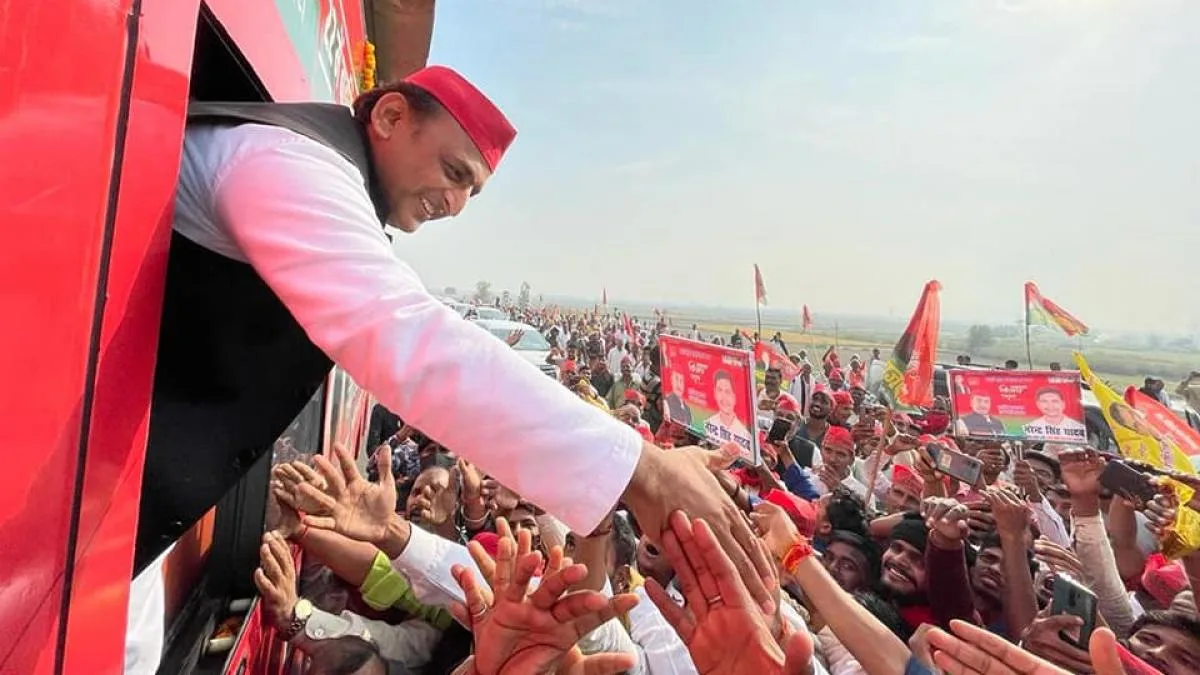
Samajwadi Party chief Akhilesh Yadav (Image Source: India Today)

Samajwadi Party chief Akhilesh Yadav (Image Source: India Today)

FacebookTwitterWhatsAppTelegramEmail

The recent electoral results in Uttar Pradesh have underscored a notable resurgence of social engineering, exerting a significant influence on the outcome and margin of victory for the Bharatiya Janata Party (BJP) in the state. Although the BJP is poised to form the government safely with its alliance partners, the situation in Uttar Pradesh has raised numerous questions, both internally within the party and externally among observers. The sole question remains, ‘What went wrong in UP?’

Akhilesh Yadav’s Samajwadi Party (SP) managed to secure 37 seats in Uttar Pradesh, compared to the BJP’s 33 seats. This is a notable contrast to the 2019 Lok Sabha elections, where the BJP emerged victorious in 62 out of the 80 seats contested in the state. The decline from 62 seats to 33 represents a significant setback for the BJP, prompting a critical analysis of Akhilesh Yadav’s electoral strategy.

The origins of social engineering in Uttar Pradesh can be traced back to the Bahujan Samajwadi Party’s Mayawati era of 2007, when she strategically mobilised a coalition of Dalits and Brahmins to consolidate political power. This historical context underscores the enduring influence of social engineering tactics in shaping electoral outcomes in the state.

Building on this model, the BJP effectively employed social engineering tactics in the 2014 and 2019 elections. However, in the recent polls, the tables turned, signifying a shift in the political landscape.

However, unlike in previous elections, there was a significant wave of anti-incumbency against the sitting MPs. Many political analysts have highlighted this as a key factor contributing to the below-average performance in the state. Additionally, multiple theories suggest that the ticket allocations were not appropriate, further exacerbating the situation.

Notably, Akhilesh Yadav, focused his electoral strategy on the ‘M’ factor, namely the Muslim community, while downplaying the influence of the ‘Y’ factor, representing the Yadav community, traditionally associated with his party. This strategic move was evident in the limited representation of Yadavs in the Samajwadi Party’s candidate list, with only five Yadavs, all from his own family, among the 62 candidates.

Despite internal discontent and murmurs of dissent, Akhilesh Yadav maintained composure, demonstrating astute political acumen and emerging as a formidable leader. His ability to navigate complex caste dynamics and strategically allocate tickets to Kurmis and other caste groups traditionally aligned with the BJP showcased his adeptness in coalition-building.

Akhilesh Yadav’s decision to field Dalit candidates in critical constituencies such as Meerut and Faizabad proved to be a strategic masterstroke, unsettling the political landscape and posing a formidable challenge to incumbent Chief Minister Yogi Adityanath.

His success in the recent elections, coinciding with the backdrop of the Ram Mandir, underscores his growing influence and political prowess, further bolstered by the support of his wife, Dimple Yadav, an elected lawmaker from Mainpuri.

Akhilesh Yadav’s rise signifies a paradigm shift in North India’s political landscape, characterised by a departure from traditional caste and religious affiliations towards a more inclusive and issue-based approach.

However, challenges persist within the Samajwadi Party, with reports of discontent among workers in certain constituencies over candidate selection. Despite these internal challenges, Akhilesh Yadav’s resounding victory underscores his growing influence and political ascendancy in Uttar Pradesh.

The BJP faces a formidable challenge due to the uncertain rise of Akhilesh in a state where they enjoyed a clear mandate in two Lok Sabha and two assembly polls. It’s intriguing to observe how the BJP will navigate Akhilesh’s social engineering tactics and manage the intricate caste politics of the region. The setback in Uttar Pradesh has undoubtedly been a significant factor contributing to their failure to reach the milestone of 370 or the magical figure of 400 seats.
Topics: Akhilesh YadavMayawatiLok Sabha electionscaste politicsBJP in UPSocial engineeringM-Y factorHindutva politics
Share1TweetSendShareSend
✮ Subscribe Organiser YouTube Channel. ✮
✮ Join Organiser's WhatsApp channel for Nationalist views beyond the news. ✮
Previous News

BJP’s Mandate in 2024 Lok Sabha Elections: A historic success with some learnings

Next News

BRICS Games 2024: 97 nations, 5000 athletes to participate in mega sports event in Russia’s Kazan

Related News

Uttar Pradesh Chief Minister Yogi Adityanath

Two terms, one transformation: How Yogi Adityanath rewrote rules of governing Uttar Pradesh

Prateek Yadav, Mulayam Singh Yadav’s younger son, passes away in Lucknow

Prateek Yadav, Akhilesh’s stepbrother and BJP leader Aparna Yadav’s husband, dies at 38; Yogi condoles

Opposition Under Fire for Politicising PM Modi’s Fuel Conservation Appeal

Global Energy Uncertainty: PM Modi appeals for fuel conservation appeal; Opposition’s anti-India narrative exposed

HISTORIC MANDATE: BJP supporters celebrate the victory of the party in West Bengal, Assam and Puducherry Assembly election 2026

State Assembly Elections 2026: Verdict against Hinduphobia

Uttar Pradesh Chief Minister Yogi Adityanath

Uttar Pradesh Infra Face-Off: Akhilesh Yadav’s ‘One Expressway’ pitch vs Yogi Adityanath’s holistic growth push

Fractured under Akhilesh, Firm under Yogi: The transformation of Uttar Pradesh law & order ecosystem

Load More

Latest News

B. Nagendra, Congress MLA and former minister in Karnataka

Karnataka: CBI files chargesheets against Nagendra, Congress leader, ex-minister, 29 others in Valmiki Corporation scam

Representative Image (This is an AI generated image)

From Class 10 to Ayurvedic Doctor: Central Sanskrit University unveils new pathway to BAMS

Heera Group founder Nowhera Shaik (File Photo)

Telangana: ED arrests Nowhera Shaik’s aide in Heera Group Sharia-compliant Rs 3000 Cr investment scam

Governor of Karnataka Thaawarchand Gehlot administered the Oath of Office and Secrecy to Chief Minister D.K. Shivakumar on June 3, 2026

DK Shivakumar takes oath as Karnataka CM, invokes Ajjayya in ceremony

TMC Leader Abhishek Banerjee attacked in Sonarpur

The Judgement Beyond the Ballot: Bengal’s Sonarpur, political memory, and accountability

Change of Guard in Punjab BJP: Challenges, opportunities and the road ahead

Sacrilege, state interference and the Sikh question in Punjab

After Schools, Vande Mataram Must For West Bengal Madarsas

West Bengal Madrasas Sing Vande Mataram: 1,600 madrasas comply with state govt order despite opposition criticism

Image of Dawood Aide Huzaifa, who is believed to be a close associate of Munna Jhingada

Dawood aide Huzaifa held in Mumbai crackdown; Probe focuses on Pakistan-linked recruitment network

Islamists to Launch Keralam’s First Sharia Gym in Palakkad — No Music, Hijab Must; A ‘Taliban’-Inspired Fitness Club

Load More
  • Privacy
  • Terms
  • Cookie Policy
  • Refund and Cancellation
  • Delivery and Shipping

© Bharat Prakashan (Delhi) Limited.
Tech-enabled by Ananthapuri Technologies

  • Home
  • Search Organiser
  • Bharat
    • Assam
    • Bihar
    • Chhattisgarh
    • Jharkhand
    • Maharashtra
    • View All States
  • World
    • Asia
    • Africa
    • North America
    • South America
    • Europe
    • Australia
  • Editorial
  • Operation Sindoor
  • Opinion
  • Analysis
  • Defence
  • Culture
  • Sports
  • Business
  • RSS @ 100
  • Entertainment
  • More ..
    • Sci & Tech
    • Vocal4Local
    • Special Report
    • Education
    • Employment
    • Books
    • Interviews
    • Travel
    • Health
    • Politics
    • Law
    • Economy
    • Obituary
  • Subscribe Magazine
  • Read Ecopy
  • Advertise
  • Circulation
  • Careers
  • About Us
  • Contact Us
  • Policies & Terms
    • Privacy Policy
    • Cookie Policy
    • Refund and Cancellation
    • Terms of Use

© Bharat Prakashan (Delhi) Limited.
Tech-enabled by Ananthapuri Technologies