As Bharat prepares for its grand electoral tradition – the largest democratic exercise on the planet – the 2024 General Elections promise to stand out. Spanning the geographic landscape from the mighty Himalayas in the north to the vast Indian Ocean in the south, and from the Thar Desert in the west to the Mishmi Hills in the east, an estimated 970 million Bharatiya citizens are poised to cast their votes. This monumental event aims to elect representatives who will govern a nation of 1.4 billion.
WEST’S ‘HYPOCRITE’ INDEX
Democracy Index: India was ranked at 104, which is below Niger (ruled by a military junta, where the country’s President is under house arrest since July 2023). Also the country has been ranked below Kuwait, where Parliament was dissolved last month, because some lawmaker insulted the Emir. (by V-Dem Institute, based at the University of Gothenburg, Sweden)
Happiness Index: India was ranked at 126. However, Pakistan is at 108 (run by Hamas terrorists). India has also been ranked below Myanmar which is going through civil war. According to this Index, war-hit Ukraine and Palestine are happier than India! (by Wellbeing Research Centre at the University of Oxford, UK)
Press Freedom Index: India ranks at 161. Ironically, Taliban-led Afghanistan is at 152. Pakistan too ranks above India, as do, Brunei, Somalia, the UAE and Uganda. (by Reporters Without Borders, popularly known as RSF for the French name ‘Reporters Sans Frontières’)
According to the Election Commission of India, the electorate this year includes 20 million young first-time voters and 14.1 million newly registered female voters, indicating a significant uptick in youth and female participation in Bharat’s democratic process. Yet, despite hosting the world’s most expansive, inclusive and resilient democratic exercise, Bharat is the target of unsolicited interventions by Western entities like United States Commission on International Religious Freedom (USCIRF), German Foreign Office, US State Department and the United Nations (UN). The actions of these entities portray an arrogant presumption, a misplaced sense of superiority and a lingering colonial mindset that presupposes Western democratic models as the pinnacle of governance, undermining the sovereignty and integrity of Bharat’s electoral, legislative and constitutional workings.
“India remains the world’s largest democracy with a strong rule of law but some of the Indian government’s actions, including restrictions on freedom of expression, have raised concerns that are inconsistent with the country’s democratic values” — Dean Thompson, Acting Assistant Secretary of State
for South and Central Asia
In the discourse of democratic history, the West often cites Athens as the cradle of democracy – the word born from the union of Greek terms ‘demos’ (people) and ‘kratos’ (power). This narrative positions the Athenian model, established under Cleisthenes in the fifth century BCE, as the archetype of people-powered governance. This Eurocentric perspective conveniently overlooks the profound democratic ethos embedded in the ancient civilisation of Bharat, predating Greek democracy by centuries.
Democracy a Vedic Concept
Bharat’s engagement with democratic principles is not a borrowed concept but a homegrown tradition that finds its roots in the Rig Veda, estimated to be composed around 1500 BCE. This ancient text reveals a society where governance was not the dominion of a singular ruler but a collaborative effort involving the collective wisdom of the Sabha (assembly) and Samiti (council), indicative of a sophisticated understanding of democratic governance far before the emergence of Greek Athenian model of democracy.
Vedic texts, including both the Rig Veda and Atharva Veda, detail the existence of assemblies where decisions were deliberated in the presence of kings, ministers, and scholars. Such gatherings were characterised by inclusive discussions and the integration of diverse viewpoints, embodying the essence of democratic dialogue. Unlike the West, the concept of a leader, or ‘Rajan’, was neither divine, absolute nor hereditary but contingent upon the approval of these assemblies, highlighting a system of checks and balances that resonates with current democratic ideals. The invocation of Samjnana in the Rig Veda, symbolising the collective consciousness, furthers the intrinsic democratic spirit of ancient Bharat. This term, representing unity of thought and purpose among the people, was foundational to the Vedic concept of governance, where decisions were made through consensus, reflecting a commitment to communal harmony and mutual respect.
Moreover, the historical records of the Mahabharat and the governance models described in Kautilya’s Arthashastra reveal a continuum of democratic practices through various epochs, including the republican systems of the Licchavi and Vaishali, where leaders were elected rather than born into power. Such examples affirm that the principles of democracy – participation, deliberation, and representation – are not new to Bharat but are woven into the fabric of this society. Considering this wealth of historical evidence, the notion that Bharat requires any dictate in democratic principles from a Western standpoint is not only misguided but an outdated and conceited assumption that must be rejected outright.
Motive Behind Western Narrative
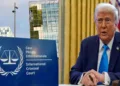
The proliferated patterns of foreign interference in Bharat’s democratic and judicial frameworks necessitates a detailed examination of the motives behind it. The United States Commission on International Religious Freedom (USCIRF), established through the efforts of Christian missionary groups concerned with the alleged persecution of Christian missionaries worldwide, has positioned itself as a self-appointed global arbiter of religious freedom. Over the years, it has regularly vocalised, often misleadingly, about Bharat’s society and governance. Since 2013-14, the USCIRF’s stance towards Bharat has been significantly influenced by its interactions with the Indian American Muslim Council (IAMC), an organisation linked to the Islamic Circle of North America (ICNA), an offshoot of Jamaat-e-Islami (Pakistan), particularly regarding the Citizenship Amendment Act. This relationship, uncovered by independent research from an Open Source Intelligence (OSINT) firm, indicates a strategic campaign to influence US policy and public opinion against Bharat, highlighting a complex network of influences that questions USCIRF and other such US-based entities and their impartiality in evaluations concerning Bharat.
The historical records of the Mahabharat and the governance models described in Kautilya’s Arthashastra reveal a continuum of
democratic practices
Recent endeavours aiming to portray Bharat in a negative context magnify apprehensions regarding international discourse related to Bharat’s internal matters. Germany’s criticism of the lawful arrest of Indian politician Arvind Kejriwal and remarks by UN Secretary-General Antonio Guterres, questioning the integrity of its electoral process, not only encroach upon the principles of sovereign equality and non-interference but also reveal a pattern of biased and agenda-driven scrutiny. Strikingly, Germany’s observations, juxtaposed against its role in hosting the Nuremberg trials, which aspired to set global legal precedents and ensure legal accountability at the highest levels of governance, particularly stand out. Moreover, the United Nations, bound by its charter to respect the sovereignty of its member states, seems increasingly influenced by the growing financial contributions from the Communist Party of China (CPC), indicating a shift in the dynamics of international power. These developments do not merely affect the mechanisms of global governance but also hint at complex strategic manoeuvres, acknowledging resurgent Bharat as a principal contender in the global chess game.
SILENT ON PAKISTAN
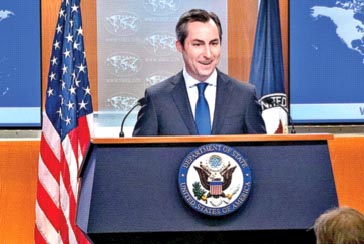
The US Department of State spokesperson Matthew Miller was put on the spot during a press briefing on April 3, when a journalist questioned him on the state department taking a stand on the arrest of Indian opposition leader Arvind Kejriwal but not doing the same on arrests of Pakistani opposition leaders. Matthew Miller refused to categorise both cases as one and said the US wanted to see everyone in Pakistan treated with consistent rule of law and human rights.
As Bharat advances towards its 18th Lok Sabha elections, a celebration of democracy that is unparalleled in scale and tradition, the unwarranted overreach by the West into Bharat’s sovereign affairs and internal matters casts a long shadow over the intent of interest. This external interference, cloaked in the guise of concern for democratic principles and human rights, starkly contradicts the rich democratic practice woven into the very fabric of Bharat’s culture and history. The biased and motivated interventions by bodies such as the USCIRF, UN, governments like Germany alongside comments from international figures like Guterres, betray a deep-seated arrogance and a colonial hangover, assuming Western democratic models as the standard to which all nations must aspire. Such a legacy underscores the incongruity and presumptuousness of Western attempts to dictate terms of democracy to Bharat, a civilisational nation that has practiced and refined principles of democracy, governance and law long before the West.