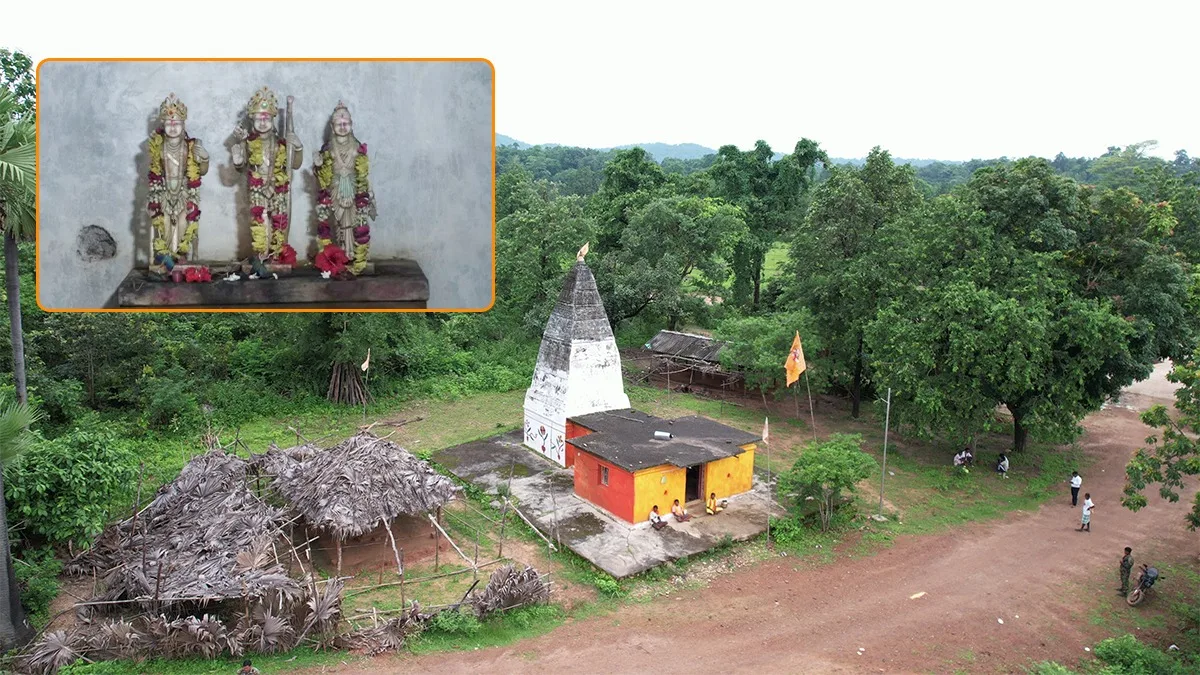
In the Treta Yuga, Bhagwan Ram’s vanvaas ended after 14 years. But in the forests of Bastar, the symbolic exile of Bhagwan Ram lasted 21 long years. At Kerlapenda, a remote village in the Sukma district of Chhattisgarh, a mandir dedicated to Bhagwan Ram remained closed from 2003 to 2024. Maoists had damaged the mandir, stopped religious activities and warned villagers that anyone found performing puja there would be driven out of the village.
Fortunately, the mandir building survived, as did the murtis within it, but its doors remained shut. As a result, the sound of bells, bhajans and aartis disappeared. Ram Navami celebrations and village fairs ended. Fear had silenced a sacred space that once served as the village’s cultural centre. That silence was finally broken in 2024.
Mandir built by an entire village
The story of the mandir begins around 1970, when Bihari Maharaj reportedly established it. Building a mandir in this inaccessible forest region was no ordinary undertaking. There were no proper roads and almost no means of transportation. Villagers recall that construction material had to be brought from distant places. Cement, iron rods, bricks, stones and sand were carried on people’s heads, shoulders and backs.
Sixty-year-old villager, Emla Mukaram, remembers hearing about the collective effort from his father and other elders. According to him, villagers broke stones themselves and carried sand from a nearby river. Nearly 50 bags of cement and around three quintals of iron rods were transported manually over difficult terrain.
“The stones, sand, iron rods and cement were all carried by the villagers. There were no vehicles available here at that time,” the villager recalled.
Every household contributed to the construction. The mandir was not merely a structure erected in the village; it was built through the collective shraddha, labour and sacrifice of the entire community. Once completed, the mandir became the spiritual and social heart of Kerlapenda. Grand fairs were organised during Ram Navami and other festivals. Villagers say that devotees from across Bastar attended these gatherings, while sadhus and saints even travelled from Ayodhya to participate.
Bhajans and kirtans continued through the day and sometimes throughout the night. For children, the mandir courtyard was a place to gather. For elders, it was a centre of faith. For the village, it was where the community came together.
When fear entered the village
However, the situation changed as Maoist influence grew in the region. According to the villagers, Maoists ordered them to discontinue worship at the mandir. The village priest, traditionally known as the Manjhi, was intimidated and told to stop performing puja. Villagers were warned that those who defied the diktat could be beaten up or expelled.
“The Maoists instructed us that anyone who performed puja here would not be allowed to remain in the village,” recalled Joga, a resident who is now around 50-year-old.
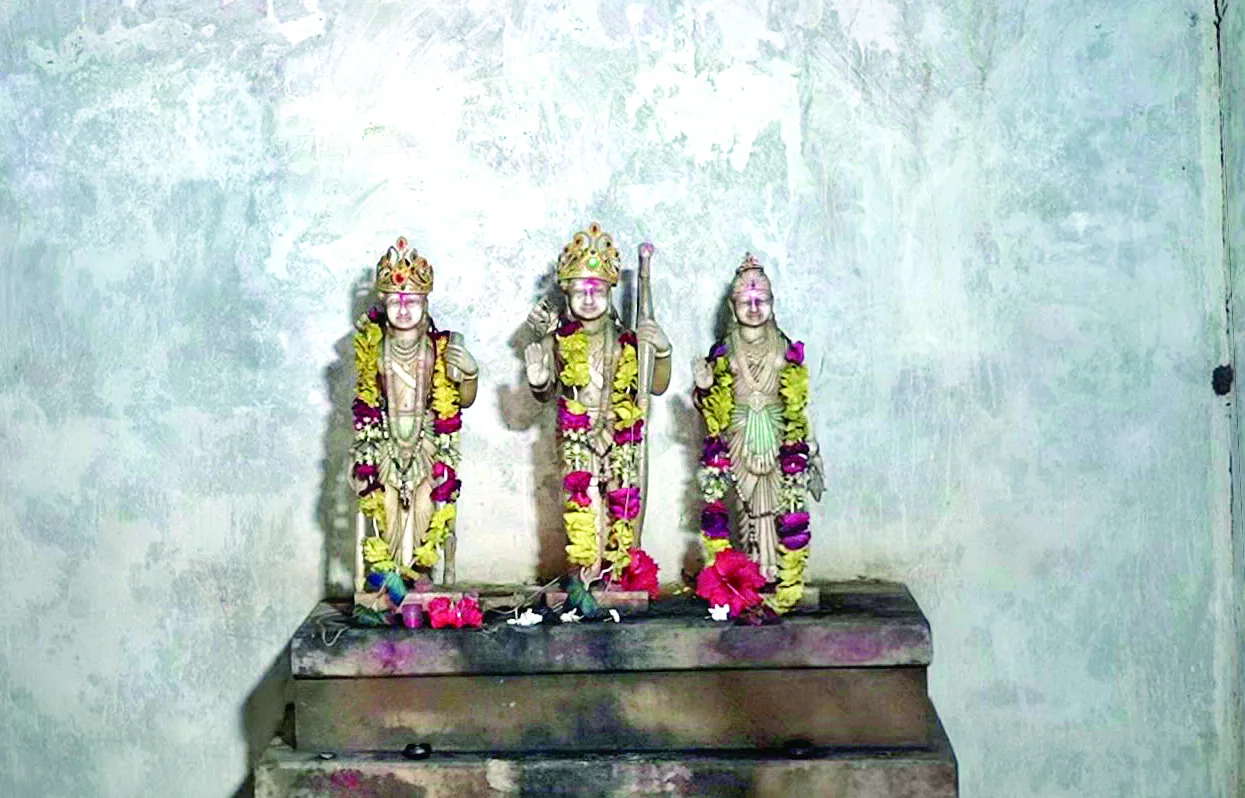
Before the mandir was closed, Joga remembered taking part in bhajans as a child. The villagers would play the dhol, manjira, jhaal and harmonium. But once the threats began, collective worship stopped.
Thankfully, the people did not abandon their faith. They simply took it indoors. Unable to visit the mandir openly, families continued worshipping Bhagwan Ram and their local deities inside their homes. Their place of worship changed, but their aastha endured.
The closure of the mandir also reflected the wider isolation imposed upon the region. Villagers found it difficult to travel even to Chintalnar, located only around eight kilometres away. There were no proper roads or bridges. Even travelling by bicycle was difficult. Village Sarpanch Bhimsen Betiya recalled that Naxals moved openly in the area. People were afraid to travel, meet relatives or speak freely. Fear weakened not only religious life but also the ordinary social bonds between neighbouring communities.
The change in 2024
A major transformation came when a CRPF camp was established in the area in 2024.
After securing the surroundings, CRPF personnel helped clear the vegetation and debris around the mandir. Villagers say machinery was used to clean the premises, after which the structure was repaired and painted. The mandir was formally reopened and religious rituals resumed.
For younger villagers, it was the first time they had ever seen the Mandir functioning. Bhimsen Betiya said he was born during the period when the mandir remained closed. Until 2024, he had never witnessed regular worship there. After the CRPF arrived and the premises were cleaned, villagers began gathering for puja. Devotees now visit from the surrounding villages and from Sukma. Bhandaras are organised, and villagers prepare kheer and khichdi on religious occasions. Morning and evening puja and aarti have become part of village life once again.
The large fairs of the past are yet to return, but Ram Navami, Mahashivratri and Dussehra are being observed. Bhajans and kirtans have also resumed.Among the most poignant figures in the temple’s history was its elderly Manjhi, who had once performed puja there.
The reopening of the mandir has given that freedom a visible and deeply emotional expression. The flowers, Gangajal and puja material inside the shrine may appear ordinary, but for the residents of KerlaPenda, they signify the restoration of something denied to them for 21 years
Villager admits that he was threatened when Maoists shut the mandir. With the place to which he had dedicated his life closed before him, he reportedly fell ill. He lived long enough, however, to see worship resume in 2024.
At nearly 100 years of age, he witnessed the reopening of the temple and once again entered the sacred space he had served. He died approximately a year later.
His life connected two very different chapters in the village’s history: one in which fear forced the Mandir into silence, and another in which its doors opened again.His son now performs the puja, while Mukaram and other villagers help look after the mandir. The revival of the Ram Mandir is not an isolated development. It represents the wider transformation taking place in Bastar’s remote villages.
Roads and culverts are being constructed. Mobile towers are reaching previously disconnected areas. Security camps have improved access to essential services, while villagers who were once associated with Maoist groups are surrendering, returning home and taking up agriculture.
The reopening of the mandir has given that freedom a visible and deeply emotional expression. The flowers, Gangajal and puja material inside the shrine may appear ordinary, but for the residents of Kerlapenda, they signify the restoration of something denied to them for 21 years.