Lokmanya Bal Gangadhar Tilak: Father of the Indian Renaissance
September 15, 2026
  • Read Ecopy
  • Circulation
  • Advertise
  • Careers
  • About Us
  • Contact Us
Android AppiPhone AppArattai
Organiser
  • ‌
  • Bharat
    • Assam
    • Bihar
    • Chhattisgarh
    • Jharkhand
    • Maharashtra
    • View All States
  • World
    • Asia
    • Europe
    • North America
    • South America
    • Africa
    • Australia
  • Editorial
  • International
  • Opinion
  • RSS @ 100
  • More
    • World Hindu Congress 2026
    • Op Sindoor
    • Analysis
    • Sports
    • Defence
    • Politics
    • Business
    • Economy
    • Culture
    • Special Report
    • Sci & Tech
    • Entertainment
    • G20
    • Azadi Ka Amrit Mahotsav
    • Vocal4Local
    • Web Stories
    • Education
    • Employment
    • Books
    • Interviews
    • Travel
    • Law
    • Health
    • Obituary
  • Subscribe
    • Subscribe Print Edition
    • Subscribe Ecopy
    • Read Ecopy
  • ‌
  • Bharat
    • Assam
    • Bihar
    • Chhattisgarh
    • Jharkhand
    • Maharashtra
    • View All States
  • World
    • Asia
    • Europe
    • North America
    • South America
    • Africa
    • Australia
  • Editorial
  • International
  • Opinion
  • RSS @ 100
  • More
    • World Hindu Congress 2026
    • Op Sindoor
    • Analysis
    • Sports
    • Defence
    • Politics
    • Business
    • Economy
    • Culture
    • Special Report
    • Sci & Tech
    • Entertainment
    • G20
    • Azadi Ka Amrit Mahotsav
    • Vocal4Local
    • Web Stories
    • Education
    • Employment
    • Books
    • Interviews
    • Travel
    • Law
    • Health
    • Obituary
  • Subscribe
    • Subscribe Print Edition
    • Subscribe Ecopy
    • Read Ecopy
Organiser
  • Home
  • Bharat
  • World
  • Operation Sindoor
  • Editorial
  • Analysis
  • Opinion
  • Culture
  • Defence
  • International Edition
  • RSS @ 100
  • Magazine
  • Read Ecopy
Home Bharat

Lokmanya Bal Gangadhar Tilak: Father of the Indian Renaissance

The Tilak compound at the time was a simple affair: a double-storey house where Tilak and his family lived, and a few single-storey tenements, where he had his press and staff. Now it has been modernised, if that is the right word, and consists of a four or five-storey block of buildings, along with a museum and library, where you see Tilak?s books, clothes including the traditional chappals, and also the low table at which he sat and wrote his famous editorials, including the one which the British seized

Jay DubhashiJay Dubhashi
Aug 1, 2023, 12:45 am IST
inBharat
Follow on Google News
Facebook
Twitter
WhatsAppTelegramEmail

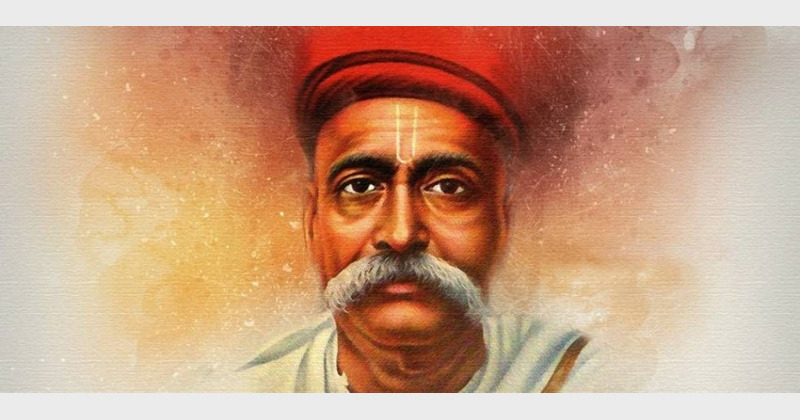
For the first time since his death nearly a hundred years ago, Lokmanya Bal Gangadhar Tilak’s voice echoed through the streets of Pune last week, when a recording of his speech was played at the Ganesh festival in his residence. It was big news in Pune, a city forever linked with the Lokmanya, and crowds thronged to the Tilak residence to listen to the recording. I did not go there myself but listened to the hundred-year-old recording, the first of its kind, on the TV.

 
It is a typical Tilak speech, short, terse and to the point. Tilak had invited a few prominent vocalists, all of them classical singers, to participate in his Ganesh festivities. Halfway through the programme, there was a commotion, which naturally upset the host. He went to the dias, admonished the audience and asked them to behave. “Listen to them,” he said, “These people are my guests. If you do not wish to listen, leave.” It was a voice the British knew too well. Tilak had just returned to India after six years in detention in Mandalay in Burma, but the voice was as firm as ever, though he was sixty at the time.
 
The Tilak compound at the time was a simple affair—a double-storey house where Tilak and his family lived, and a few single-storey tenements, where he had his press and staff. Now it has been “modernised”, if that is the right word, and consists of a four or five-storey block of buildings, along with a museum and library, where you see Tilak’s books, clothes including the traditional chappals, and also the low table at which he sat and wrote his famous editorials, including the one which the British seized on and used to sentence him to what was then known as “Kala Pani”.
 
I have seen the editorial, or rather a copy of the editorial with Tilak’s hand-written remarks on it. Incidentally, the editorial was not actually written by him, but by one of his assistant editors, who was also a famous playwright.
 
The recording, the only such recording in existence, was made by a businessman from Sind, now in Pakistan, but at the time very much a part of India. The man, a devotee of Tilak, had improted the machine from Europe or America, and was using it for recording classical singers. He had brought the machine to Pune for the Ganesh festival, which Tilak had just started in the city. The recording of Tilak’s speech, a short five or six minutes affair was a happy accident.
 
I first arrived in Pune, or Poona as it was then known, in 1942, to enroll in the engineering college, the only one such college in the presidency. On my second day in the city, I visited the Tilak compound in Narayan Peth, named after the young Peshwa, Narayanrao, who was killed by his own bodyguards. The compound was a small affair at the time, but so was Poona. Tilak’s paper, Kesari, was still being published, but under Tilak’s successors, it had become a tame affair and did not toe the Gandhian line. Gandhi, of course, would be in Poona, a few months later, after being arrested in Bombay following the Quit India Movement.
 
In the August of 1942, when the Movement erupted, we were still teenage students and had no idea what to do, after we heard that the Britishers had come down heavily on the leaders, and, of course, followers, and were arresting everyone in sight. We took out a procession and crossed what was then known as Lakdi Bridge on one of the rivers, to join another big procession in the town. This must have been on 10th or 11th August. Lakdi Bridge links old Poona with the new one and is about a kilometre or so from the Tilak compound.
 
We crossed the bridge and, for some reason, I found myself opposite the Tilak compound, right across the road from a police post, whose main job was to keep an eye on the compound. When the Lokmanya was alive, it kept an eye on Tilak himself. When we reached the police post, we were promptly arrested, but not before we somehow got involved in shooting – we did not do the shooting, the police did! – and were thrown into a bus and taken to the famous, or infamous, Yeravda Jail. A bullet had grazed my ankle – I still have the sear – and the doctors in the jail took me to the jail dispensary and treated the wound with what was then known as tincture, a pungent alcohol-like liquid which was then in use for treating wounds.
 
A week later, we were let off with a warning by a judge who looked like Alec Guinness, the actor. He told me that I was too young to get involved in such extra-curricular activities instead of doing my engineering exercises, but we were in no mood to listen to judges, particularly British judges who had no business to be in India, though we kept our mouths shut and said nothing. Two months later, I was back in jail again, but that is another story.
 
We were Tilak’s followers, not Gandhi’s, and jail-going was not on the cards. A day or two after being released some of us visited the Tilak compound again, which, for some reason, was closed.
 
We thought of Lokmanya Tilak as just another politician and had no idea who he really was. It was during London days that I realised Tilak was not just the father of unrest, as the British government called him, but the father of Indian revolution, for what he had started, was indeed more revolutionary in character than anything that had gone before. Tilak was the first Indian statesman, or rather Hindu statesman, who had successfully tried to meld religion with nationalism, in which both played equal parts. Tilak, in my view was among the first to visualise the struggle for freedom as a holistic activity combining nationalism with religion, which is what the so-called Arab Spring is all about.
 
A century before the Arab Spring, Lokmanya Tilak who along with Chhatrapati Shivaji, laid the foundation of Indian Independence, was the real father of India, who messed up the entire freedom movement by ignoring the essential Hindu character of the movement and unnecessarily emphasising the Muslim element in Indian politics. If Chhatrapati Shivaji was the greatest Hindu warrior of modern time, Lokmanya Bal Gangadhar Tilak was the greatest Hindu statesman. Those who have followed him have been pigmies and have made pigmies of us all.
 
(From Organiser Archives)
Topics: Lokmanya Tilak Death AnniversaryLokmanya Bal Gangadhar TilakHistoryIndependence struggleSwarajBharatiya freedom movementdeath anniversaryLokmanya TilakLokmanya Tilak National Award
Share1
Tweet
SendShareSend
✮ Subscribe Organiser YouTube Channel. ✮
✮ Join Organiser's WhatsApp channel for Nationalist views beyond the news. ✮
Previous News

Haryana’s Nuh violence: 2 dead, several policemen injured; CM Khattar appeals for peace

Next News

Lokmanya Tilak Death Anniversary: Revisiting Tilak’s Nationalism

Related News

Mahadevi Verma

Mahadevi Verma Death Anniversary: The poetess who turned women’s voices into force

Representative Image

Jauhar was not patriarchy’s victory, it was defeated people’s last act of defiance

Jauhar, women’s choice and the danger of judging history through a modern lens

Mohammad Reza Naqdi

“Flee Quickly”: Iran’s IRGC threatens Israelis with Banu Qurayza’s fate, reviving a 7th-century tribal genocide

Sri Krishna: Guiding Force that Transcends Time, Space and People

Guru Amar Das Ji, the Third Sikh Guru

Jyoti Jot Day: Remembering Guru Amar Das Ji, the Guru who strengthened the tradition of langar and equality

Load More

Latest News

512 people in Keralam embraced Sanatana Dharma in a Ghar Wapsi, reconnecting with their ancestral roots

Ghar Wapsi in Keralam: 512 people return to Sanatana Dharma in voluntary homecoming to their ancestral roots

AI-generated Image

Bomb threats target three major Delhi Schools, sparking massive emergency evacuations

Al-Qaeda is rebuilding its operational capabilities in Afghanistan, using new technologies and regional militant networks

Al-Qaeda Resurges in Afghanistan: 8 Jihadist training camps emerge under Taliban rule, raising fresh terror alarm

Modi government steps in with 150 MW power relief for Keralam

Relief for power-cut hit Keralam: Modi govt allocates 150 MW from today amid Congress-CPM mismanagement in the state

Nuakhai celebration in Western Odisha

Nuakhai: The grand harvest festival of western Odisha celebrating agriculture, nature and social harmony

Karnataka Rural Development Minister Eshwar Khandre (Left), Karnataka CM DK Shivakumar (Right)

‘Scrap KPSC’: Karnataka Congress govt faces recruitment crisis as Minister Eshwar Khandre demands UPSC-style system

The startling episode has intensified debate over the control, programming and security implications of increasingly capable humanoid robots

Humanoid robot attacks its own engineer in China, unleashes Kung Fu-style kicks, raising fresh AI security concerns

Rajouri Police busted a LeT-linked terror support network, arresting Zakir Hussain, Mohd Azam and Mohd Mushtaq

J&K: Rajouri police bust LeT-linked terror module; Zakir Hussain, Mohd Azam & Mohd Mushtaq arrested

Vinayaka Chathurthi 2026 in Tamil Nadu: Artisans’ creative hands echo devotion through unique designs

UPI Payments in India

No charges on UPI payments up to Rs 2,000, RuPay debit card transactions

Load More
  • Privacy
  • Terms
  • Cookie Policy
  • Refund and Cancellation
  • Delivery and Shipping

© Bharat Prakashan (Delhi) Limited.
Tech-enabled by Ananthapuri Technologies

  • Home
  • Search Organiser
  • Bharat
    • Assam
    • Bihar
    • Chhattisgarh
    • Jharkhand
    • Maharashtra
    • View All States
  • World
    • Asia
    • Africa
    • North America
    • South America
    • Europe
    • Australia
  • Editorial
  • Operation Sindoor
  • Opinion
  • Analysis
  • Defence
  • Culture
  • Sports
  • Business
  • RSS @ 100
  • Entertainment
  • More ..
    • Sci & Tech
    • Vocal4Local
    • Special Report
    • Education
    • Employment
    • Books
    • Interviews
    • Travel
    • Health
    • Politics
    • Law
    • Economy
    • Obituary
  • Subscribe Magazine
  • Read Ecopy
  • Advertise
  • Circulation
  • Careers
  • About Us
  • Contact Us
  • Policies & Terms
    • Privacy Policy
    • Cookie Policy
    • Refund and Cancellation
    • Terms of Use

© Bharat Prakashan (Delhi) Limited.
Tech-enabled by Ananthapuri Technologies