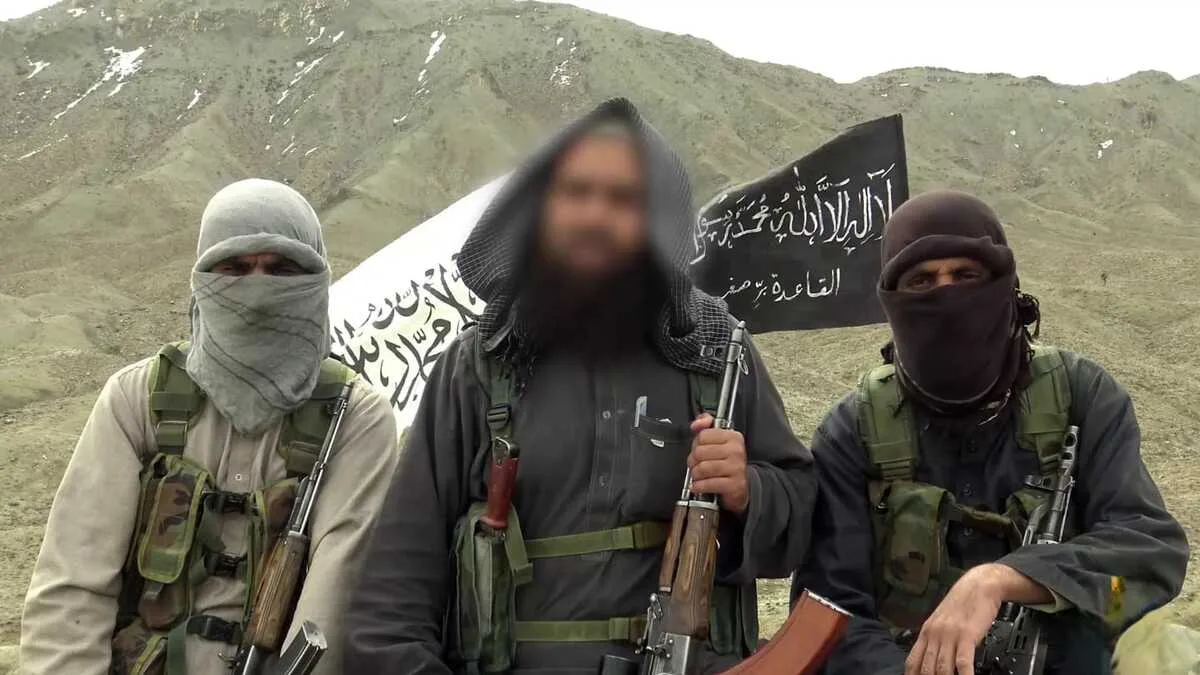
NEW DELHI: Al-Qaeda has re-established a training infrastructure in Afghanistan, with the terrorist organisation and its affiliates setting up at least eight training sites over the past three years, according to United Nations reports and US and Western intelligence officials. The development comes nearly 25 years after Al-Qaeda used training camps in Afghanistan to prepare for the September 11, 2001, attacks, raising fresh concerns over the militant network’s ability to rebuild under the Taliban’s rule.
The expansion of Al-Qaeda and other jihadist groups has been facilitated by what a UN monitoring report described as a “permissive environment” provided by the Taliban in Afghanistan. The terrorist organisation has been able to consolidate its presence through safe houses and training camps, while other militant groups have established training facilities across the country. Officials said Islamist militant groups now have a foothold in at least 14 of Afghanistan’s 34 provinces.
The new Al-Qaeda camps reportedly provide training in weapons, explosives and guerrilla warfare, methods familiar from the organisation’s camps in Afghanistan during the 1990s. However, the US intelligence officials have also identified indications of training involving encryption, artificial intelligence and drones, reflecting the technological changes that have occurred since Al-Qaeda’s pre-9/11 operations.
The scale of the current Al-Qaeda presence remains considerably smaller than during the period before the September 11 attacks. Colin Smith, coordinator of a UN monitoring team tracking terrorist groups and sanctions, estimated that the number of militants belonging to core Al-Qaeda in Afghanistan is probably 100 or fewer. Rather than directly directing major operations, Al-Qaeda is increasingly functioning as a support and training network for other militant organisations operating in Afghanistan and the wider region.
Al-Qaeda’s Afghanistan network increasingly supports regional jihadist groups
One of the principal beneficiaries of this network is Tehrik-e-Taliban Pakistan (TTP), which seeks to overthrow Pakistan’s government and establish an Islamic state. A 2024 UN report said Al-Qaeda operatives in Afghanistan’s Kunar province were conducting suicide-bomber training for TTP. The TTP is believed to have as many as 7,000 fighters in Afghanistan and has established camps in at least four Afghan provinces with the involvement of Al-Qaeda and the Taliban. The group has also conducted hundreds of cross-border attacks against Pakistani military positions and other targets.
Islamic State-Khorasan, Al-Qaeda’s principal jihadist rival, has simultaneously expanded its presence in Afghanistan. The group has attracted about 2,000 recruits and uses northern Afghanistan as a major hub for training and planning operations across Central Asia. Al-Qaeda and Islamic State-Khorasan remain bitter rivals, competing for influence within the broader jihadist movement.
The current Al-Qaeda presence in Afghanistan differs from the 1990s in another important respect. The organisation appears more focused on regional conflicts and is not openly pursuing the elaborate attacks against the United States and its allies that characterised its pre-9/11 strategy. Analysts say the Taliban is also wary of allowing Afghanistan to once again become the launchpad for attacks that could provoke international military action.
US and Western intelligence officials have nevertheless expressed concern over their reduced ability to monitor Al-Qaeda training camps in Afghanistan following the 2021 US military withdrawal. The drawdown of CIA personnel and other intelligence capabilities has made surveillance more difficult. However, the 2022 US drone strike that killed Al-Qaeda leader Ayman al-Zawahiri in Kabul demonstrated that Washington retains intelligence and strike capabilities in Afghanistan.
Al-Qaeda is now led by Saif al-Adel, an Egyptian who helped run training camps in Afghanistan after arriving there in 1988. He is believed to remain in Iran. Meanwhile, officials said Al-Qaeda and Islamic State-Khorasan are concentrating more heavily on recruiting from Afghanistan and neighbouring countries rather than attracting large numbers of foreign fighters as Al-Qaeda did in the 1990s.
The resurgence of Al-Qaeda training camps in Afghanistan does not indicate an immediate return to the pre-9/11 threat, officials and experts said. But the establishment of at least eight sites since 2023 demonstrates that Afghanistan under the Taliban has once again become an important training and support environment for jihadist organisations.