India’s tradition of knowledge and research is ancient and Indian civilisation attaches great value to knowledge. In Shrimad Bhagavad –Gita, Lord Krishna tells Arjun that knowledge is the great purifier of the self. Our tradition has always been of the welfare of all, and for that reason, even though Indians contributed in various fields to the knowledge and good of the world, but never copyrighted their contribution. Research and knowledge have never been considered the monopoly of anyone, but it is constituted and maintained for the greater good of all.
In the Bharatiya tradition, knowledge has been gained, stored and passed on in the framework of the oral culture. According to Bhartrhari, knowledge is constituted in our inner self. There is the antarjnana, created by the input of the senses (indriya), processed by the mind (mana), and the intellect (buddhi).
Finally, this created knowledge exists as our transformed, alert self, Citta (Vakyapadiya). The central role in knowledge formation has been accorded to Chintana and Manana, i.e. Meditation and Deep reflection, respectively, and the entirety of relying completely on the mind and senses have been denied. Besides these, perception, inference and argumentation are also given primary importance. The oral culture of our tradition states that knowledge is by and large constituted in mind, stored in mind and therefore seeing with the “mind’s eye” is typical of Indian thought.
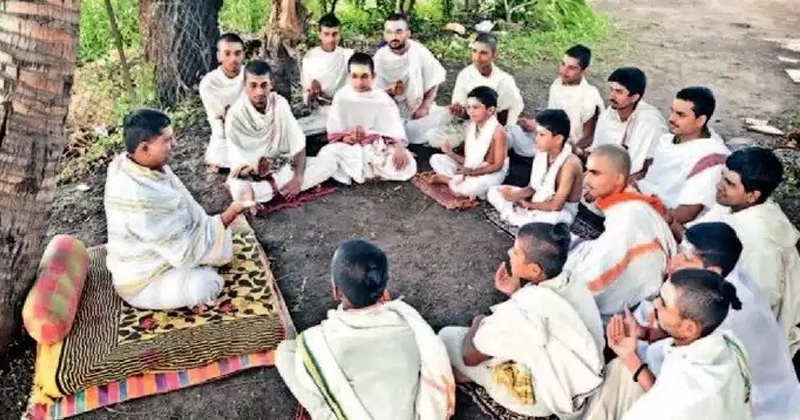
Furthermore,’ the Bharatiya tradition of research and knowledge emphasises transmitting and strengthening knowledge through Guru- Shisya mode. It should be highlighted here that the oral culture existed not because of the absence of writing systems but because of the continuing tradition of Tika Parampara, i.e. the commentary tradition and the simultaneous mode of knowledge, as it is believed that the speed of information processing is very high in the oral tradition. Although great value has been attached to knowledge and research and tremendous efforts have gone into maintaining this tradition, the most notable feature of the Bharatiya tradition is that there has always been complete freedom to interpret and come up with competing interpretations. This feature is not present in other cultures. Bharatrhari says: “Monism, Dualism and any number of points of view (pravada bahuda mata), are equally valid, are often all rooted in and argued from the same proposition.” (Vakyapadiya)
In this article, an attempt is made to correlate the Bharatiya tradition of knowledge and to understand its significance in contemporary issues.
The attempt is to elaborate upon the concept of Good Governance from Valmiki’s Ramayana. In the “Ayodhya kand” Uttarardh of Ramayana, when Bharat goes in search of Shri Rama, who was banished from Ayodhya by Bharat’s mother Kakkayi, he finds him at Chitrakoot. There Rama enquires about the well-being of all and, more importantly, of Ayodhya and talks about how a good ruler should be and the guiding principles of good governance.
Shri Rama starts the conversation by enquiring about his father’s health, Dashratha, and whether Bharat pays proper attention to him and the kingdom. Shri Rama talks about the importance of Dharma for a just king. He talks about respecting and honouring the sages and philosophers. He further elaborates on the primacy to be given to the Dhanurvedacharya, skilled in using weapons and ethology. Shri Rama advises Bharat to appoint respectable, dependable, reliable, ethical, and who would not give in greed as his ministers because the advice rendered secretly by these ministers, in the hour of need, is the way to victory for the king. Shri Rama asks Bharat whether he can ponder the means to strengthen the kingdom’s finances before falling asleep.
Shri Rama further states that a king should only discuss his matters in front of a few people to avoid leakage and its expression before time. A king should aim to achieve major goals and should not delay beginning such a task, and he should make sure that his decisions remain secret before completing the task. Shri Rama further talks about the importance of having an intellect as an advisor and shunning the company of fools, as they do not bring the kingdom any good but can cause only harm. If the king’s advisor is an intellect, he can help deal with the worst circumstances. The punishment for a crime should not be so treacherous that it would incite anger and disrespect among the kingdom’s subjects. The levying of taxes should not be exorbitant and arbitrary. Shri Rama describes the quality of a successful military commander as clever, skilled in the military and strategic tactics, calm and composed in the face of adversity, trustworthy and dedicated to the king. He explains that to keep peace and to avoid any chaos in the army, they should be well-fed and paid a salary in due time.
A person who is a native of the state, capable, quick-witted, and one who is able to counter-argue to prove his point should be made ambassador. An ideal king should appoint eighteen officers for the smooth functioning of the administration and maintaining law and order in the kingdom. A wise king should have an efficient network of spies to keep an eye on his officers except the three: ‘Mantri’, ‘purohit’ and ‘Yuvraj’.Shri Ram warns Bharat and asks him never to underestimate his enemies because even a defeated enemy can prove fatal. A king should always be generous to the farmers and animal rearers and protect the weak. He should present himself to his subjects occasionally, but a king should neither draw people too close nor drive them far out of fear, as both these conditions are disadvantageous.
When we read and attempt to understand the conversation between Shri Rama and Bharat, we realise that these guidelines apply even to contemporary times. Therefore, the main objective of writing this article is to encourage the study of our ancient scriptures and understand their significance. This would help develop society by coordinating ancient and modern genres of knowledge.
(The writer is a PhD Scholar Department of political science, CCS University, Meerut)