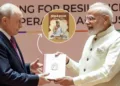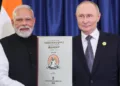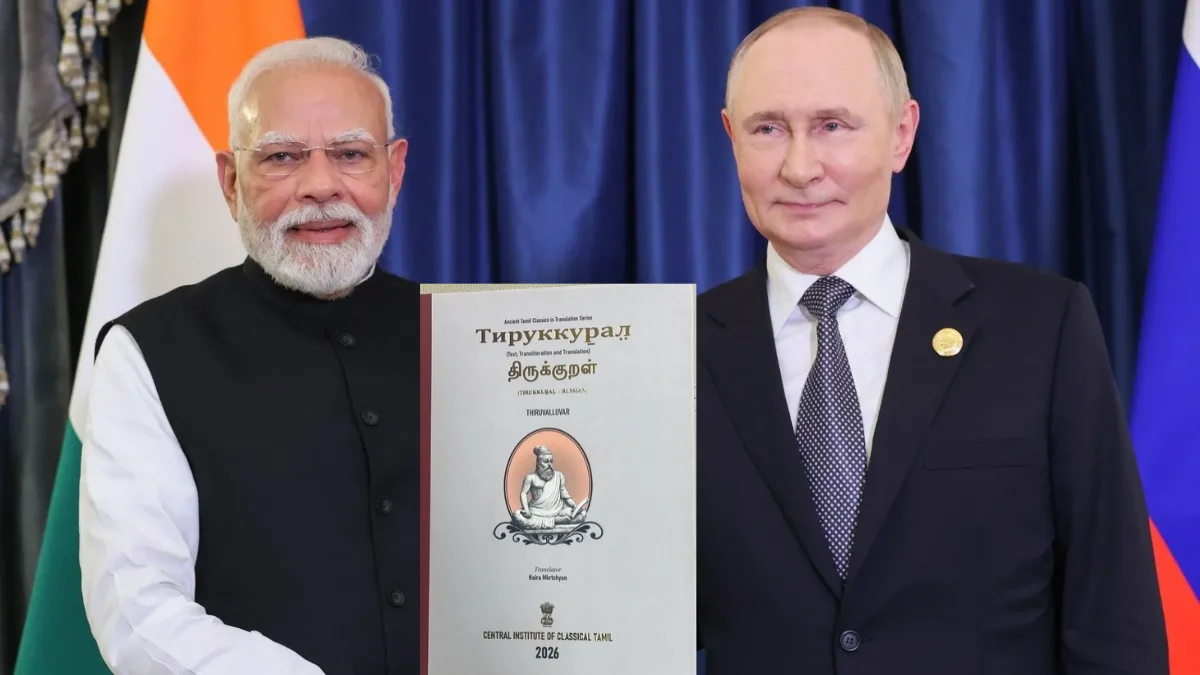
When Prime Minister Narendra Modi presented Russian President Vladimir Putin with a Russian translation of the Thirukkural, it was more than a diplomatic gift. It was a statement about the civilizational confidence of Bharat and the universal relevance of Tamil wisdom.
Nations often showcase their technological achievements, economic strength and military capabilities. These are vital expressions of national power, but they are neither permanent nor unique. Records are surpassed, technologies are replicated and economic rankings change. A civilization’s deepest ideas, however, possess a different kind of power. They can travel across centuries and borders without losing their moral force.
The power of a timeless text
The Thirukkural gives India precisely such a voice. Across 133 chapters and 1,330 couplets, Thiruvalluvar examines Aram, Porul and Inbam – virtue, wealth and love. In two compact lines at a time, he addresses personal conduct, family life, education, friendship, leadership, statecraft, justice, prosperity and human dignity.
Bharat is home to many languages and an extraordinary range of literary traditions. Celebrating the Thirukkural does not diminish any of them. Its distinction lies in the combination of antiquity, brevity and universality. Rooted unmistakably in classical Tamil, it speaks to questions that confront every society: How should power be exercised? How should wealth be created and shared? What does justice demand? What makes a life honourable?
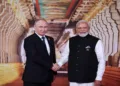
By choosing a Russian translation for President Putin, Prime Minister Modi placed those questions within a global conversation. At a moment when the BRICS Summit had drawn international attention to New Delhi, he complemented strategic diplomacy with cultural diplomacy. The message was clear: India’s global voice is grounded not only in its economic and geopolitical strength, but also in the wisdom of its civilization.
A consistent global journey
This was not an isolated gesture. In Bangkok in 2019, Prime Minister Modi unveiled a Thai translation of the Thirukkural. At the 2023 Forum for India-Pacific Islands Cooperation Summit in Papua New Guinea, he and Prime Minister James Marape jointly launched a Tok Pisin translation. The Russian edition continues that journey, carrying Thiruvalluvar’s ideas into another major linguistic and cultural sphere.
Translation matters because it allows a work to enter the intellectual life of another society. A ceremonial gift may last for a moment; a translated book can begin a longer conversation. By supporting the Thirukkural’s movement across languages, Prime Minister Modi has helped present Tamil thought as part of India’s contribution to the world.
His engagement with the text has also extended beyond diplomatic occasions. During his 2019 Independence Day address, while speaking about the Jal Jeevan Mission, he invoked Kural 20 and its insight that the world cannot exist without water. Addressing Indian troops in Ladakh in July 2020, he cited Kural 766, which identifies valour, honour, disciplined conduct and reliability as the foundations of a strong army. On Thiruvalluvar Day, he has described the poet’s teachings on righteousness, compassion and justice as a source of enduring inspiration.
These references connect an ancient text with modern public responsibilities. Water security, national defence, ethical leadership and social harmony are not abstract concerns. They are central to the everyday work of governance.
Ancient wisdom for modern statecraft
The Thirukkural remains relevant because human institutions may change while the moral challenges surrounding them endure. Governments still struggle with power without justice, prosperity without responsibility and education without character. Thiruvalluvar addressed these tensions with remarkable clarity.
In ‘Karka Kasadara’, he urges us to learn thoroughly and then live in accordance with what we have learned. In ‘Iyatralum Eettalum’, he explains that sound rulership requires the ability to generate resources, acquire them, preserve them and distribute them wisely. These are not merely poetic observations. They are principles of capacity, stewardship and public administration.
The celebrated line ‘Pirappokkum Ella Uyirkkum’ affirms that all people are equal by birth and that distinctions arise from their actions and work. In a few words, Valluvar establishes a moral principle of human equality while placing responsibility upon individual conduct.
Such couplets demonstrate that sophisticated thinking about education, economics, governance and social ethics flourished on Tamil soil more than two millennia ago. They challenge the colonial misconception that intellectual modernity or administrative wisdom arrived in India only from outside. Long before the language of contemporary public policy emerged, the Thirukkural had already connected personal virtue with the quality of public life.
Tamil pride and Indian pride
There is also a larger cultural meaning to Prime Minister Modi’s repeated invocation of the Thirukkural. Tamil identity and Indian identity are sometimes presented as though they must compete with one another. The global celebration of Thiruvalluvar rejects that false choice. Tamil is one of Bharat’s great classical languages, and its finest works are simultaneously a Tamil inheritance, an Indian civilizational treasure and a contribution to humanity.
For Tamils, seeing the Thirukkural carried to world leaders is naturally a matter of pride. But the deeper achievement is that audiences far beyond Tamil Nadu are being invited to encounter Thiruvalluvar on his own terms – not merely as a regional poet, but as a thinker of universal importance.
When a nation speaks only of its material achievements, it tells the world what it can do. When it carries itsgreatest texts across borders, it also tells the world what it stands for.
That is why the Thirukkural is an ideal cultural ambassador for Bharat. Through translation, public addresses and diplomatic gestures, Prime Minister Modi has helped take Thiruvalluvar’s wisdom to the world. In doing so, he has also reminded India that one of Tamil civilization’s greatest inheritances belongs not only to Tamil Nadu, but to all humanity.