

Corruption is deeply entrenched in our political, Governmental, and social systems. Many people have accepted it as a way of life for selfish gain, forgetting that this scourge known as corruption has been destroying middle and lower-class people socioeconomically, politically, and culturally. We have been victims of this threat since the Mughal invasion. When central Government agencies act according to the law against these political leaders who have looted public money using power, supporters of many political parties or leaders abuse Prime Minister Narendra Modi.
The worst part is that most mainstream media and social media fabricate emotional and false stories to favour the corrupt leader and create a negative image of Prime Minister Modi in the minds of the general public. There is nothing wrong with having a different ideology. Still, no one should support a corrupt leader of any party, a Government servant, or anyone involved in corruption to oppose the Prime Minister’s ideology.
When we support such corrupt leaders because we have gained a few rupees or some favour in the past or will receive assistance from such a leader in the future, we are contributing to the root cause of deep-seated corruption in the political and Government bureaucratic systems.
In the recent case of Manish Sisodia, who was involved in a liquor excise policy scam, his leader, Arvind Kejriwal, openly supported him and demanded that he be awarded the “Bharat Ratna”. We should investigate the observations made by the High Court regarding Manish Sisodia, the “prima facie architect” of the conspiracy.
We can imagine the pitiful situation of many political leaders who seek power and loot money and, in some cases, are foreign-funded to destroy our country. Even these corrupt leaders believe they have a natural right to practice corruption and deceive the public by playing the emotional card. When the central Government Agencies Central Bureau of Investigation (CBI), Enforcement Directorate (ED), and other agencies work against these corrupt due to the Modi Government’s support and non-interference in working, they label Prime Minister Modi as a dictator and say that action against corruption is anti-democratic. How can fighting against corruption be anti-democratic?
How is the Modi Government combating corruption and the corrupt system?
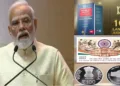
On April 3, 2023, Prime Minister Shri Narendra Modi inaugurated the Diamond Jubilee Celebrations of the CBI at Vigyan Bhawan in New Delhi. The Prime Minister emphasised that the primary responsibility of the CBI is to rid the country of corruption. “Corruption is not an ordinary crime; it robs the poor of their rights, breeds other crimes, and is the greatest impediment to justice and democracy,” he said.
According to him, corruption in the Government system undermines democracy. The first casualties are the dreams of the youth, as a certain type of ecosystem thrives in such conditions, killing talent. The Prime Minister continued corruption fosters nepotism and a dynastic system that weakens the nation and stifles development.
Unfortunately, the Prime Minister recalled that India inherited a legacy of corruption at independence and bemoaned that, rather than eradicating it, some people continued to feed the disease. Just a decade ago, he remembered the scene of the scams and the prevalent sense of impunity. According to him, this situation resulted in the system’s destruction, and an atmosphere of policy paralysis halted development. He mentioned the Fugitive Economic Offenders Act, which has so far resulted in confiscating fugitive offenders’ properties worth Rs. 20,000 crores.
The Prime Minister, shedding light on one of the decades-old methods of looting the Government’s treasury, stated that the corrupt would even go as far as looting the aid sent out to beneficiaries of Government schemes. According to the Prime Minister, the original beneficiary would feel duped every time, whether it was rations, homes, scholarships, pensions, or any other Government scheme. “A Prime Minister once said that for every rupee sent to the poor, only 15 paise reaches them,” Shri Modi stated.
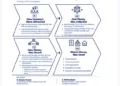
Using Direct Benefit Transfer as an example, the Prime Minister stated that the Government had transferred 27 lakh crores to the poor and that based on the one rupee 15 paise theory, 16 lakh crores would have already vanished. The Prime Minister stated that with the trinity of Jan Dhan, Aadhaar, and Mobile, beneficiaries are receiving their full entitlement and that more than eight crore fake beneficiaries have been removed from the system. “DBT has saved the country about 2.25 lakh crore rupees from falling into the wrong hands,” the Prime Minister said.
From 2014 to 2022, the ED conducted 3,010 raids, a nearly 27-fold increase from 112 searches between 2004 and 2014. The ED has custody of assets worth over Rs 1 lakh crore as of March 31 2022, which are linked to cases under investigation by the agency. Over Rs 57,000 crore are related to bank fraud and Ponzi scheme cases.
How has corruption harmed each of us socioeconomically?
According to a 2005 Transparency International survey, more than 62 per cent of Indians had paid a bribe to a public official at some point. Another report in 2008 found that approximately 50 per cent of Indians had first-hand experience of paying bribes or using contacts to obtain services from public offices; however, in 2019, their Corruption Perceptions Index ranked the country 80th out of 180, reflecting a steady decline in people’s perception of corruption.
According to a November 2010 report, from the Washington-based Global Financial Integrity, over 60 years beginning in 1948, India lost US$213 billion in illicit financial flows; adjusted for inflation, this is estimated to be $462 billion in 2010, or about $8 billion per year ($7 per capita per year). According to the report, India’s underground economy was worth approximately US$640 billion at the end of 2008, or roughly 50 per cent of the country’s GDP.
In their book Corruption in India: The DNA and RNA, Professor Bibek Debroy and Laveesh Bhandari claim that public officials in India may be pocketing as much as $921 billion (US$12 billion), or 5 per cent of the GDP, through corruption. According to the book, most bribery occurs in Government-provided services, transportation, and real estate.
Bribery and corruption are widespread, but some areas are more affected than others. According to a 2013 EY (Ernst & Young) Study, the industry’s most vulnerable to corruption are infrastructure and real estate, metals and mining, aerospace and defense, and power and utilities. Various factors make one industry more vulnerable to bribery and corruption risks than others. The use of middlemen, high-value contracts, liaisoning activities, and other factors contribute to the depth, volume, and frequency of corrupt practices in vulnerable sectors.
According to a 2009 survey of Asia’s leading economies, Indian bureaucracy is not only the least efficient among Singapore, Hong Kong, Thailand, South Korea, Japan, Malaysia, Taiwan, Vietnam, China, Philippines, and Indonesia but also works with Indian civil servants is a “slow and painful” process.
Potential innovators cannot be certain that patents will protect their invention and not be copied by those who know they can get away with it by bribing the authorities because there needs to be more trust in the legal system of corrupted economies in which legal judgments can be rigged.
As a result, there is a disincentive to innovate, and as a result, emerging countries are typically technology importers because such technology is not created within their societies. After 2014, the Modi Government’s policy and crackdown on corruption have led to a massive increase in start-ups, unicorns, research and patents.
Corruption is one of the barriers to foreign investment. Investors looking for a fair and competitive business environment will avoid investing in countries with high levels of corruption. While investing in emerging markets remains popular, investors are naturally hesitant to put their money at risk in countries with high levels of corruption. According to studies, there is a direct relationship between a country’s level of corruption and measures of its business environment’s competitiveness.
Corruption is an inefficient tax on businesses, raising production costs and decreasing investment profitability.
Corruption may also reduce investment productivity by lowering resource quality. Corruption, for example, reduces a country’s human capital by undermining the quality and quantity of health and education services. Seeing the fight and work of the Modi Government against corruption, foreign and domestic investment is increasing every year, strengthening employment and economic condition.
Although corruption has been finished at the Central Government level, state and local Governmental leaders and administrators must still take action at the village, town, city and state levels. This will only be possible if people commit to ending corruption at all levels. Only the Modi Government at the centre can end corruption at some levels, even though they implement various methods to combat corruption in each system. However, corruption is inversely proportional to people’s participation and seriousness.