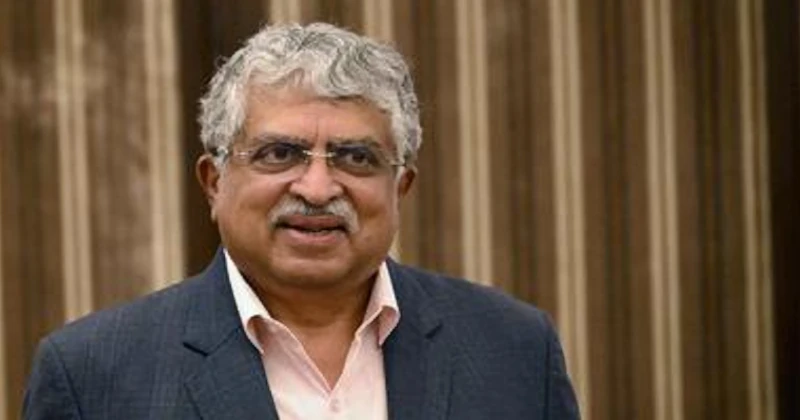
Prime Minister Narendra Modi has entrusted one of India’s most accomplished technology architects, Infosys co-founder Nandan Nilekani, with leading a high-powered task force to reform the country’s examination system. The move comes as the Centre seeks to restore public confidence in competitive examinations through structural reforms, greater accountability, and the extensive use of technology.
Announcing the initiative, the Prime Minister said the government was committed to ensuring that India’s examination system becomes “reliable, transparent and technology-driven.” He stressed that those responsible for compromising the future of students had already been brought to justice and that stronger legal safeguards were being introduced. The newly constituted panel will now focus on recommending long-term reforms that can make India’s examination process secure, leak-proof and future-ready.
The appointment of Nilekani reflects the government’s decision to rely on proven technocratic leadership for one of the country’s most challenging governance reforms. Over the past two decades, Nilekani has repeatedly demonstrated his ability to design and execute digital infrastructure at an unprecedented scale.
Widely regarded as the architect of Aadhaar, Nilekani served as the founding chairman of the Unique Identification Authority of India (UIDAI), where he led the creation of the world’s largest biometric identity programme, providing digital identities to more than a billion Indians. The Aadhaar ecosystem has since become the backbone of welfare delivery, financial inclusion and digital governance.
His contributions extend well beyond Aadhaar. Nilekani has been among the strongest advocates of India’s Digital Public Infrastructure, playing a significant role in promoting the ecosystem that enabled the Unified Payments Interface (UPI), now one of the world’s most successful real-time payment systems. He has also contributed to the Technology Advisory Group for Unique Projects (TAGUP), whose recommendations influenced the digital architecture supporting the Goods and Services Tax (GST).
In 2019, Nilekani chaired the Reserve Bank of India’s High-Level Committee on Deepening Digital Payments, recommending reforms that accelerated digital payment adoption across the country. More recently, he was appointed as an external expert on the Supreme Court’s AI Committee to guide the judiciary’s adoption of artificial intelligence and was named chief mentor of the India Energy Stack task force, which aims to build a digital public infrastructure for India’s power sector.
The latest assignment once again places him at the centre of a major national transformation initiative.
The multidisciplinary task force includes former ISRO chairman S Somanath, former Intelligence Bureau director Tapan Deka, IIT Madras Director V. Kamakoti, former Education Secretary Anita Karwal and logistics expert Amrit Lal Meena. Together, they are expected to recommend immediate measures to secure upcoming examinations while proposing systemic reforms to strengthen the National Testing Agency (NTA).
The government’s decision follows growing concerns over examination integrity and the need for institutional reforms capable of preventing paper leaks and ensuring greater transparency. Officials believe that such a challenge requires expertise beyond conventional administration, combining technological innovation with governance reforms.
Nilekani’s experience in managing projects involving massive databases, digital authentication and secure technology platforms is expected to play a crucial role in redesigning India’s examination ecosystem. His earlier participation in committees examining irregularities in recruitment examinations also provides relevant experience for the assignment.
The panel is expected to recommend measures to strengthen accountability across examination bodies, improve cybersecurity, deploy advanced digital technologies, and create mechanisms that minimise human intervention in sensitive stages of the examination process.