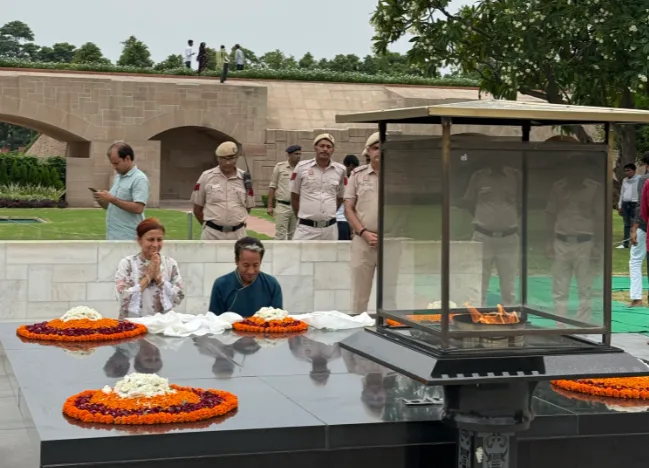
Activist Sonam Wangchuk on Monday welcomed the passage of the Public Examinations (Prevention of Unfair Means) Amendment Bill, 2026 in the Lok Sabha, describing it as a positive step while expressing hope that discussions would lead to the best possible system for the country.
Reacting to the development, Wangchuk said, “That is a good thing. Let there be a discussion, and let the appropriate measures be adopted after thorough deliberation.”
Commenting on Union Education Minister Dharmendra Pradhan’s resignation, Wangchuk said it was “just the beginning” and hoped the issue would now be addressed through constructive dialogue.
“The resignation is just the beginning. If the issue is acknowledged and addressed from this point onward, our country will become a better place. Discussions are currently ongoing, and I hope that, through a very positive dialogue, the most suitable course of action for the country will be adopted, allowing us to implement an excellent system through mutual goodwill,” he said.
Wangchuk also urged authorities to respect the constitutional right to peaceful protest.
“No action should be taken against those who are protesting peacefully. If mischievous elements are acting with malicious intent, we cannot say that absolutely nothing will happen. However, I want to make it very clear that peaceful protest is our constitutional right, and it must be respected. As for the rest, the law will take its own course,” he added.
The Public Examinations (Prevention of Unfair Means) Amendment Bill, 2026, passed by the Lok Sabha on Monday, strengthens the existing 2024 law by significantly enhancing penalties for examination-related malpractices. The legislation increases jail terms and fines for offenders, extends the debarment period for service providers involved in unfair practices from four to eight years, empowers the Centre to constitute a Special Task Force to investigate such offences, mandates completion of investigations within two months, and requires states and Union Territories to establish Special Fast Track Courts to ensure trials are completed within three months. It also provides for time-bound disposal of appeals by High Courts.