

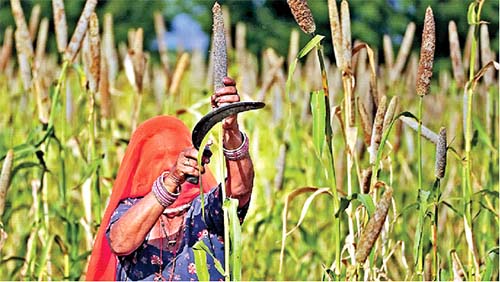
Over the last five decades, the importance of coarse grains i.e. millets has been continuously decreasing, so much so that the new generation knows very little about ragi, jowar, bajra etc—grains which had been an important part of our diets for thousands of years. The decline in millets was mostly driven by the belief that millets were sub-standard and meant only for the poor. Due to that mentality, the consumption of millets decreased amongst the rich households. The low consumption of millets in the diet of western countries has also been a cause of its low consumption among Indian affluent families. Since wheat and rice require more irrigation and almost half of the arable land in India is rain fed, devoid of proper irrigation facilities, food crops have been grown on only one third of the land. Although, now the per hectare productivity in wheat and rice has increased significantly, and due to this the production of wheat and rice is now abundant in the country. Sadly, coarse grains lost their glory post green revolution, as they vanished from Indians’ diet.
Although millets continued to be used in small quantities in rural areas, they had almost disappeared from the urban food basket. The urban people were also not much aware of the nutritional importance of coarse grains. Regular consumption of millets also helps prevent heart disease and diabetes. Coarse grains also prevent growth of cancer cells and are also beneficial for bones. Apart from this, there are numerous other virtues of millets .
Thanks to efforts made by India, the year 2023 is being celebrated as the International Year of Millets. Although millets or coarse grains have been used in India for a long time, but due to the encouragement given to wheat and rice in the Green Revolution under the new agricultural policy in 1964-65, coarse grains receded into the background and production of millets dropped drastically. In our country, mainly three types of coarse grains, namely, Jowar, Bajra and Ragi are grown in large quantities, while other coarse grains like Sanva, Chena, Kakum, Kodon, Kutki etc. are also grown in India. Apart from this, two other types of pseudo coarse cereals Rajgira and Kuttu are also produced in India. Due to encouragement given to coarse grains by Narendra Modi government, there is some increase in the production of coarse grains. In the year 2015-16, whereas the production of coarse cereals was only 145.2 lakh tonnes, it increased to 179.6 lakh tonnes by 2020-21. Most of this increase is seen in millets, whose production increased from 80.7 lakh tonnes to 108.6 lakh tonnes during this period. Presently India is the 5th largest exporter of coarse cereals in the world and the export of coarse cereals has been growing at an average rate of 3 percent over the years.
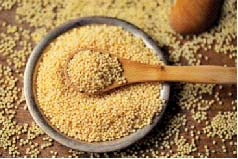
The increase in the production of coarse cereals is due to several reasons. First, better public awareness of the nutritional value of millets has boosted the demand for millets. Second, researches in the field of medical sciences, highlighting the importance of millets based lifestyle has also encouraged consumption of millets. Third, demand for coarse cereals has also been increasing overseas. Fourth, inclusion of millets in the public distribution system by the government. Fifth, the inclusion of millets in the midday meal of school children, etc is also boosting demand for millets. Apart from this, millets have also been included in the Integrated Child Development Services (ICDS) as per the suggestion of NITI Aayog.
Coarse grains are not only being encouraged by the government, but at the same time coarse grains are in fashion these days. Ragi dosa, ragi and bajra khichdi and other types of dishes are getting included in five star hotels’ menu. Today, when the year 2023 is being celebrated as the International Year of Millets, the interest in millets is also increasing in the country and the world. Due to increase in demand, farmers have also started getting remunerative prices for millets. Today, coarse grains worth about $300 million are also being exported from the country. Although the production and export of coarse cereals are increasing year by year, but there is a need to further encourage the production of coarse cereals in the country not only to improve nutrition and increase farmers’ income, but also in the context of climate change.
Future of millets
Today, the popularity of coarse grains is increasing at the international level. Efforts are also being made by the government to develop high yielding varieties of seeds of millets. Naturally, the production of coarse grains in the country is likely to increase further. Significantly, in the past, coarse grains were produced in many states including Rajasthan, Maharashtra, Odisha, Bihar and Punjab. Especially, states with vast rain fed agriculture land used to produce most of these millets and were meeting their nutritional requirements. But due to the diminishing interest of people in coarse grains, their production was affected and different types of commercial crops were produced in place of coarse grains. Millets were mostly replaced by cotton and sugarcane. Today, when the demand for coarse grains has started increasing again, in many places the interest of farmers towards coarse grains has also increased. In the past, coarse grains were produced not only in rain-fed agricultural land, but even in irrigated agricultural land like Punjab. At present, under the pressure of climate change, by promoting the production of coarse grains, we can save farmers from the onslaught of climate change and can help improve their income. Various stakeholders including agricultural scientists, policy makers and others will have to make concerted efforts to encourage the production of millets. With this, we can increase the income of the farmers, improve nutrition and can also get rid of various types of diseases by removing the anomalies in the present-day diet. Moreover, coarse grains can also become an important source of earning foreign exchange.