New data processing technique to accurately measure soot
June 10, 2026
  • Read Ecopy
  • Circulation
  • Advertise
  • Careers
  • About Us
  • Contact Us
Android AppiPhone AppArattai
Organiser
  • ‌
  • Bharat
    • Assam
    • Bihar
    • Chhattisgarh
    • Jharkhand
    • Maharashtra
    • View All States
  • World
    • Asia
    • Europe
    • North America
    • South America
    • Africa
    • Australia
  • Editorial
  • International
  • Opinion
  • RSS @ 100
  • More
    • Op Sindoor
    • Analysis
    • Sports
    • Defence
    • Politics
    • Business
    • Economy
    • Culture
    • Special Report
    • Sci & Tech
    • Entertainment
    • G20
    • Azadi Ka Amrit Mahotsav
    • Vocal4Local
    • Web Stories
    • Education
    • Employment
    • Books
    • Interviews
    • Travel
    • Law
    • Health
    • Obituary
  • Subscribe
    • Subscribe Print Edition
    • Subscribe Ecopy
    • Read Ecopy
  • ‌
  • Bharat
    • Assam
    • Bihar
    • Chhattisgarh
    • Jharkhand
    • Maharashtra
    • View All States
  • World
    • Asia
    • Europe
    • North America
    • South America
    • Africa
    • Australia
  • Editorial
  • International
  • Opinion
  • RSS @ 100
  • More
    • Op Sindoor
    • Analysis
    • Sports
    • Defence
    • Politics
    • Business
    • Economy
    • Culture
    • Special Report
    • Sci & Tech
    • Entertainment
    • G20
    • Azadi Ka Amrit Mahotsav
    • Vocal4Local
    • Web Stories
    • Education
    • Employment
    • Books
    • Interviews
    • Travel
    • Law
    • Health
    • Obituary
  • Subscribe
    • Subscribe Print Edition
    • Subscribe Ecopy
    • Read Ecopy
Organiser
  • Home
  • Bharat
  • World
  • Operation Sindoor
  • Editorial
  • Analysis
  • Opinion
  • Culture
  • Defence
  • International Edition
  • RSS @ 100
  • Magazine
  • Read Ecopy
Home Bharat

New data processing technique to accurately measure soot

WEBDESKWEBDESK
Sep 22, 2021, 01:52 pm IST
in Bharat, Sci & Tech
Follow on Google News
FacebookTwitterWhatsAppTelegramEmail
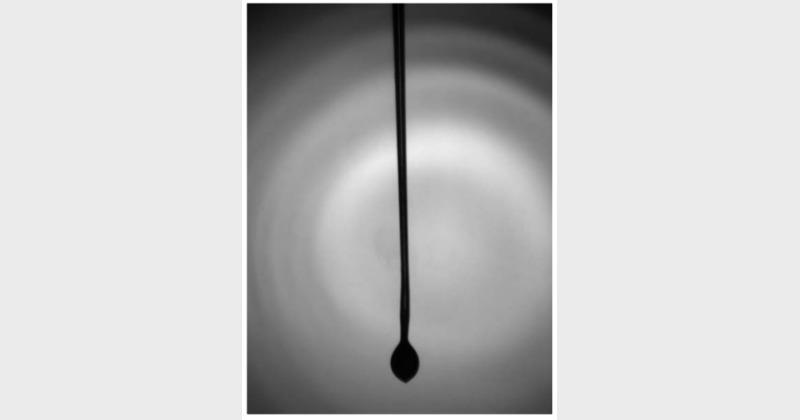
The researchers passed a beam of red laser light of a specific frequency through a droplet of burning fuel and took images as it burnt. The light falling on the camera also contains the light from the burning fuel.


New Delhi: Tiny black particles that rise from a campfire flame, called soot, are formed when the fuel doesn’t burn entirely. When fuel burns properly, a blue flame is seen, whereas the flame is yellow when the soot is formed during burning, and it becomes hot. Soot can cause cancer and respiratory and cardiac disorders. Soot can also reduce the life of machine parts.

Led by Prof Neeraj Kumbhakarna, researchers from the IIT, Bombay, have demonstrated a new technique to effectively reduce measurement errors when soot is present in low amounts. This study shows how soot is formed and measures the quantity of soot under various conditions, such as varying amounts of air for different fuels. The data helps designers minimise soot and design better combustion-based devices such as internal combustion engines, like the ones used in automobiles. Even small amounts of soot can cause damage, but it is difficult to measure small soot volumes accurately.

Researchers use digital images of burning fuel to guess its temperature and use the information to estimate the soot volume. Collecting and weighing the soot and studying a light beam shone on soot particles are some other methods to measure the amount of soot. The current study uses the last method. The researchers passed a beam of red laser light of a specific frequency through a droplet of burning fuel and took images as it burnt. The light falling on the camera also contains the light from the burning fuel. The researchers used a narrow band filter to let only the laser light pass and filter out the light emitted by the burning fuel, IIT, Bombay statement said.

“When a flame having soot particles is shone with light, called background light, the particles absorb and scatter some of this light, so light reaching the camera is less bright,” explains Dr Anand Sankaranarayanan from IIT Bombay, who is a co-author of the study.

The researchers used the relation between the initial brightness of the laser light, the brightness of the light falling on the camera and the soot volume to calculate the amount of soot. A data-processing technique was used to compute the values of brightness from their images. Their challenge was to estimate the initial brightness of background light falling on soot particles since it isn’t directly captured in the images.

In previous studies, scientists calculated the average brightness of background light from some additional images taken before burning the fuel. They used the average as an estimate of the actual brightness of background light. But a laser light flickers every few milliseconds. In the current study, the researchers predicted the brightness of background light at every moment instead of using an average. They observed the flickers in background light at areas present outside the flame of the burning fuel, where there is no soot.

They used it to estimate the background light falling on the soot particles.

“Using our new data processing technique, we got lower errors, especially when the amount of soot produced is low. Our technique does not require any additional equipment or extra expenditure, which is an added advantage,” says Dr Sankaranarayanan.

To further reduce errors in the experiment, the researchers passed the laser light beam through a fixed and a rotating diffuser- a glass sheet that scatters light before the light was incident on the burning fuel. A diffuser gives an evenly bright light and avoids the many speckles in the camera image.

A fuel that usually produces low amounts of soot, when burnt incompletely without sufficient oxygen and air or with little time to burn, can give high amounts of soot.

“For practical combustion devices, there is a range of operating conditions where soot is not formed and a range where soot formation suddenly starts happening. So if we were to use a similar setup for analysing the conditions in which there is a transition from no soot to very low soot to high soot, this study could be useful,” feels Dr Sankaranarayanan. “This is useful to design better devices and identify the right operating conditions so that formation of soot is minimal,” he adds.

The study has been published in the Journal of Aerosol Science and was jointly funded by the Industrial Research & Consultancy Centre, IIT, Bombay, and the Indian Space Research Organization (ISRO).

Courtesy: India Science Wire

ShareTweetSendShareSend
✮ Subscribe Organiser YouTube Channel. ✮
✮ Join Organiser's WhatsApp channel for Nationalist views beyond the news. ✮
Previous News

Study to help develop better treatment for blood-related disorders

Next News

Manjinder Singh Sirsa disqualified from Delhi Sikh Gurudwara Management Committee after failing to read and write ‘Gurumukhi’

Related News

Book Review | Zubeen Garg: 'The Voice That Bridged Worlds' by Prosenjit Nath

Book Review | Zubeen Garg: ‘The Voice That Bridged Worlds’ by Prosenjit Nath

A representative image generated using AI

“I am Christian, I don’t want any bhagwan”: Nurse booked for placing murtis of Hindu gods on footwear stand in Palghar

Uttar Pradesh CM Yogi Adityanath

Project GANGA: Yogi Adityanath’s ambitious plan to transform rural Uttar Pradesh into network of smart digital villages

(Left) PM Narendra Modi (Right) Former PM Jawaharlal Nehru (This is an AI generated image)

Nehru’s 72-Year Record Falls: Narendra Modi becomes India’s longest-serving elected Prime Minister

West Bengal government drops ‘Dham’ from Digha Jagannath Temple name, upholds Puri’s unique sacred status

PIB debunks viral claim that Kiren Rijiju, Arjun Ram Meghwal and Judges attended Badminton event in London

Fact Check: PIB busts viral London claim, says Rijiju-Meghwal photos are from New Delhi Judges’ Badminton Championship

Load More

Latest News

Book Review | Zubeen Garg: 'The Voice That Bridged Worlds' by Prosenjit Nath

Book Review | Zubeen Garg: ‘The Voice That Bridged Worlds’ by Prosenjit Nath

A representative image generated using AI

“I am Christian, I don’t want any bhagwan”: Nurse booked for placing murtis of Hindu gods on footwear stand in Palghar

Uttar Pradesh CM Yogi Adityanath

Project GANGA: Yogi Adityanath’s ambitious plan to transform rural Uttar Pradesh into network of smart digital villages

(Left) PM Narendra Modi (Right) Former PM Jawaharlal Nehru (This is an AI generated image)

Nehru’s 72-Year Record Falls: Narendra Modi becomes India’s longest-serving elected Prime Minister

West Bengal government drops ‘Dham’ from Digha Jagannath Temple name, upholds Puri’s unique sacred status

PIB debunks viral claim that Kiren Rijiju, Arjun Ram Meghwal and Judges attended Badminton event in London

Fact Check: PIB busts viral London claim, says Rijiju-Meghwal photos are from New Delhi Judges’ Badminton Championship

Now Islamists Eye Keralam’s Ancient Kottiyoor Temple: How Congress, Muslim Family Built Fake ‘Bavalikkettu’ Narrative

Amaravati Gets Major Boost: Andhra Pradesh Cabinet Clears Rs1,299 Crore Central Government Office Complex

PM Narendra Modi and French President Emmanuel Macron

PM Modi’s six-day Europe tour to focus on G7, AI, innovation and strategic partnerships

POJK Burns (This is an AI generated image)

POJK Boils Over: Rs 1 crore bounty on JAAC leaders as anti-government protests intensify

Load More
  • Privacy
  • Terms
  • Cookie Policy
  • Refund and Cancellation
  • Delivery and Shipping

© Bharat Prakashan (Delhi) Limited.
Tech-enabled by Ananthapuri Technologies

  • Home
  • Search Organiser
  • Bharat
    • Assam
    • Bihar
    • Chhattisgarh
    • Jharkhand
    • Maharashtra
    • View All States
  • World
    • Asia
    • Africa
    • North America
    • South America
    • Europe
    • Australia
  • Editorial
  • Operation Sindoor
  • Opinion
  • Analysis
  • Defence
  • Culture
  • Sports
  • Business
  • RSS @ 100
  • Entertainment
  • More ..
    • Sci & Tech
    • Vocal4Local
    • Special Report
    • Education
    • Employment
    • Books
    • Interviews
    • Travel
    • Health
    • Politics
    • Law
    • Economy
    • Obituary
  • Subscribe Magazine
  • Read Ecopy
  • Advertise
  • Circulation
  • Careers
  • About Us
  • Contact Us
  • Policies & Terms
    • Privacy Policy
    • Cookie Policy
    • Refund and Cancellation
    • Terms of Use

© Bharat Prakashan (Delhi) Limited.
Tech-enabled by Ananthapuri Technologies