What would be the next major reform in the electoral process and what are the impediments standing in its way? The debate over the issue must continue
Prof Rajvir Sharma
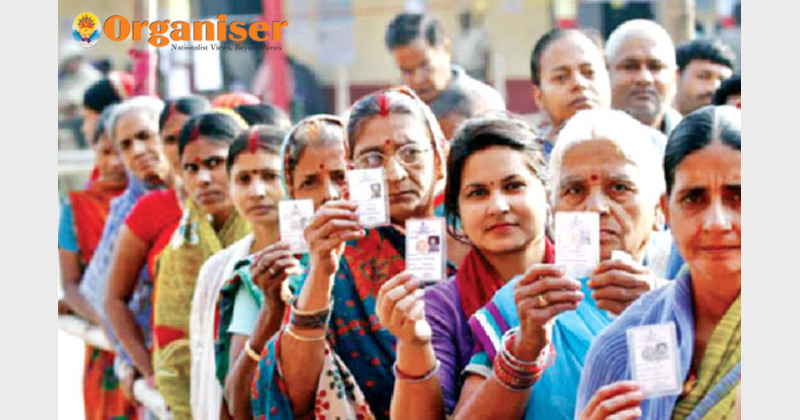
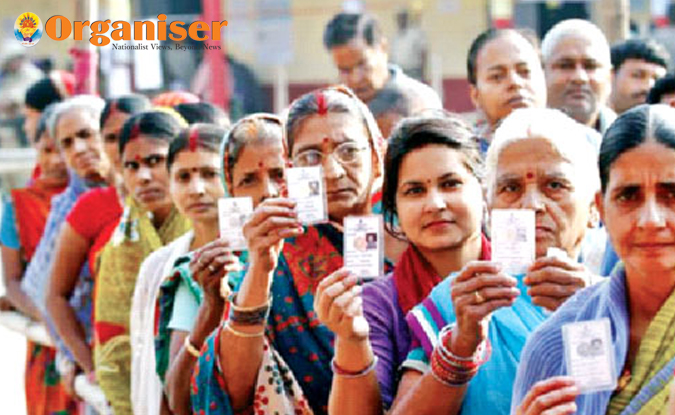
The free and fair election is the sine qua non of a robust democracy. The term implies that elections should be held in an environment of freedom of choice before the electorate without any fear, pressure or influence of any sort. As the democracy progressed in Bharat, it was noted that the elections were becoming susceptible to manipulation and the administrative machinery as well as the muscle and money available with the political parties shaped the political fate of the contestants at the polls.
I remember the days of the late 60s to early 80s when, before the introduction of the EVMs, the polling booths were auctioned for grabbing, loot or destruction by the political musclemen. Electoral violence choked the voice and freedom of many voters especially of the Dalits and the economically suppressed. Furthermore, the district magistrates and the police were often accused of taking sides in the game plan of the powers that be.
Even political democracy, not talking about social-economic democracy, seemed to be acquiring the status of mere formality. The entry of competitive politics vis-à-vis the Congress facing challenges from various national and regional political formations further aggravated the politics of booth capturing, fake voting, impersonation, gunshots etc.
Required Reforms
As the situation assumed alarming proportion, it attracted the attention of all the well-wishers of democracy including the academics, the political reformers, the civil society, the political parties, more of those who were at a disadvantage in the prevailing electoral politics, the election commission, the judiciary and the Parliament. The demand for electoral reforms became louder by the day. Many committees to examine the issue were set up including the Goswamy committee.
Among several reforms, big and small, the judiciary induced mandate for a candidate to declare the number of criminal cases registered against him or her. The number of convictions in those cases, number of cases pending etc. The defacement prevention of the public and private properties, strict enforcement of filing the election expenditure returns within the stipulated time frame as per capping on the money to be spent by the candidate. The introduction of the system of voting through the electronic voting machine (EVM) could be some worth quoting.
One Nation, One Election
The Law Commission has said that over Rs 4,500 crore will be needed to buy new EVMS and paper trail machines for “imminent” simultaneous elections to the Lok Sabha and the State Assemblies.The commission, in its draft report on simultaneous polls issued last week, quoted the Election Commission saying that around 10,60,000 polling stations will be set up for the 2019 Lok Sabha elections.“It (EC) further informed that as of now there is a shortfall of about 12.9 lakh ballot units, 9.4 lakh control units and about 12.3 lakh VVPATs (voter verifiable paper audit trail machines or paper trail machines), if simultaneous elections are to be held,” the report read. According to it, an electronic voting machine (EVM), which includes a control unit (CU), a ballot unit (BU) and a VVPAT, costs about Rs 33,200.
The objective was obvious; it was to reduce the influence of money and muscle on the mind of the voter, the monetary ceiling on electoral spending by the candidates was revised from time to time to keep it in step with the escalation of costs of man and material.
The outcome of the reforms was a mixed experience. The declaration of criminal records though enabled the electors to make an informed choice and not elect those with a criminal background. Its cleansing effect, however, is for anybody to assess. Even so, the use of EVMs for the exercise of the vote did have a defining impact on the elimination of the evils attached with ballot voting.
Debating Expenditure Ceiling
However, I am tempted to write this piece specifically because recently, a discussion on another suggestion has been taking shape, and that is relating to retaining or removing the expenditure ceiling imposed referencing an election to a State Assembly or the Parliament. The source of the debate is a recommendation of the law commission to remove this cap. It is the co-existence of two realities that makes the debate more complex. Firstly, there is a need to curb the rising salience of money power to block the road to free and fair elections. Secondly, the truth that the ceiling on expenditure is being breached with impunity by all the political players, the colour or the ideology of the parties notwithstanding. So, how to navigate through the two political strands is what is most pertinent.
There are many examples, despite the cap being in place, where tons and tons of currency notes are detected and seized from the cars and other places or the candidates distributing thousands and thousands of notes to the vulnerable sections of the voters in the name of helping the poor. Or the distribution of alcohol or saris is a common feature and an open activity for all to see on the D day. In other words, the upper limit on expenditure is more a myth than reality when it comes to implementation.
So, an argument may flow from the first line of analysis that the recommendation of the law commission should be accepted and the candidates and parties should be left free to spend as per their financial capacity. The political parties other than the BJP have come out against this proposition on the ground that such a step may deny a level playing field to the political participants in the democratic process and the mightier would rule the roast.
While there could be no upper limit on political/electoral spending, it is imperative that a close watch on bribing the voter is not lost sight off. Would the provision of acceptance only by cheque of any amount beyond Rs 2000 be of some help to brush clean the suspicion that parties with huge funding from the corporate world will deny the financially weak and regionally based political parties the opportunity to compete effectively.
(The writer is a Retd Professor of Political Science at University of Delhi)