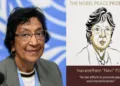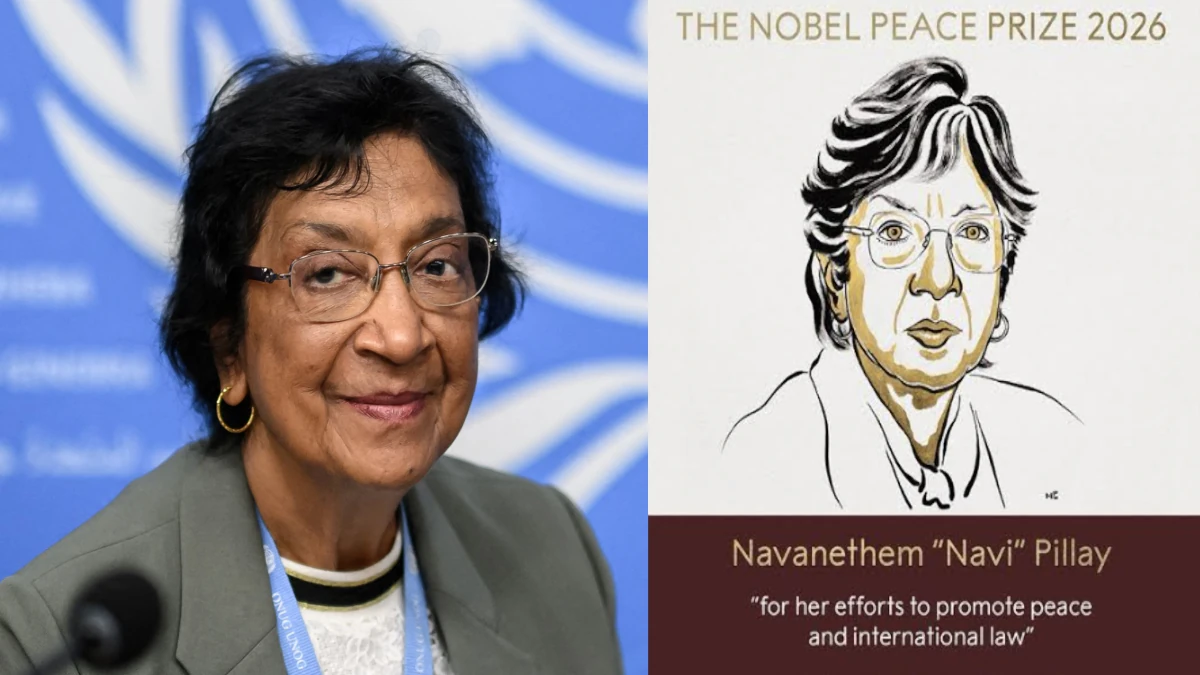
Navanethem “Navi” Pillay, a South African jurist of Indian Tamil origin, has been awarded the 2026 Nobel Peace Prize for her work in promoting peace and international law.
Pillay, 85, spent decades confronting racial discrimination, defending anti-apartheid activists and helping establish legal precedents for prosecuting genocide and sexual violence. Her recognition is also a moment of pride for India, given her Tamil heritage and the humble beginnings of her family.
Her career has taken her from South African courtrooms under apartheid to the International Criminal Tribunal for Rwanda, the International Criminal Court and the United Nations’ highest human-rights office.
Denied equality because of her skin colour, she fought her way into the courtroom
Born in Durban in 1941 to parents of Indian Tamil descent, Pillay grew up in a family of eight children. Her father, Narrainsamy Naidoo, worked as a bus driver, while her mother, Santhama, helped raise the family amid racial and economic hardship.
Apartheid South Africa imposed systematic racial discrimination, restricting opportunities and reinforcing barriers for people of colour. Pillay experienced those barriers firsthand, including restrictions on access to judicial chambers because of her race.
But discrimination did not force her out of the legal profession. Instead, it helped shape a career dedicated to challenging injustice.
She graduated from the University of Natal with a Bachelor of Arts degree in 1963 and a law degree in 1965. She later earned a Doctor of Juridical Science degree from Harvard University in 1988.
In 1967, she became the first woman to establish a law practice in Natal Province and the first Black woman to serve as a judge on South Africa’s High Court. As a lawyer, she defended opponents of apartheid, including political prisoners, and exposed abuses against detainees.
Her rise through a system marked by racial exclusion was not merely a personal achievement. It placed a woman who had experienced discrimination at the forefront of the struggle to hold powerful institutions accountable.