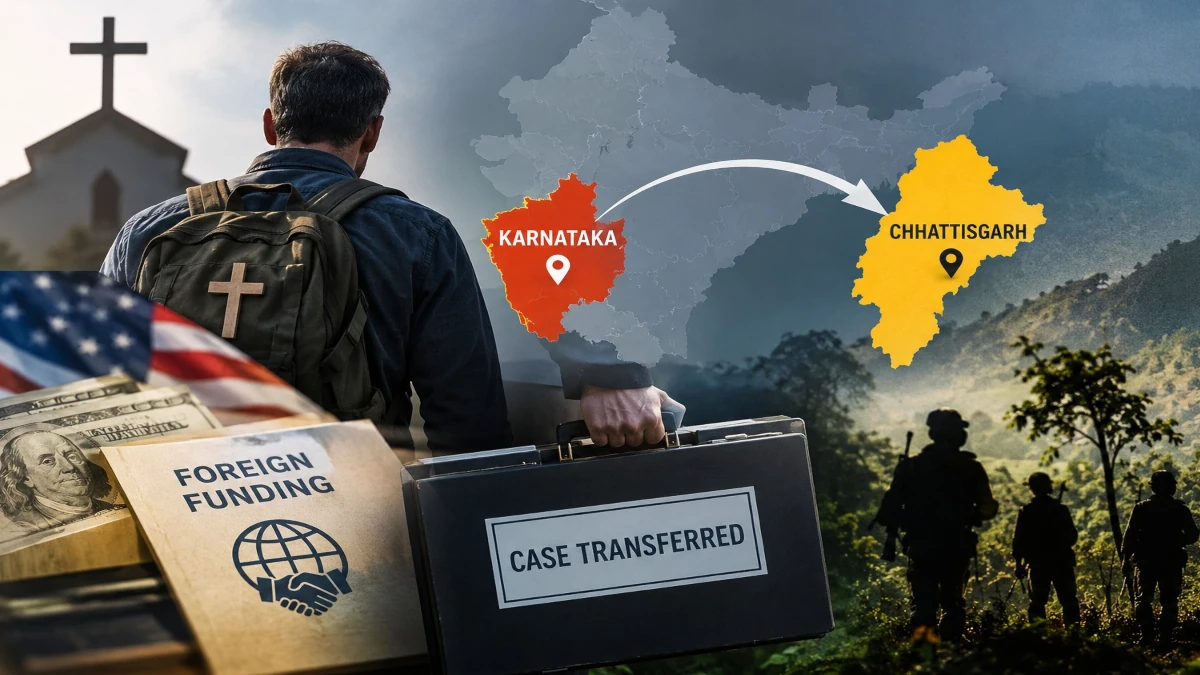
BENGALURU: The investigation into alleged foreign funding of maoist activities through a network of overseas debit cards has taken a significant turn, with Bengaluru police transferring a case involving a US-based organisation and six individuals to Chhattisgarh. The move comes as investigators in the state are already examining suspicious financial transactions allegedly linked to maoist-affected districts.
Kothanur police in Bengaluru registered the case in June under the Unlawful Activities (Prevention) Act (UAPA), based on a complaint from the Enforcement Directorate (ED). However, a separate case concerning the same organisation and accused had been registered in Chhattisgarh in May. With the investigation reportedly progressing, the court has approved transferring the case to avoid parallel probes by police in two states.
The records are expected to be handed over to the Chhattisgarh police in the coming days.
The allegations centre on the US-based Christian missionary organisation The Timothy Initiative (TTI) and six individuals from Karnataka and other states. The case names Jonathan S. Rajan of Bengaluru, Mika Mark, Ajith Varghese Mathai, Varghese Chacko of Chhattisgarh, Babloo Kurmi of Assam, and Supreme Joy of Mysuru.
Investigators are examining whether foreign funds were routed into India through debit cards issued by US-based Truist Bank and then withdrawn in cash through ATMs across several states. The ED has alleged that the transactions were carried out in violation of legal provisions and that a portion of the money was withdrawn in areas affected by left-wing extremism.
Alleged use of more than 1,000 debit cards
The ED conducted searches at multiple locations linked to the accused and the organisation on April 18 and 19. During the investigation, officials allegedly uncovered the use of foreign-issued debit cards to withdraw funds from ATMs across India.
According to the complaint, officials allege that more than 1,000 foreign debit cards were distributed in India under the fictitious name of Santosh Kumar. Investigators suspect the cards were used to withdraw large sums without following applicable legal and financial requirements.
The complaint alleges that around Rs 92.55 crore, equivalent to approximately USD 9.995 million, was utilised between November 2025 and April 2026 in transactions suspected to violate legal provisions.
Separately, withdrawals of approximately Rs 44 crore through foreign debit cards were reportedly identified across Karnataka, Chhattisgarh, Assam and other states between January 2024 and March 2026.
The investigators are examining the source of the funds, the purpose for which the money was withdrawn and the individuals or organisations that ultimately received it. The alleged transactions have raised concerns about the possible misuse of overseas financial channels to move substantial amounts of cash without adequate scrutiny.
Suspicious transactions in Maoist-affected districts
A key focus of the investigation is the alleged movement of foreign funds into Maoist-affected regions of Chhattisgarh, particularly Dhamtari and Bastar.
The ED’s complaint reportedly refers to suspicious cash withdrawals amounting to Rs 6.34 crore over several years in areas affected by left-wing extremism. Investigators are seeking to establish whether the money was used to support Maoist-related activities and identify the persons responsible for the transactions.
One transaction pattern allegedly involved two foreign debit cards used at an AU Small Finance Bank ATM at Vijay Plaza on Dhamtari Road in Chhattisgarh. The ED reportedly found that Rs 3.2 crore had been withdrawn through 3,200 transactions, each involving Rs 10,000.
According to the complaint, the withdrawals were carried out under the supervision of Varghese Chacko, described as a field-level worker. Investigators suspect that the cash was subsequently moved to districts affected by Maoist activity.
The allegations have brought renewed attention to the challenge of tracing foreign-origin funds once they are converted into cash through repeated ATM transactions. Establishing the ultimate beneficiaries and proving the money’s intended use will be crucial to determining whether the transactions were linked to unlawful activities.
Roles of the accused under scrutiny
The ED’s complaint identifies Jonathan Rajan as a person responsible for overseeing TTI’s operations in India. He allegedly coordinated with Ajith Varghese Mathai to arrange cash withdrawals and manage activities associated with the organisation.
The complaint also alleges that foreign funds funded training programmes, identified trainers, and selected locations for TTI-conducted activities. Investigators are examining whether these activities were connected to the alleged financing of left-wing extremism.
Mika Mark has been described as a key person handling the organisation’s financial operations in India. Varghese Chacko, Supreme Joy and Babloo Kurmi have been identified as field-level workers.
These descriptions and allegations form part of the investigative record. Evidence will have to establish each individual’s precise role, the nature of the activities undertaken, and any connection to unlawful organisations.
Bengaluru police had launched a search
After registering the case, Bengaluru police launched searches to trace the accused. However, they reportedly did not find them during the initial efforts.
The accused also approached the court seeking anticipatory bail. Police sources said they opposed and dismissed the applications. Investigators obtained banking transaction details and shared relevant information with the ED.
Lookout notices were also issued amid concerns that the accused might leave the country. The case was later transferred after reports said Chhattisgarh investigators had made greater progress in examining the transactions and their possible links to the affected districts.