India-Afghanistan : Monuments of Dynamic Friendship
July 11, 2026
  • Read Ecopy
  • Circulation
  • Advertise
  • Careers
  • About Us
  • Contact Us
Android AppiPhone AppArattai
Organiser
  • ‌
  • Bharat
    • Assam
    • Bihar
    • Chhattisgarh
    • Jharkhand
    • Maharashtra
    • View All States
  • World
    • Asia
    • Europe
    • North America
    • South America
    • Africa
    • Australia
  • Editorial
  • International
  • Opinion
  • RSS @ 100
  • More
    • Op Sindoor
    • Analysis
    • Sports
    • Defence
    • Politics
    • Business
    • Economy
    • Culture
    • Special Report
    • Sci & Tech
    • Entertainment
    • G20
    • Azadi Ka Amrit Mahotsav
    • Vocal4Local
    • Web Stories
    • Education
    • Employment
    • Books
    • Interviews
    • Travel
    • Law
    • Health
    • Obituary
  • Subscribe
    • Subscribe Print Edition
    • Subscribe Ecopy
    • Read Ecopy
  • ‌
  • Bharat
    • Assam
    • Bihar
    • Chhattisgarh
    • Jharkhand
    • Maharashtra
    • View All States
  • World
    • Asia
    • Europe
    • North America
    • South America
    • Africa
    • Australia
  • Editorial
  • International
  • Opinion
  • RSS @ 100
  • More
    • Op Sindoor
    • Analysis
    • Sports
    • Defence
    • Politics
    • Business
    • Economy
    • Culture
    • Special Report
    • Sci & Tech
    • Entertainment
    • G20
    • Azadi Ka Amrit Mahotsav
    • Vocal4Local
    • Web Stories
    • Education
    • Employment
    • Books
    • Interviews
    • Travel
    • Law
    • Health
    • Obituary
  • Subscribe
    • Subscribe Print Edition
    • Subscribe Ecopy
    • Read Ecopy
Organiser
  • Home
  • Bharat
  • World
  • Operation Sindoor
  • Editorial
  • Analysis
  • Opinion
  • Culture
  • Defence
  • International Edition
  • RSS @ 100
  • Magazine
  • Read Ecopy
Home Bharat

India-Afghanistan : Monuments of Dynamic Friendship

Afghans can hardly be blamed for Afghanistan?s failure to stabilise despite the billions of dollars poured into that country towards reconstruction and development, and the hundreds of billions of dollars spent by the US army and NATO.

Archive ManagerArchive Manager
Aug 29, 2016, 02:22 pm IST
in Bharat
Follow on Google News
FacebookTwitterWhatsAppTelegramEmail


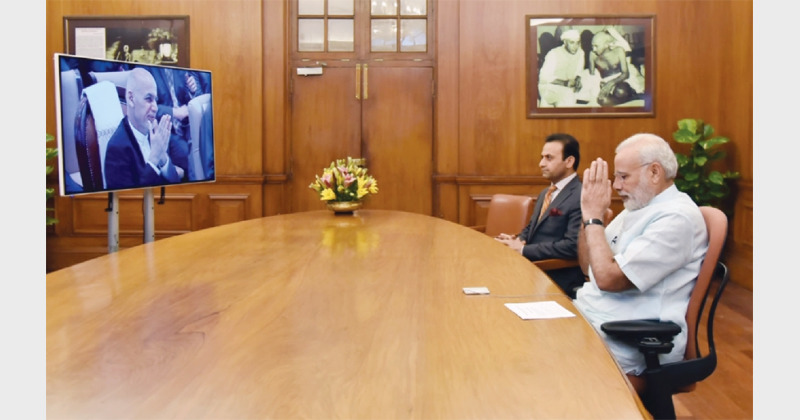
India, being a responsible regional power, craftily played a soft power role in the war-torn Afghanistan to stabilise the country as an inclusive democracy

Shakti Sinha
Afghans can hardly be blamed for Afghanistan’s failure to stabilise despite the billions of dollars poured into that country towards reconstruction and development, and the hundreds of billions of dollars spent by the US army and NATO. In fact, the country has seen unimaginable changes in school enrollment, coverage of heath facilities, infrastructure development and the mobile revolution, but these are being threatened by Islamic extremism whose forces have rapidly spread over different parts of the country. Should India worry? Or can it afford to sit back since events in Afghanistan get space only on page 14 of Indian newspapers and  rarely on TV except if the Prime Minister Narendra Modi visits that country or any major terrorist attack is deemed newsworthy? Do India and Afghanistan face common threats? If vital Indian interests are affected, should India try and influence developments in Afghanistan?

Providing New Infrastructure for Friendship

  • Prime Minister Narendra Modi inaugurated ‘Stor Palace’ in Kabul,         renovated and resorted by India spending $5.7 million, on August         22, 2016
  • Now India is set to deliver more arms to Afghanistan to help it fight     Islamist militants
  • Prime Minister Narendra Modi and Afghan President Ashraf Ghani,     in June 2016, jointly inaugurated The Afghan-India Friendship Dam,     known as SALMA dam, a Rs 1,700 crore infrastructure project by         India in strategically important Herat province
  • Narendra Modi in 2015 inaugurated the Afghan Parliament building     that was constructed by India at a cost of $90 million
  • India, last year, provided four attack helicopters to Afghanistan in the first transfer of lethal equipment
  • India has provided over $2bn in economic assistance to Afghan in the last 15 yrs

The fact of the matter is that India can hardly afford to sit back and let the Afghans singly and bravely face well-armed terrorists, actually a front for the Pakistani army desperately seeking to prevent the Afghan State from stabilising as an inclusive democracy. Its bogey about Afghanistan providing Pakistan with strategic depth is exactly that—a bogey. It can be nobody’s case that in the event with Indian forces overwhelming the Pakistani army, the latter would withdraw with its strategic assets westwards into Afghan territory. Even assuming this were feasible, Afghanistan is not exactly an ‘empty’ country that could be forced to play host to the Pakistani army and its strategic (read nuclear) assets!
The other bogey which needs to be exposed, and which paradoxically suggests a way forward is the one about Pakistan being boxed in and threatened by India and Afghanistan acting in concert. Hence the false alarm about Indian consulates in Afghanistan and on Pakistan’s imperative to seek and install a pro-Pakistan regime in Kabul. One, despite tensions with Pakistan that economically affected Afghanistan adversely, the latter did not support India during the 1965 war. Neither did Afghanistan support India during the East Bengal refugee crisis and subsequent war with Pakistan in 1971 that led to the creation of Bangladesh. Two, Pakistan has consulates in the same Afghan cities as India and with little justification: the Indian missions issue far more visas, scholarship cases and development assistance than their Pakistani counterparts. Three, the Pakistani army wants continued instability in Afghanistan, and tensions with India, to justify its complete domination of the Pakistani polity, so all talks of ensuring a friendly regime in Kabul is actually to serve its domestic corporate interests.
It is this Pakistani army bogey of  India-Afghanistan alliance that shows how critical both countries are in the former’s strategic calculus. And why should this common, self-identified opponent be confronted by both of them in concert, not as an act of war but as one of aggressive defence. In other words rather than being at the receiving end all the time, India and Afghanistan should become proactive in preventing such wanton aggression in which their citizens have suffered, and continue to suffer all the time, tremendous loss of lives.
Both the countries gave Pakistan tremendous leeway, forgave grave transgressions, extended hands of peace and all they got was renewed terrorist attacks. President Ghani, in particular, staked his entire presidency on the Pakistan army delivering peace, conceding all their demands and more. Security assistance from India was put on hold, Afghan military officers were sent to Pakistan for training, intelligence agencies of the two countries signed a memorandum of understanding, coordinated actions were carried out by army divisions across the Durand line and persons that Pakistan wanted were handed over. Most such actions were unparalleled in the history of Af-Pak bilateral relations and Ghani saw his credibility sink when the Taliban stepped up their campaign of bombings and killings of unarmed civilians, almost unravelling the government. Similarly, PM Modi flew down to Lahore, an action that was rewarded by the armed incursion and attack on the Pathankot Air Force Station. Rather than ratcheting up pressure, in an unprecedented move, the Government of India allowed a Pakistani investigation team to visit Pathankot Air Force Station and collect evidence. The response of the Pakistani army was increased infiltration into Kashmir and stepped up hostility in the Valley following the elimination of a ‘poster boy’ terrorist. Clearly, both the countries have to readjust their strategies against such relentless aggression.
PM Modi’s reference to the sufferings of the people of Baluchistan is very timely, and some would argue, long overdue. Jammu & Kashmir and Baluchistan are similar in a very significant way. But not in the way mainstream media has let us believe.  Jinnah recognised  sovereignty of both States, formally in the case of Baluchistan and implicitly in the case of J&K when Pakistan entered into ‘stand-still’ agreement with that State. A similar agreement was there with Baluchistan; significantly Jinnah the lawyer had negotiated Baluchistan’s sovereignty with the departing British as the legal representative of the Khan of Kalat; a position recognised by Pakistan when it came into existence.  In both the cases, Jinnah sent in armed raiders, actually Pakistani army out of uniform, in complete violation of the standstill agreement in a bid to forcibly take over these States. The rest is history. Afghanistan has, within its means, afforded refuge to Baluchis exiles fleeing for their lives but there are limitations in what it can do. India and Afghanistan must combine forces to highlight these atrocities being inflicted on the Baluch nation, and India must extend all its moral, humanitarian and diplomatic support.
A Pakistani army on the defensive would seek to step up violence in Afghanistan and India. While the latter can handle such aggression, unpleasant as it is, Afghanistan is in a far weaker position than its aggressor. Indian security assistance to Afghanistan must be stepped up, beginning with the supply of the fourth helicopter promised. Afghanistan is having difficulties in buying Russian equipment including helicopters; India must help smoothen this process. Afghanistan also needs to build capacity in border management to control infiltration by Pakistan-based terrorists; Indian expertise could help build adequate systems.
India remains the most popular country in Afghanistan; Pakistan remains the most unpopular country. Clearly, the Afghan people have a better understanding of overlapping interests/conflicts than strategic thinkers do. The two countries must seize the momentum in the larger interests of reducing aggression and building peace in the region, which would benefit people across national boundaries.
 (The writer is the Director, South Asian Institute for Strategic Affairs (SAISA), New Delhi)

ShareTweetSendShareSend
✮ Subscribe Organiser YouTube Channel. ✮
✮ Join Organiser's WhatsApp channel for Nationalist views beyond the news. ✮
Previous News

Opinion : Governing Amidst Expectations

Next News

Open Letter : ?Comrades, you have a history of rearing rapists?

Related News

(Left) Rath to be used at Puri Jagannath Yatra (Right) Odisha Chief Minister Shri Mohan Charan Majhi reviews Rath Yatra preparations at Lok Seva Bhawan on July 10, 2026

Puri Rath Yatra: Odisha CM reviews preparations; Govt deploys 12,000 security personnel, 30 evacuation corridors ready

Two held in the killing of Nagaland civilians

Manipur: NIA makes first arrests in sensational killings of 6 Naga civilians

People gather in large numbers during an anti-Pakistan protest, in Pakistan-occupied Jammu and Kashmir (ANI Video Grab)

POJK Unrest: Pakistan Forces kill two during JAAC protest; Umar Nazir Kashmari sets July 14 deadline if demands not met

Shahzad Bhatti, operating from Pakistan, is weaving a digital web in India! Maharashtra ATS takes action (This is an AI generated image)

Maharashtra ATS launches biggest anti-terror operation against Pakistan-based Shahzad Bhatti’s network

NIA chargesheets Shabir Shah, five others in 1996 Srinagar violence case

1996 mob violence & indiscriminate firing case: NIA chargesheets Shabir Ahmed Shah & 5 other Hurriyat leaders

Tamil Nadu: BJP, temple activists oppose lifting of registration ban on 3,085 acres of temple land in Karur

Load More

Latest News

(Left) Rath to be used at Puri Jagannath Yatra (Right) Odisha Chief Minister Shri Mohan Charan Majhi reviews Rath Yatra preparations at Lok Seva Bhawan on July 10, 2026

Puri Rath Yatra: Odisha CM reviews preparations; Govt deploys 12,000 security personnel, 30 evacuation corridors ready

Two held in the killing of Nagaland civilians

Manipur: NIA makes first arrests in sensational killings of 6 Naga civilians

People gather in large numbers during an anti-Pakistan protest, in Pakistan-occupied Jammu and Kashmir (ANI Video Grab)

POJK Unrest: Pakistan Forces kill two during JAAC protest; Umar Nazir Kashmari sets July 14 deadline if demands not met

Shahzad Bhatti, operating from Pakistan, is weaving a digital web in India! Maharashtra ATS takes action (This is an AI generated image)

Maharashtra ATS launches biggest anti-terror operation against Pakistan-based Shahzad Bhatti’s network

NIA chargesheets Shabir Shah, five others in 1996 Srinagar violence case

1996 mob violence & indiscriminate firing case: NIA chargesheets Shabir Ahmed Shah & 5 other Hurriyat leaders

Tamil Nadu: BJP, temple activists oppose lifting of registration ban on 3,085 acres of temple land in Karur

Tamil Nadu Governor Rajendra Vishwanath Arlekar, presided over the Kashi Tamil Sangamam 4.0 – 2025 Felicitation Ceremony at Lok Bhavan, Chennai on July 10, 2026

Tamil Nadu Governor Arlekar felicitates Kashi Tamil Sangamam 4.0 winners, calls for learning each other’s languages

Verification drive targeting suspected individuals in Karnataka (File Photo)

Karnataka: Six suspected illegal Bangladeshis detained in Mangaluru; FRRO begins verification for deportation

Tamil Nadu Chief Minister S. Joseph Vijay hands over compassionate appointment orders to 31 legal heirs of Karur stampede victims on July 10, 2026

Tamil Nadu: CM Joseph offers Karur victims’ kin govt jobs, subject to judicial review, politics over tragedy continues

Union Minister Shobha Karandlaje

Karnataka: Shobha Karandlaje urges Amit Shah to halt PRC of Congress govt; Cites illegal Bangladeshi immigration

Load More
  • Privacy
  • Terms
  • Cookie Policy
  • Refund and Cancellation
  • Delivery and Shipping

© Bharat Prakashan (Delhi) Limited.
Tech-enabled by Ananthapuri Technologies

  • Home
  • Search Organiser
  • Bharat
    • Assam
    • Bihar
    • Chhattisgarh
    • Jharkhand
    • Maharashtra
    • View All States
  • World
    • Asia
    • Africa
    • North America
    • South America
    • Europe
    • Australia
  • Editorial
  • Operation Sindoor
  • Opinion
  • Analysis
  • Defence
  • Culture
  • Sports
  • Business
  • RSS @ 100
  • Entertainment
  • More ..
    • Sci & Tech
    • Vocal4Local
    • Special Report
    • Education
    • Employment
    • Books
    • Interviews
    • Travel
    • Health
    • Politics
    • Law
    • Economy
    • Obituary
  • Subscribe Magazine
  • Read Ecopy
  • Advertise
  • Circulation
  • Careers
  • About Us
  • Contact Us
  • Policies & Terms
    • Privacy Policy
    • Cookie Policy
    • Refund and Cancellation
    • Terms of Use

© Bharat Prakashan (Delhi) Limited.
Tech-enabled by Ananthapuri Technologies