KIDS' ORG
July 3, 2026
  • Read Ecopy
  • Circulation
  • Advertise
  • Careers
  • About Us
  • Contact Us
Android AppiPhone AppArattai
Organiser
  • ‌
  • Bharat
    • Assam
    • Bihar
    • Chhattisgarh
    • Jharkhand
    • Maharashtra
    • View All States
  • World
    • Asia
    • Europe
    • North America
    • South America
    • Africa
    • Australia
  • Editorial
  • International
  • Opinion
  • RSS @ 100
  • More
    • Op Sindoor
    • Analysis
    • Sports
    • Defence
    • Politics
    • Business
    • Economy
    • Culture
    • Special Report
    • Sci & Tech
    • Entertainment
    • G20
    • Azadi Ka Amrit Mahotsav
    • Vocal4Local
    • Web Stories
    • Education
    • Employment
    • Books
    • Interviews
    • Travel
    • Law
    • Health
    • Obituary
  • Subscribe
    • Subscribe Print Edition
    • Subscribe Ecopy
    • Read Ecopy
  • ‌
  • Bharat
    • Assam
    • Bihar
    • Chhattisgarh
    • Jharkhand
    • Maharashtra
    • View All States
  • World
    • Asia
    • Europe
    • North America
    • South America
    • Africa
    • Australia
  • Editorial
  • International
  • Opinion
  • RSS @ 100
  • More
    • Op Sindoor
    • Analysis
    • Sports
    • Defence
    • Politics
    • Business
    • Economy
    • Culture
    • Special Report
    • Sci & Tech
    • Entertainment
    • G20
    • Azadi Ka Amrit Mahotsav
    • Vocal4Local
    • Web Stories
    • Education
    • Employment
    • Books
    • Interviews
    • Travel
    • Law
    • Health
    • Obituary
  • Subscribe
    • Subscribe Print Edition
    • Subscribe Ecopy
    • Read Ecopy
Organiser
  • Home
  • Bharat
  • World
  • Operation Sindoor
  • Editorial
  • Analysis
  • Opinion
  • Culture
  • Defence
  • International Edition
  • RSS @ 100
  • Magazine
  • Read Ecopy
Home Bharat

KIDS’ ORG

Popularly regarded as an incarnation of wind God Vayu, Madhavacharya propagated the Dvaita or ?dualist? school of Hindu Vedanta philosophy in 13th-century. He was of the view that there exist two diff...

Archive ManagerArchive Manager
Apr 23, 2012, 12:00 am IST
in Bharat
Follow on Google News
FacebookTwitterWhatsAppTelegramEmail

Madhavacharya: Proponent of Vedic culture?

Anoop Verma ?
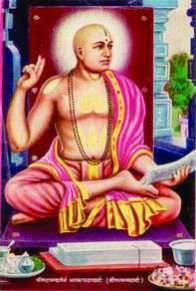
$img_titlePopularly regarded as an incarnation of wind God Vayu, Madhavacharya propagated the Dvaita or “dualist” school of Hindu Vedanta philosophy in 13th-century. He was of the view that there exist two different realities in the universe. The first is the independent reality, which is the supreme God Himself, and the second is the dependent reality, which comprises of the universe, matter and souls. In all, Madhavacharya is thought to have written 37 works, all of which exhibit a complete unity of purpose.
According to one popular tradition, Madhavacharya was born on the auspicious day of Dussehra in 1238 AD at a small village near Udipi on the west coast of India. It is said that at the time of his birth, there were sounds of divine drums from heavens. Some sages predicted that the Wind God had taken birth for revival of Vedic dharma on earth. Since childhood, Madhavacharya showed a precocious talent for all things spiritual. When he was only eleven years old, he was drawn to the path of renunciation, and joined a reputed monastic order near Udipi. At the time of initiation in sanyasa, he was given the name of Purnaprajna. The teachers at the monastic order soon realised that the young Madhavacharya was already well versed in the religious rituals. He could recite the Vedas flawlessly and he was always filled with supreme effulgence that made everyone’s minds fill with reverence. 

Barely 40 days after he had become an ascetic, Madhavacharya managed to defeat in debate an expert group of Vedic scholars led by Vasudeva Pandita, who was famous for his erudition all over the country. Overjoyed by the precocious talent that Madhavacharya had displayed, the leader of the monastery consecrated him as the head of the empire of Vedanta and conferred on him the title of Ananda Tirtha. Thus Madhavacharya came to have three names. Purnaprajna was the name given to him at the time of Sanyasa. He became Ananda Tirtha when he was consecrated as the head of the empire of Vedanta. Later on he realised that the Vedas talk about him as Madhava and he decided to utilise the name for himself.

While he was still in his teens, Madhavacharya set on a tour of South India. He visited many holy places and met and debated with Vedic scholars. He also delivered discourses and preached his Tyaktaveda or religious truth to the people. In a course of time, he was filled with the desire of touring North India. The holy centre of Badri, which was located in the foothills of the Himalayan Mountains, beckoned him irresistibly. During those days, it was believed that Vyasa used to reside in a remote place in these mountains.

According to a popular legend, one night while he was in Badri, Madhavacharya disappeared from the ashram. He remained missing for many months and his followers were filled with the apprehension that he had perished in the desolate mountains. But their fears proved to be unfounded when he appeared one fine morning looking resplendent and joyful. He told his disciples that he had ascended to the mythical mountain called Mahabadari, where he met Vyasa. He presented his commentary of Bhagavad Gita to the Vyasa and received his blessings. 

When he was back to Udipi, Madhavacharya began writing his famous Brahmasutra commentary, which had the effect of further enhancing the appeal of his message. A man of great physical stamina, he used to travel a lot and preach in his sonorous voice. The number of his disciples kept growing, and his influence spread far and wide across the country. During this time he also established a temple by installing the statue of Sri Krishna, which he had found in the ocean.

The 37 works that Madhavacharya wrote during his lifetime include, the four commentaries – on the Bhahmasutra, on the opening passages of Rig Veda, on the Upanishads and on the Bhagavad Gita. He also wrote lengthy expositions of the Mahabharata and the Bhagavata. Then there are his ten treatises devoted to the inquiry into the Supreme God. There are several other works that are devoted to establishing the fact that it is possible for human beings to make their entire life an expression of the inquiry into the Supreme God. He composed lyrical pieces that can be sung during religious ceremonies, and continue to be popular till this day.

Madhavacharya’s teachings have played a seminal role in the revival of Vedic culture in the country. According to most accounts, he passed away in 1317 AD.

ShareTweetSendShareSend
✮ Subscribe Organiser YouTube Channel. ✮
✮ Join Organiser's WhatsApp channel for Nationalist views beyond the news. ✮
Previous News

Bihar state convention of BMS BMS to spread work in rural areas

Next News

SPECIAL REPORT-2

Related News

80 Years of Organiser: Celebrating 8 decades as Voice of the Nation; VP Radhakrishnan to join in commemorative event

Tamil Nadu: Madras HC allows temple entry to American woman, says Hindutva cannot be judged by name or nationality

Tamil Nadu CM Joseph Vijay (File Photo)

Tamil Nadu: TVK alleges DMK bid to poach its MLAs; DMK counters with horse-trading complaint against CM Joseph Vijay

Odisha Govt to provide error-free textbooks to students, rejects claim of 1,678 mistakes

Odisha government to provide error-free textbooks to students, rejects claim of 1,678 mistakes

US-Iran Conflict: Beyond the battlefield

Japan’s Domestic Transformation: The silent revolution behind its strategic rise

Load More

Latest News

80 Years of Organiser: Celebrating 8 decades as Voice of the Nation; VP Radhakrishnan to join in commemorative event

Tamil Nadu: Madras HC allows temple entry to American woman, says Hindutva cannot be judged by name or nationality

Tamil Nadu CM Joseph Vijay (File Photo)

Tamil Nadu: TVK alleges DMK bid to poach its MLAs; DMK counters with horse-trading complaint against CM Joseph Vijay

Odisha Govt to provide error-free textbooks to students, rejects claim of 1,678 mistakes

Odisha government to provide error-free textbooks to students, rejects claim of 1,678 mistakes

US-Iran Conflict: Beyond the battlefield

Japan’s Domestic Transformation: The silent revolution behind its strategic rise

A section of the vast procession paying homage to Dr Syama Prasad Mookerjee

Dr Shyama Prasad Mookerjee: Exposing the mystery surrounding his death

India-Pak reconciliation appeal in an open letter by a section of Indians draws fire amid cross-border terror concerns

By enabling direct yen-rupee settlements, India and Japan are laying the foundation for a more efficient, resilient and strategically integrated economic partnership

Beyond De-Dollarisation: What India-Japan’s Yen-Rupee trade framework really means

(Left) J&K LG Manoj Sinha performing puja (Right) LG Manoj Sinha flags off the bus carrying pilgrims for the Amarnath Yatra

Amarnath Yatra 2026: LG Manoj Sinha flags off first batch of pilgrims amid tight security

Load More
  • Privacy
  • Terms
  • Cookie Policy
  • Refund and Cancellation
  • Delivery and Shipping

© Bharat Prakashan (Delhi) Limited.
Tech-enabled by Ananthapuri Technologies

  • Home
  • Search Organiser
  • Bharat
    • Assam
    • Bihar
    • Chhattisgarh
    • Jharkhand
    • Maharashtra
    • View All States
  • World
    • Asia
    • Africa
    • North America
    • South America
    • Europe
    • Australia
  • Editorial
  • Operation Sindoor
  • Opinion
  • Analysis
  • Defence
  • Culture
  • Sports
  • Business
  • RSS @ 100
  • Entertainment
  • More ..
    • Sci & Tech
    • Vocal4Local
    • Special Report
    • Education
    • Employment
    • Books
    • Interviews
    • Travel
    • Health
    • Politics
    • Law
    • Economy
    • Obituary
  • Subscribe Magazine
  • Read Ecopy
  • Advertise
  • Circulation
  • Careers
  • About Us
  • Contact Us
  • Policies & Terms
    • Privacy Policy
    • Cookie Policy
    • Refund and Cancellation
    • Terms of Use

© Bharat Prakashan (Delhi) Limited.
Tech-enabled by Ananthapuri Technologies