The Parliament Play? Wangchuk's protest timing triggers debate
July 24, 2026
  • Read Ecopy
  • Circulation
  • Advertise
  • Careers
  • About Us
  • Contact Us
Android AppiPhone AppArattai
Organiser
  • ‌
  • Bharat
    • Assam
    • Bihar
    • Chhattisgarh
    • Jharkhand
    • Maharashtra
    • View All States
  • World
    • Asia
    • Europe
    • North America
    • South America
    • Africa
    • Australia
  • Editorial
  • International
  • Opinion
  • RSS @ 100
  • More
    • Op Sindoor
    • Analysis
    • Sports
    • Defence
    • Politics
    • Business
    • Economy
    • Culture
    • Special Report
    • Sci & Tech
    • Entertainment
    • G20
    • Azadi Ka Amrit Mahotsav
    • Vocal4Local
    • Web Stories
    • Education
    • Employment
    • Books
    • Interviews
    • Travel
    • Law
    • Health
    • Obituary
  • Subscribe
    • Subscribe Print Edition
    • Subscribe Ecopy
    • Read Ecopy
  • ‌
  • Bharat
    • Assam
    • Bihar
    • Chhattisgarh
    • Jharkhand
    • Maharashtra
    • View All States
  • World
    • Asia
    • Europe
    • North America
    • South America
    • Africa
    • Australia
  • Editorial
  • International
  • Opinion
  • RSS @ 100
  • More
    • Op Sindoor
    • Analysis
    • Sports
    • Defence
    • Politics
    • Business
    • Economy
    • Culture
    • Special Report
    • Sci & Tech
    • Entertainment
    • G20
    • Azadi Ka Amrit Mahotsav
    • Vocal4Local
    • Web Stories
    • Education
    • Employment
    • Books
    • Interviews
    • Travel
    • Law
    • Health
    • Obituary
  • Subscribe
    • Subscribe Print Edition
    • Subscribe Ecopy
    • Read Ecopy
Organiser
  • Home
  • Bharat
  • World
  • Operation Sindoor
  • Editorial
  • Analysis
  • Opinion
  • Culture
  • Defence
  • International Edition
  • RSS @ 100
  • Magazine
  • Read Ecopy
Home Politics

Sonam Wangchuk, CJP and the March to Parliament: Was this a student protest or a political spectacle?

As Sonam Wangchuk's hunger strike and the CJP's proposed 'Chalo Sansad' march converge with the opening day of Parliament's Monsoon Session, political questions are being raised over whether the agitation was always intended to culminate in a high-profile showdown outside Parliament. The timing, participation of opposition leaders and Wangchuk's conditional offer to end his fast have fuelled debate over whether the movement is purely about education reform or has acquired a broader political dimension

WEBDESKWEBDESK
Jul 20, 2026, 09:00 am IST
in Politics, Bharat, Delhi
Follow on Google News
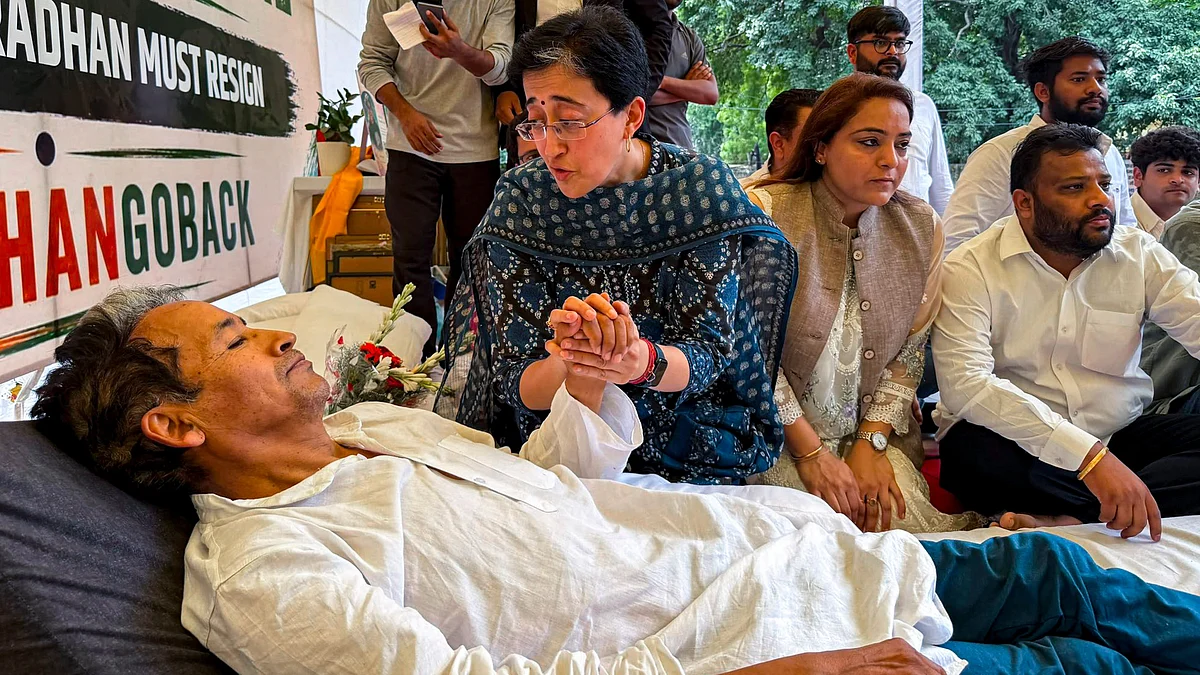
Sonam Wangchuk at the protest site with AAP leaders

Sonam Wangchuk at the protest site with AAP leaders

FacebookTwitterWhatsAppTelegramEmail

Sonam Wangchuk’s announcement that he is prepared to end his hunger strike under certain conditions on the opening day of Parliament’s Monsoon Session has triggered political debate over the timing and strategy of the protest.

The activist, who has been on an indefinite fast since June 28 over alleged irregularities in national entrance examinations, said he would end his fast if the Centre accepts responsibility for failures in the education system, if he and leaders of the Cockroach Janta Party (CJP) are allowed to present their demands before Members of Parliament, or if MPs visit him at Safdarjung Hospital and assure him that the issue will be raised in Parliament.

The coincidence of these conditions with the very first day of the Monsoon Session has prompted many to ask whether the agitation was always intended to culminate in a march towards Parliament. Delhi Police had already imposed restrictions under Section 163 of the BNSS, stepped up security across central Delhi and stated that no permission had been sought or granted for the proposed “Chalo Sansad” march.

The sequence of events has raised several questions. If the principal objective was to seek accountability over alleged examination paper leaks and education reforms, why was the decisive phase of the protest aligned with the opening of Parliament?

Was this simply an attempt to maximise public attention for the issue, or did the organisers anticipate that the protest would become a major political flashpoint on the first day of the session?

Another question being debated is whether institutional avenues had been adequately exhausted before escalating the agitation. Wangchuk has previously interacted with senior government functionaries, including the Union Education Minister, on education-related issues.

If he enjoys such access, it is a question of whether further engagement through established channels remains possible before announcing a Parliament march. Supporters, however, may contend that previous interactions did not produce the outcomes they sought, prompting a more visible campaign.

The presence of leaders and supporters from multiple political parties at what has been projected as a student-centric movement has also become a subject of discussion. Was their participation merely an expression of solidarity with students demanding accountability, or did it indicate that the protest had acquired a broader political dimension?

Political backing is common in public agitations, but it also inevitably raises questions about whether a movement remains non-partisan or becomes intertwined with wider political objectives.

The demand for the resignation of Union Education Minister Dharmendra Pradhan has further added a political edge to the campaign. While the organisers have maintained that the protest is centred on education reforms and accountability, many argue that calls for a minister’s resignation naturally move the agitation beyond administrative reform into the realm of political contestation.

The timing of Wangchuk’s latest message has also drawn attention. Rather than announcing an unconditional end to his fast or outlining a roadmap for dialogue after the commencement of Parliament, the conditions are directly linked to parliamentary engagement on the opening day itself. This has prompted many to ask whether the strategy was designed to ensure that the issue dominated the political discourse as legislators assembled for the Monsoon Session.

Supporters of Wangchuk are likely to argue that Parliament is the appropriate forum to seek accountability on issues affecting students across the country and that raising the matter when MPs are in session is both logical and democratic. Many, however, question whether the convergence of the fast, the proposed march and the opening day of Parliament was intended primarily to generate maximum political visibility.

As Parliament begins its Monsoon Session, these competing interpretations are likely to remain at the centre of the debate. Whether the protest is ultimately viewed as a determined campaign for education reform or as a politically timed mobilisation will depend on evidence, public perception and the responses of both the government and the organisers. At present, the motivations behind the strategy remain a matter of political debate rather than established fact.


Topics: Parliament ProtestSonam WangchukCockroach Janta PartyCJP protestChalo Sansad MarchMonsoon Session 2026
ShareTweetSendShareSend
✮ Subscribe Organiser YouTube Channel. ✮
✮ Join Organiser's WhatsApp channel for Nationalist views beyond the news. ✮
Previous News

Uttar Pradesh: CM Yogi inaugurates Rajju Bhaiya Sainik Vidya Mandir, urges students to put nation first

Next News

Madhya Pradesh: Cabinet clears UCC bill; Bans Triple Talaq, polygamy and nikah halala

Related News

CJP violence in Delhi should be probed by CBI: Bharatiya Vichara Kendram

Nihang Sikhs at Delhi Jantar Mantar Protest

“Not students, anti-nationals”: Nihang Sikhs confront CJP at Jantar Mantar protest, expose their sinister motives

NEET aspirant Rushi Mehra, exposes mob violence in Delhi Protest

Jantar Mantar CJP Protest: “Five goons around every genuine student,” terrified NEET aspirant exposes mob violence

Sonam Wangchuk offers to end hunger strike on three conditions: What are they?

Sonam Wangchuk offers to end hunger strike on three conditions: What are they?

NEET Paper Leak Row: PM Modi announces fast-track courts; “Nothing is more important than our youth’s future”

Delhi CJP Protest: Controversial Public Personalities Who Joined the Jantar Mantar Agitation and Sansad Chalo March

How CJP protest drew controversial public personalities as the agitation expanded beyond student issues

Load More

Latest News

Rouse Avenue Court to Fast-Track Public Examination Paper Leak Cases

Amid NEET protest paper leak cases to be heard by special fast track court at Rouse Avenue

Sonam Wangchuk breaks his fast in front of Union Ministers JP Nadda and Dr Jitendra Singh

Sonam Wangchuk accepts the govt assurance, breaks his fast at Medanta in the presence of JP Nadda and Dr Jitender Singh

RSS leader Sreenivasan (File Photo)

Murder case of RSS karyakarta Sreenivasan: Key absconder PFI leader Muhammadali KP arrested on arrival from Riyadh

Hindu marriage is a sacred sacrament, not a contract; loss of interest is no ground for divorce: Karnataka High Court

CJP violence in Delhi should be probed by CBI: Bharatiya Vichara Kendram

India's new MPMS aims to make the country a global mobile manufacturing leader by combining incentives, localisation and innovation

How Indian Mobile Phone Manufacturing Scheme positions New Delhi to outcompete the world’s rival manufacturing models

Chai-Pakoda Mornings to Biryani Nights: What’s Real Cost of One ‘Cockroach Protester’ & Who Funds the Feast Each Day?

Chai-Pakoda Mornings to Biriyani Nights: What’s Real Cost of One ‘Cockroach Protester’ & Who Funds the Feast Each Day?

The Ahoms developed an elaborate administrative hierarchies extending from the royal court to the village, the hill polities evolved equally sophisticated systems in which chiefs governed alongside councils and assemblies

Pre-colonial northeast | Ashtalakshmi: Where stability meets continuity

From Thumba's humble beginnings to private rocket launches, Atmanirbhar Bharat has transformed ISRO-led reforms into a thriving space ecosystem

From Thumba to the Space Economy: How Atmanirbhar Bharat is powering ISRO’s private space revolution

Vice-President CP Radhakrishnan addressing audience at IIAS virtually

Sardar Patel’s vision for unification meets reverence for motherland

Load More
  • Privacy
  • Terms
  • Cookie Policy
  • Refund and Cancellation
  • Delivery and Shipping

© Bharat Prakashan (Delhi) Limited.
Tech-enabled by Ananthapuri Technologies

  • Home
  • Search Organiser
  • Bharat
    • Assam
    • Bihar
    • Chhattisgarh
    • Jharkhand
    • Maharashtra
    • View All States
  • World
    • Asia
    • Africa
    • North America
    • South America
    • Europe
    • Australia
  • Editorial
  • Operation Sindoor
  • Opinion
  • Analysis
  • Defence
  • Culture
  • Sports
  • Business
  • RSS @ 100
  • Entertainment
  • More ..
    • Sci & Tech
    • Vocal4Local
    • Special Report
    • Education
    • Employment
    • Books
    • Interviews
    • Travel
    • Health
    • Politics
    • Law
    • Economy
    • Obituary
  • Subscribe Magazine
  • Read Ecopy
  • Advertise
  • Circulation
  • Careers
  • About Us
  • Contact Us
  • Policies & Terms
    • Privacy Policy
    • Cookie Policy
    • Refund and Cancellation
    • Terms of Use

© Bharat Prakashan (Delhi) Limited.
Tech-enabled by Ananthapuri Technologies