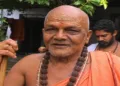




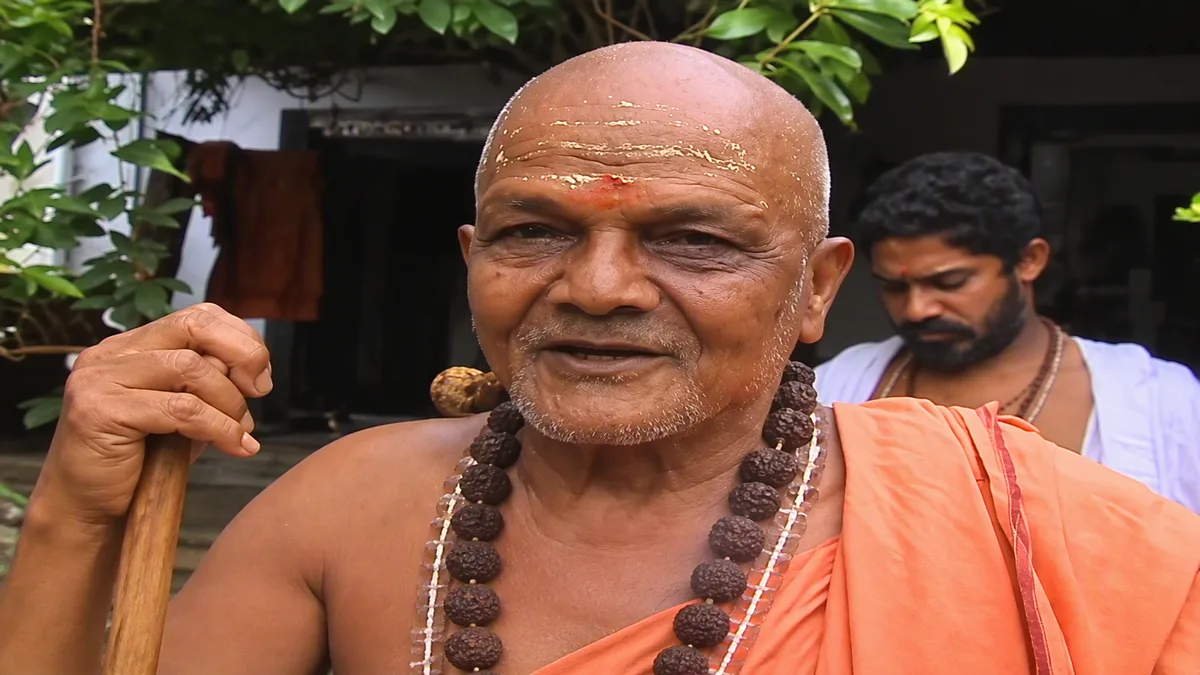
Born in Gurujang village of Angul district in 1926, Swami Laxmanananda devoted nearly four decades to tribal welfare, education, cultural preservation, environmental protection and social empowerment in Odisha. From establishing ashrams, Sanskrit schools and residential institutions for tribal girls to promoting traditional agriculture, cow protection and community self-reliance, he became a prominent figure in Kandhamal’s social and religious landscape.
His killing, following several earlier attacks and threats, remains a deeply contested and sensitive chapter in Odisha’s history.
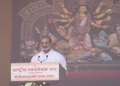
His birth centenary is being observed in 2026. Remembering the revered sanyasi during his Vijayadashami address in Nagpur on October 20, RSS Sarsanghchalak Dr Mohan Bhagwat paid tribute to him for his service and sacrifice, recalling his dedicated work among forest-dwelling communities and the ultimate sacrifice he made among the people he had served.
Vedanta Kesari Swami Laxmanananda Saraswati was brutally killed on the night of August 23, 2008. His work in Kandhamal focused on the welfare of tribal communities and opposition to what he described as fraudulent or coercive religious conversions among vulnerable tribal people.
After entering family life and becoming the father of two children, he eventually left for the Himalayas to pursue spiritual practices. When he returned from the Himalayas in 1965, he became associated with the cow-protection movement.
Initially, he established the centre of his activities in Chakapad, a predominantly tribal area of Kandhamal district. Within a few years, his service activities became widely known across the forested regions of the district.
For nearly four decades, he worked for the social and religious development and empowerment of tribal communities. In remote Chakapad, he established a school and college based on the Gurukul system to teach Sanskrit.
He also established the Shankaracharya Kanyashram, a residential educational institution and ashram at Jalespeta in Kandhamal, where girls were provided education.
In 1969, he established his first ashram at Chakapad, which became a centre for activities aimed at the welfare of the local tribal population. He also renovated the Birupakshya, Kumareshwar and Jogeshwar temples. A scholar of Vedanta philosophy and Sanskrit grammar, he came to be known as “Vedanta Kesari.”
He remained based in Phulbani for a long period and worked for the preservation of tribal culture and religious traditions. The Shankaracharya of the Govardhan Peeth in Puri honoured him with the title “Vidharmi Kuchakra Vidaran Maharathi.”
Swami Laxmanananda Saraswati Birth Centenarywas a visionary, as reflected in the range of his activities. Through his work in different fields, he sought to bring fundamental changes to the lives of people in Kandhamal.
In 1969, he established a Sanskrit school called Kalyan Ashram at Chakapad, which has since been upgraded into a Sanskrit college.
For girls’ education, he established the fully residential Shankaracharya Kanyashram at Jalespeta in Kandhamal in 1988. He also established a school at Banki in Angul district and an ashram at Pandigola.
Swamiji taught grammar to students in classrooms and modern agricultural techniques in the fields. He taught villagers when and how to cultivate paddy, vegetables and other crops.
His efforts contributed to farmers in the Udayagiri and Raikia block areas producing high-quality and large quantities of beans. He also established a vegetable cooperative society at Katingia. These initiatives helped improve the economic condition of local communities.
Campaign Against Cow Slaughter
Swami Laxmanananda often said that a region where tears or blood are shed cannot prosper. He strongly opposed indiscriminate cow slaughter and educated people about protecting cattle.
On several occasions, he participated in demonstrations, sit-ins and hunger strikes on the issue and travelled extensively across Odisha.
He remained associated with several social, cultural and religious organisations and was involved in the establishment and renovation of temples in different parts of the state.
The 1986 Jagannath Rath Yatra
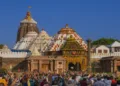
In 1986, Swamiji took the deities of Bhagwan Jagannath from Puri on a large chariot and travelled for nearly three months through Odisha’s tribal districts.
Nearly 10 lakh men and women connected with Bhagwan Jagannath through the Rath Yatra and participated in worship. The initiative was also used to create awareness against social evils and promote cow protection. It was intended to foster cultural awareness, devotion and social consciousness among tribal communities.