



The Cockroach Janta Party (CJP), a digital political and activist movement that emerged in May 2026, has drawn attention through its protests, confrontational political messaging and the controversies surrounding several of its prominent faces. Its activities raise questions about the movement’s political objectives, its approach to public institutions and whether its activism is driven by consistent principles or selective political opposition. Founder Abhijeet Dipke and figures associated with the movement, including Dhruv Rathee, Prakash Raj, Saurav Das, Mohammed Zubair, Ratna Singh and Ashutosh Ranka, have all attracted criticism over their public statements, political positions or activism on contentious national issues.
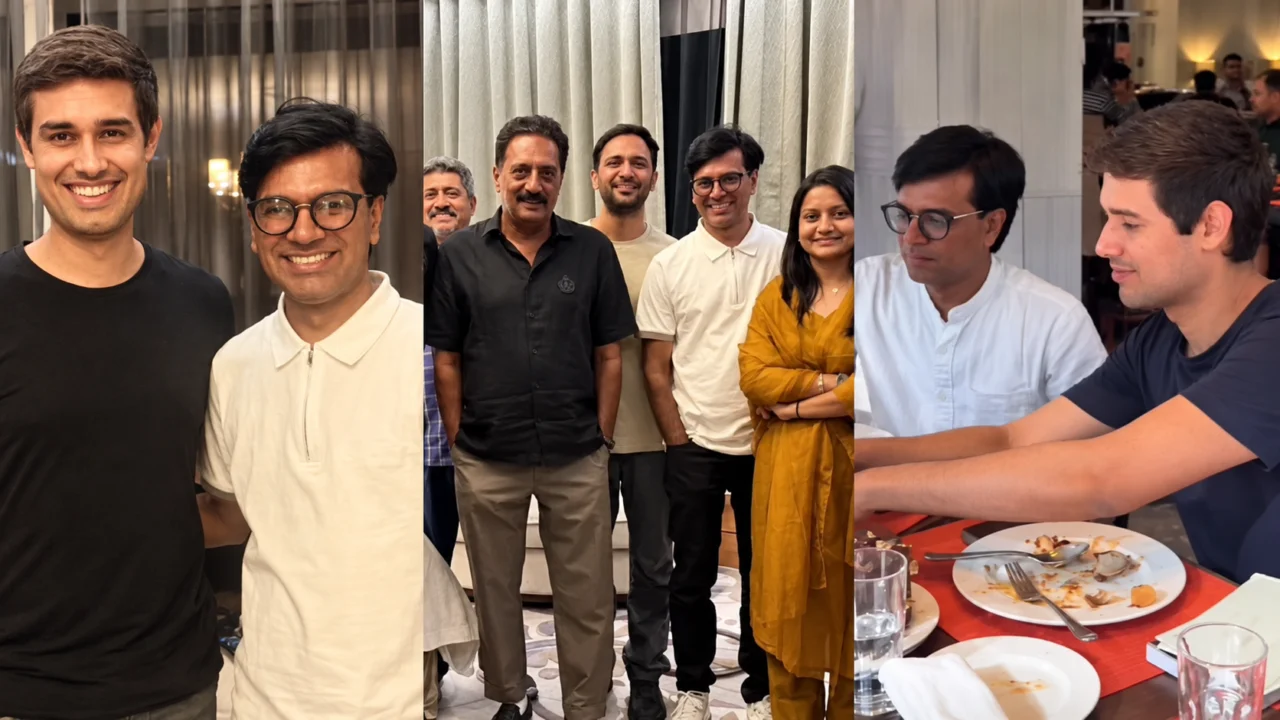
On October 8, 2026, Dipke shared an Instagram video announcing Rathee’s participation in a proposed protest at Bengaluru’s Freedom Park against Chief Election Commissioner Gyanesh Kumar. The video showed Rathee, Raj, Ranka, Zubair, Das and Singh seated together ahead of the demonstration. The gathering brought together individuals known for their outspoken criticism of the government, religious and political controversies, and activism around civil liberties. It also placed the spotlight on a central question facing CJP: whether its campaign against a constitutional authority rests on a clearly articulated case backed by evidence, or primarily on political mobilisation and public spectacle.
The controversies surrounding the seven figures offer grounds for examining the movement’s rhetoric and credibility. Rathee has faced criticism over his commentary on Hindu deities, Sanatan Dharma, political developments and communal issues. Raj has repeatedly attracted criticism for remarks concerning Sanatan Dharma, the Ramayan, the Sabarimala Mandir and national institutions. Zubair has faced legal proceedings and criticism over social media posts involving Hindu religious figures. Das has drawn scrutiny for his statements concerning Umar Khalid, the Ram Mandir, Article 370 and constitutional authorities. These disputes raise questions about the standards of accuracy, consistency and sensitivity applied by public figures who frequently position themselves as defenders of democracy and civil liberties.
Dipke’s own political record and public messaging also warrant scrutiny. Reports have examined his earlier Kashmir-related posts, his association with the Aam Aadmi Party (AAP), and expressions of support for Umar Khalid in CJP-related discussions. Allegations concerning foreign social media amplification, educational funding and political coordination have also circulated. Such claims should not be treated as proof of wrongdoing without verifiable evidence. Nevertheless, they make transparency about the movement’s funding, organisational links and political objectives an important test of its credibility. A movement that demands accountability from public institutions should be equally willing to answer legitimate questions about its own operations.
Ranka’s previous association with AAP and professional engagements with Gavi, the Vaccine Alliance, have also attracted attention. However, professional associations alone do not establish political misconduct or improper foreign influence. The relevant questions concern verifiable evidence, disclosure and the distinction between legitimate professional work and any demonstrable political coordination. Singh, meanwhile, has emerged as a legal representative of the movement, participating in its protest-related activities and legal responses. Her role places legal arguments and the movement’s public claims under particular scrutiny: allegations against constitutional authorities must be assessed on evidence and law, not simply amplified through political messaging.
Taken together, these profiles expose the tensions between political activism, public accountability and the use of controversy as a mobilisation tool. Critics of these figures have questioned their remarks on Hindu religious traditions, their treatment of national institutions and the consistency of their stated commitments to democratic values. Reports published by Organiser, OpIndia, The Commune, HinduPost, Panchjanya and other outlets have advanced various criticisms, though their claims and interpretations must be assessed individually rather than accepted as a single, established account.
The larger issue is not whether public figures should criticise the government, challenge constitutional authorities or organise protests. These are legitimate parts of democratic life. The issue is whether those who claim the moral authority to hold others accountable apply the same standards to themselves. Strong political rhetoric cannot substitute for evidence, selective outrage cannot establish principled consistency, and a protest cannot by itself prove the allegations made by its organisers. Claims involving foreign influence, funding or political coordination require documentary support and careful verification. CJP and its prominent associates should therefore be judged not merely by the causes they champion, but by the accuracy of their claims, the consistency of their standards and their willingness to face scrutiny themselves.
1. Dhruv Rathee & the selective outrage
Dhruv Rathee, born on October 8, 1994, in Haryana, is a Germany-based YouTuber, political commentator and social media influencer. Trained in Mechanical Engineering, he also holds a master’s degree in Renewable Energy from the Karlsruhe Institute of Technology. Through videos on Indian politics, history, government policies and international affairs, Rathee has built a substantial digital following. His commentary has become increasingly critical of Prime Minister Narendra Modi and the Bharatiya Janata Party (BJP), particularly since 2015–16. But his growing influence has also brought serious questions about his presentation of facts, treatment of Hindu religious traditions, use of provocative language and framing of contentious political events.
Rathee’s political videos often present complicated issues through forceful narratives that leave little room for ambiguity. His confidence and reach make his arguments influential, but neither popularity nor presentation can substitute for evidence. When discussing religion, communal violence, national security or democratic institutions, a commentator with millions of viewers has a responsibility to distinguish verified facts from interpretation and avoid reducing complex issues to convenient political conclusions.
Hindu Religious Traditions Turned into Political Controversy
On March 21, 2026, Rathee uploaded a video titled “Can Hindus Eat BEEF? | Kerala Story 2 EXPOSED.” The video examined Hindu dietary practices and referred to ancient texts while asserting that Bhagwan Ram, Bhagwan Krishna and the Pandavas consumed meat, including deer meat, and alcohol. Such claims involve complex questions of scripture, historical interpretation and religious tradition. Presenting them responsibly requires careful attention to textual context and the different interpretations surrounding these figures.
The video became a major controversy, with objections focusing on the way Hindu scriptures and revered figures were presented. In July 2026, the government’s Grievance Appellate Committee reportedly directed YouTube to remove the video on the grounds that it had the potential to hurt Hindu religious sentiments, according to reporting by OpIndia. The episode placed Rathee’s treatment of religious subjects under renewed scrutiny.
Rathee has also discussed his childhood questions about the Ramayan and Mahabharat while explaining his atheism. He subsequently used Spider-Man as an analogy in a discussion about whether a physical bridge establishes the historicity of the Ramayan. News Bharati reported on the comparison. Questioning religious narratives is a legitimate exercise of free expression, but comparisons between sacred traditions and fictional superheroes risk oversimplifying a much larger discussion about faith, history and evidence. A serious examination should address the actual arguments involved instead of relying on an analogy that may generate attention without resolving the underlying question.
Political Opposition and the Language of Contempt
Rathee’s political commentary has at times moved beyond policy criticism into personal and cultural insults. In March 2019, while responding to controversy surrounding a Holi advertisement, he wrote that BJP supporters would soon have only “Gaumutra and Gobar” to eat and drink. The remark used terms associated with Hindu cultural and religious practices as a means of attacking political opponents.
The problem with such rhetoric is that it weakens the distinction between challenging an ideology and ridiculing people associated with it. Political supporters can be criticised for their arguments, actions and electoral choices. But reducing a political disagreement to insults linked to cultural practices does little to advance a substantive debate. It also raises questions about the consistency of a commentator who speaks about misinformation, prejudice and political intolerance while using language that can deepen social divisions.
On April 23, 2019, following the death of former Goa Chief Minister Manohar Parrikar, Rathee questioned why BJP supporters had not suggested a “gobar recipe” to cure cancer. The post drew attention because it linked a political argument to the death of a public figure who had battled cancer. Political leaders should remain subject to scrutiny, including when they are ill or have died, but the scrutiny should be grounded in a relevant argument rather than a remark that appears to use personal tragedy as a weapon in a partisan dispute.
These episodes illustrate a recurring problem in political communication: outrage can attract attention, but attention does not make an argument stronger. When a commentator relies on ridicule instead of evidence, the result is often greater polarisation rather than greater public understanding.
Partition and the Risks of Simplifying History
In December 2019, Rathee argued that India had not been partitioned solely on religious grounds and described Partition as having occurred between a “Secular India and an Islamic Pakistan.” The formulation raises significant historical questions about the relationship between religious identity, competing nationalisms and the political negotiations that led to Partition.
The division of British India was shaped by multiple forces, including the politics of the Muslim League and the Congress, British decisions, competing constitutional proposals, communal tensions and the circumstances surrounding the transfer of power. Explaining this history through a single contrast risks flattening a complex process into a political slogan. Any broad interpretation must account for the historical record and engage with the different factors that contributed to Partition.
Rathee’s treatment of the subject demonstrates why historical commentary demands more than a compelling narrative. A commentator should not select a formulation simply because it supports a contemporary political argument. Historical claims must be evaluated through documents, events and context, with room for evidence that complicates the preferred interpretation.
Communal Violence and the Responsibility to Present the Full Picture
During the COVID-19 outbreak in 2020, Rathee produced content questioning claims concerning the role of Tablighi Jamaat in the spread of coronavirus. His analysis of the Delhi riots in March 2020 also examined the violence and its political context. These subjects required particular care because public discussion was taking place amid communal tension, allegations of discrimination and uncertainty about events on the ground.
The central responsibility in such cases is to apply consistent evidentiary standards. Claims about violence must be supported by reliable records, and the actions of individuals must not automatically be attributed to entire religious communities. At the same time, the principle against collective blame must not become a reason to overlook specific acts, victims or evidence relevant to understanding an incident.
A political commentator cannot establish the accuracy of a narrative merely by presenting it confidently. The credibility of an analysis depends on whether it includes the material facts, distinguishes verified information from allegations and acknowledges evidence that challenges its conclusions. When the subject is communal violence, omissions or imprecise claims can distort public understanding and intensify existing tensions.
Diwali and the Use of Tragedy in Political Arguments
In November 2020, Rathee commented on the death of the eight-year-old granddaughter of Rita Bahuguna Joshi while criticising people promoting firecrackers during Diwali. He said he observed two minutes of silence for “crazy idiots” promoting crackers. OpIndia reported that the child’s death had not been caused by firecrackers and criticised the remarks.
The episode illustrates the importance of separating a legitimate public-policy argument from the circumstances of an individual tragedy. Firecracker use can be debated on grounds of air pollution, public health and safety. But when a specific death becomes part of that debate, the circumstances must be established accurately. Otherwise, a broader argument risks becoming misleading or insensitive.
Rathee’s choice of language also matters. Public figures can advocate environmental responsibility forcefully without insulting people who disagree with them. A large digital audience makes such restraint more important, not less. The aim of public commentary should be to strengthen an argument through facts and reasoning, not to turn a tragic event into another occasion for partisan hostility.
Religious Sentiments and Consistency on Free Speech
In 2021, Rathee released a video titled “Carryminati, Munawar Faruqui and Kunal Kamra Controversy | Hinduphobia in Comedy.” He discussed the cancellation of comedy shows involving Munawar Faruqui and Kunal Kamra and argued that allegations of Hinduphobic comedy were being used politically.
The debate raises an important distinction between protecting artistic freedom and dismissing concerns about religious stereotyping. Freedom of expression includes the right to question religious beliefs and criticise public figures. It also includes the right to challenge speech considered offensive. Neither criticism nor offence, on its own, settles whether a performance should be restricted.
Rathee’s position deserves scrutiny on the consistency of its reasoning. If political motivations are relevant when examining accusations of religious offence, they must be assessed with evidence rather than assumed. Equally, allegations of prejudice should be evaluated through the actual material in question, not simply accepted or dismissed based on the identity of the performer. A consistent defence of free expression requires the same principles to apply regardless of the religion, ideology or political affiliation involved.
‘Mera Abdul’ and the Debate over Collective Blame
In April 2024, Rathee released a video titled “Reality of ‘Mera Abdul’ | The Hindu-Muslim Brainwash Agenda.” He argued against narratives that held an entire religious community collectively responsible for crimes and emphasised communal harmony.
The principle behind rejecting collective blame is sound: responsibility for a crime belongs to those responsible, and an individual’s actions cannot automatically establish the guilt of an entire community. But applying this principle effectively requires careful treatment of individual cases, reliable evidence and the wider circumstances in which crimes occur.
The challenge for Rathee is to ensure that the principle remains consistent across issues. Rejecting generalisations about Muslims should not require minimising crimes committed by particular individuals; likewise, reporting a crime involving a Muslim individual should not justify hostility towards Muslims as a whole. The same standard must apply to Hindus and every other community. Such consistency is essential if calls for communal harmony are to be more than political messaging.
‘Dictatorship’ Claims and the Need for Evidence
Rathee’s 2024 videos questioning whether India was becoming a dictatorship attracted substantial attention. His commentary placed democratic institutions, government conduct and political freedoms at the centre of public debate. These are legitimate subjects for scrutiny, but the seriousness of the claim demands precision.
Describing a country as a dictatorship is not simply a rhetorical expression of opposition to its government. It is a claim about the nature of its political system and must be supported by evidence concerning elections, institutional independence, civil liberties, the rule of law and the ability of opposition parties to function. Democratic systems can experience serious shortcomings without every shortcoming necessarily establishing that they have become dictatorships.
The same evidentiary standard applies when comparing India with neighbouring countries. Rathee’s presentation of Bangladesh drew scrutiny amid reports and controversy concerning attacks on Hindus and Mandirs there. Any comparison between political systems must account for the treatment of minorities, the functioning of institutions, civil liberties and the protection of citizens. Selective comparisons can mislead audiences if important differences or relevant developments are left unexplained.
The point is not that the government should be shielded from criticism. It is that allegations of democratic collapse must be substantiated with the same seriousness expected of any major political claim. Strong language may capture attention, but it cannot replace a systematic examination of evidence.
Savarkar, Golwalkar and the Limits of Nazi Analogies
Rathee has discussed political propaganda through the concept of a “WhatsApp Mafia” and compared political communication mechanisms with those associated with Adolf Hitler. He has also referred to Vinayak Damodar Savarkar and M. S. Golwalkar in highly critical terms, including calling them “Hitler fanboys.”
Comparisons with Nazism carry exceptional historical weight. Used carelessly, they can replace analysis with a label designed to provoke an immediate reaction. A meaningful historical comparison requires specific evidence, a clear explanation of the similarities being claimed and an acknowledgment of the differences between historical contexts.
Rathee is entitled to criticise Savarkar, Golwalkar and the political traditions associated with them. But criticism is strongest when it engages directly with their writings, actions, historical circumstances and ideological positions. Applying a label without establishing the basis for the comparison risks turning history into a rhetorical weapon. The same standard should apply to anyone who invokes Hitler to discredit a contemporary political opponent.
Pahalgam Terror Attack: Security Accountability and Communal Harmony
Following the terrorist attack in Pahalgam on April 22, 2025, Rathee released a video discussing the attack, security failures and communal tensions. He argued that the terrorists wanted Indians to turn against one another along religious lines and highlighted condemnations of the attack by Muslim organisations and Muslim-majority countries.
The attack raised serious questions about security preparedness, intelligence and the protection of civilians. Examining those failures is a legitimate part of public accountability. It is equally important to prevent terrorists from achieving a wider objective by encouraging hostility towards an entire religious community. These two concerns can and should be addressed together.
A balanced analysis must give appropriate attention to the victims, the perpetrators, the evidence surrounding the attack and any substantiated failures by the authorities. It must also distinguish criticism of security arrangements from any suggestion that terrorism can be excused. Highlighting condemnations from Muslim organisations can contribute to rejecting collective blame, but it should not substitute for examining the attack itself and the evidence surrounding it.
Rathee’s video should therefore be assessed on the claims it actually made, the evidence it presented and the context it included. The political implications of his argument do not, by themselves, establish either its accuracy or its inaccuracy.
Fact-Checking, Political Alignment and Digital Influence
HinduPost has published a compilation titled “20 Fake Claims,” challenging assertions Rathee made in videos on the Delhi riots, Partition, politics and other subjects. OpIndia, HinduPost, The Commune and Panchjanya have also published extensive criticism of his commentary and suggested that his political positions are sympathetic to AAP or opposition politics.
Such criticisms should be examined claim by claim. A disputed statement must be compared with its original context and the available evidence before it can fairly be classified as false. Repetition of an accusation does not make it proven, just as a large online following does not establish the accuracy of the person being criticised.
Rathee’s political preferences are not, in themselves, evidence that his arguments are incorrect. Nor does criticism of the Modi government automatically amount to misinformation. The appropriate test is whether his claims are accurate, whether he represents opposing evidence fairly and whether he corrects errors when they are established. The same standards apply to political commentators across the ideological spectrum.
His influence makes this scrutiny particularly important. Digital videos can shape public understanding by deciding which facts receive attention, how events are framed and which conclusions audiences are encouraged to draw. A persuasive presentation can make an incomplete argument appear comprehensive. Viewers therefore need access to the underlying evidence, not merely a confident explanation of what they should conclude.
2. Abhijeet Dipke and the Cockroach Janta Party
Abhijeet Dipke, founder of the Cockroach Janta Party (CJP), has built his political identity around confrontational digital activism and protests against state institutions. The movement emerged in May 2026 following a controversy over remarks attributed to Chief Justice Surya Kant concerning unemployed youth. Dipke studied journalism in Pune and pursued a master’s degree in Public Relations at Boston University. Media reports have also linked him to AAP’s social media and campaign activities, raising questions about his claims of political independence.
Dipke’s earlier social media activity concerning Kashmir resurfaced during scrutiny of his background. Organiser reported on the posts, while OpIndia reported that the Legal Rights Observatory had filed a complaint with Pune Police in 2019 over material it considered provocative or separatist. These were allegations, not established findings of wrongdoing.
His support for Umar Khalid, an accused in the Delhi riots conspiracy case, has also drawn criticism. OpIndia reported that Dipke had criticised Khalid’s prolonged incarceration, while The Commune examined CJP’s Discord discussions, where some supporters reportedly praised Khalid as a revolutionary freedom fighter and even a potential Defence Minister. Such political messaging has fuelled questions about the ideological direction of the movement.
On July 18, 2026, men’s-rights activist Barkha Trehan threw ink at Dipke during a CJP protest at Jantar Mantar. According to OpIndia, Trehan said she acted over allegations that Dipke and his associates had mocked Bhagwan Ram and Mata Sita on stage. The incident brought religious sensitivities into a movement that presents itself as a voice for frustrated youth.
CJP’s confrontational approach has extended to constitutional institutions. In September 2026, Dipke launched the “EC Thik Karo” campaign against Chief Election Commissioner Gyanesh Kumar over the Special Intensive Revision of electoral rolls. OpIndia reported that Dipke used terms such as “anti-national” and “traitor” for the Chief Election Commissioner. Critics have questioned whether such rhetoric constitutes serious democratic scrutiny or simply escalates hostility towards institutions.
Questions have also been raised about CJP’s online ecosystem. Organiser and OpIndia reported on alleged Pakistan-linked amplification of the movement’s social media presence and scrutiny of its online activity. These reports raised concerns but did not establish that the organisation was directed or controlled by foreign actors.
Dipke’s educational funding has also become a subject of public scrutiny. Panchjanya reported that an RTI activist sought an inquiry into the finances of Dipke’s father, reportedly a retired Maharashtra government employee, questioning how his studies at Boston University were funded. The reported salary figures prompted questions, but no financial wrongdoing is established by the material cited.
His political associations remain another point of contention. OpIndia reported that older social media posts prompted questions about Dipke’s claim that his association with AAP was limited to 2020-2023. The issue has fuelled debate over whether CJP is an independent youth platform or operates within a broader political network.
Dipke has also faced criticism over alleged derogatory remarks about rural residents of Jaipur and claims that CJP-linked protesters used abusive language against political leaders and raised anti-India or anti-Hindu slogans. These claims have been reported by OpIndia and discussed by political commentators, but each allegation requires evidence and context.
In October 2026, The Times of India reported Dipke’s statement that Hindus and Muslims should live together, while telling those pursuing divisive politics to “go to Pakistan.” The remarks sit alongside the wider controversy over CJP’s religious and political messaging.
3. Prakash Raj: Controversies Over Sanatan Dharma
Prakash Raj is an Indian actor, film producer, director and political activist known for his criticism of Prime Minister Narendra Modi, the BJP and Hindutva politics. In 2018, he described himself as “anti-Modi, anti-Shah, anti-Hegde” rather than “anti-Hindu.” He contested the 2019 Lok Sabha election from Bengaluru Central as an independent candidate. His public interventions have generated debate over Sanatan Dharma, Hindu religious traditions, nationalism, the BJP, the Rashtriya Swayamsevak Sangh (RSS), Kashmir, the Hindi language, the military and Indian scientific institutions.
In September 2023, Raj made remarks about Sanatan Dharma at an event in Kalaburagi, Karnataka. According to OpIndia, he echoed comments made by Tamil Nadu Minister Udhayanidhi Stalin and stated, “Sanatan is like dengue, and it must be eradicated.” The report also noted that Raj had previously referred to Sanatan Dharma as “Tanatan.” His remarks prompted criticism and protests in Karnataka.
Raj also faced controversy over comments concerning the Ramayan. At the Kerala Literature Festival, he discussed a version of the epic enacted by a children’s theatre group during a creative workshop. The version portrayed Bhagwan Ram and Lakshman as North Indians who “stole” fruits from Ravan’s garden in the south. Organiser reported on the controversy in April 2026, noting that the remarks had attracted criticism and reportedly led to legal action.
During the 2018 Sabarimala women’s-entry controversy, Raj criticised opposition to women worshipping at the Sabarimala Mandir. OpIndia reported that he said he had “no respect” for a religion that prevented women from worshipping. He argued that a religion that did not allow his mother to pray was not a religion, that those who prevented her from worshipping were not actual devotees, and that a deity who denied her permission was not the actual deity. His remarks generated controversy among those involved in the debate over women’s entry.
On 18 January 2018, Raj criticised Prime Minister Modi over what he described as silence regarding attacks carried out under the pretext of religious sensitivities. The Indian Express reported his statement: “They call me anti-Hindu but I am anti-Modi, anti-Shah, anti-Hegde. They are not Hindus. People who support killing are not Hindus.” The remarks became part of the public debate over his political positions and his distinction between criticism of political leaders and opposition to Hindu identity.
On 17 December 2025, Raj addressed an event titled “Longing for Justice,” organised by the Association for Protection of Civil Rights (APCR) in Hyderabad. According to The Commune, he that developments in India amounted to preparations for genocide and claimed that Muslims, tribal communities and other minorities were being deliberately targeted. He stated, “Whatever is happening in this country is a preparation of a genocide.” He also argued that constitutional safeguards and legal processes no longer mattered to those in power. The Commune criticised his allegations concerning the BJP, the RSS and the judiciary. The genocide claim was Raj’s allegation, not an established finding presented in the supplied material.
Raj has also been involved in controversy concerning the Hindi language. In March 2023, an older photograph of him wearing a T-shirt featuring a map of Karnataka and a Kannada message reading “I don’t know Hindi, Go!” circulated on social media. Responding to a user who tagged Tamil Nadu Police and asked whether a first information report would be filed, Raj said the message was a form of protest against language imposition. He wrote that his roots and mother tongue were Kannada and that attempts to force another language would prompt protest. OpIndia criticised the message as an expression of anti-Hindi sentiment.
His criticism of the film The Kashmir Files has also attracted controversy. HinduPost included his opposition to the film, along with his comments concerning cow urine and dung and his interventions in the Sanatan Dharma debate, in its criticism of what it described as a selective approach to secularism.
In August 2023, Raj faced a police complaint over a social media post concerning India’s Chandrayaan-3 lunar mission. He shared a caricature depicting a man wearing a shirt and lungi and pouring tea, accompanied by the caption, “First view just arrived from Chandrayaan .. #VikramLander #justasking.” According to OpIndia, representatives of a Hindu organisation filed a complaint at Banahatti police station in Karnataka’s Bagalkot district and sought action against him for mocking the mission. Police confirmed that a complaint had been filed.
Raj has also faced criticism over political statements concerning the BJP and its leaders. In December 2017, OpIndia accused him of spreading false information about the BJP while criticising Uttar Pradesh Chief Minister Yogi Adityanath. The publication also reported his demand for an apology from the Modi government over demonetisation and his questions about the BJP’s performance in the Gujarat Assembly elections. Raj had separately said he intended to send a legal notice to BJP MP Pratap Simha, whom he accused of damaging his image.
The controversies involving Raj have centred on his public remarks about Sanatan Dharma, Hindu religious traditions, the Sabarimala Mandir, the Ramayan, language politics, national scientific institutions and the BJP-led political establishment.
4. Saurav Das: Controversies Over Umar Khalid
Saurav Das, reported to be 27 in 2026, is a journalist, writer, Right to Information (RTI) and transparency activist, and political commentator. He was appointed chief spokesperson of CJP in June 2026 and was subsequently identified as one of its co-conveners. His published work has covered governance, courts, RTI, civil liberties, transparency and political and legal issues. His professional archive lists contributions to publications including Frontline and The Caravan. His political positioning has been characterised differently by different publications, with some describing him as a left-leaning commentator strongly critical of the BJP.
One prominent controversy concerns Das’s public support for Umar Khalid, an accused in the larger-conspiracy case relating to the 2020 Delhi riots. In a social media post in December 2025, Das wrote, “Mulaqat with the bravest, Umar Khalid.” He also described the charges against Khalid as “false, frivolous charges” and expressed “mad respect” for him. After meeting Khalid, Das reportedly described his continued imprisonment as a “permanent blot on India’s judiciary.” Organiser examined these statements in a July 2026 report concerning Das, Dipke and other CJP members.
Das has also faced criticism over statements concerning the Ram Mandir and the Babri Masjid demolition. The Commune reported that he had opposed the reconstruction of the Ram Mandir and described 6 December as a “sad day.” The publication characterised his statements as anti-Hindu rhetoric. OpIndia separately reported that Das had described the demolition of the Babri Masjid as a “BJP crime.” These statements have been cited by the publications in their assessments of his political positions.
His position on the abrogation of Article 370 has also drawn criticism. In June 2026, The Commune reported that Das had opposed the abrogation by citing a statement from the Chief Justice of Pakistan. HinduPost subsequently criticised his reliance on the Pakistani judicial authority while discussing India’s decision. The publication characterised his position as opposition to a sovereign decision by India.
Das also attracted criticism over his response to the Pahalgam terrorist attack. HinduPost argued that he focused on what he described as the communalisation of the incident rather than directing his criticism towards the perpetrators. The publication presented his response as part of a broader pattern of political positions it considered favourable to Pakistan’s narrative. These descriptions represent the publication’s assessment of his commentary.
In December 2025, Das was criticised over his participation in or support for protests associated with the Campaign Against State Repression (CASR). OpIndia reported that more than 40 organisations had formed the collective and identified Das among those who participated in or supported protests the publication described as pro-Naxal demonstrations. The report that the protests involved pro-Maoist slogans during anti-pollution demonstrations in Delhi. It also raised allegations concerning slogans associated with Maoist commander Hidma, criticism of Supreme Court judges, foreign-linked funding and support for social media accounts described as connected to Pakistan. These allegations require distinction from independently established findings.
The Commune similarly published an article titled “Love for Terrorists, Hate for Hindus,” citing Das’s support for Khalid, his opposition to the abrogation of Article 370, his criticism of Ram Mandir-related developments and his comments concerning Indian institutions. The headline and allegations reflected the publication’s characterisation of his political views.
In September 2026, Das became involved in a controversy concerning an AI-generated video that falsely attributed remarks about activist Swatantra Bhardwaj to BJP leader and lawyer Gaurav Bhatia. Bhatia filed a defamation case, following which the Delhi High Court asked CJP leaders, including Das, to remove the posts. India Today reported on 10 September 2026 that Das and fellow CJP member Ashutosh Ranka had agreed to take down the posts.
On 23 September 2026, Das accused Delhi Police of attempting to construct a “cooked-up anti-national story” around CJP members. The Times of India reported his allegation amid the continuing controversy surrounding the movement and its members.
Das has also criticised the idea of India moving towards a Hindu Rashtra, particularly in connection with the participation of constitutional authorities in Hindu religious events. In commentary concerning former Chief Justice of India D. Y. Chandrachud, Das criticised his attendance at Prime Minister Narendra Modi’s Ganesh Chaturthi puja, presenting it as a betrayal of constitutional principles and evidence of what he described as India’s movement towards a Hindu Rashtra. OpIndia discussed these remarks in its coverage of Das’s political activities.
The controversies surrounding Das include his public support for Khalid, statements concerning the Ram Mandir and Babri Masjid demolition, opposition to the abrogation of Article 370, commentary following the Pahalgam terrorist attack, allegations concerning protest activities, the AI-generated video involving Gaurav Bhatia and criticism of constitutional authorities participating in Hindu religious events.
5. Mohammed Zubair: Controversies Over Hindu Religious Sentiments
Mohammed Zubair is an Indian journalist and fact-checker who co-founded Alt News with Pratik Sinha in 2017. He is known for fact-checking misinformation, particularly claims involving communal issues, religion and Indian politics. His public commentary has frequently been critical of the BJP, Hindutva politics and right-wing political groups. He has also faced criticism and legal action over social media posts concerning Hindu religious figures and religious sentiments. Critics have characterised his political positions as strongly anti-BJP, while Zubair and Alt News describe their work as independent fact-checking.
On 27 June 2022, Delhi Police arrested Zubair over a 2018 social media post involving a hotel signboard featuring the words “Honeymoon Hotel” and “Hanuman Hotel.” Police that the post contained words and imagery directed against a particular religious community and had the potential to provoke tensions and threaten public tranquillity.
The case followed a complaint by a Twitter user operating under the handle @balajikijaiin, who tagged Delhi Police and that Zubair was deliberately linking the word “Honeymoon” with Bhagwan Hanuman, depicted as a celibate figure, through an old film clip.
In the post, Zubair referred to a hotel whose name had been changed from “Honeymoon” to “Hanuman” in 2014 to conform to Indian values or sanskaar. The post and subsequent police action became the subject of public controversy. OpIndia published a timeline of the events surrounding his arrest.
In June 2022, OpIndia published a compilation of Zubair’s older social media posts and accused him of mocking Hindu deities, scriptures and religious beliefs. The posts highlighted by the publication concerned Bhagwan Hanuman, Bhagwan Ram, the Mahabharat, the Shivling, Sanskrit, the Pushpak Vimana and other Hindu religious traditions. Organiser also published a compilation of the posts and reported that Zubair deleted his Facebook account after the material resurfaced. The allegations formed part of the criticism directed at him during the controversy surrounding his arrest.
Zubair was also involved in the controversy surrounding former BJP spokesperson Nupur Sharma in May 2022. He highlighted remarks made by Sharma concerning the Prophet Muhammad and Aisha. The remarks subsequently circulated widely and became the subject of a major national controversy. Several Muslim-majority countries condemned the remarks, and the BJP suspended Sharma. The Indian Express examined Zubair’s role and background in its coverage of the controversy.
In August 2020, Delhi Police registered a case against Zubair following a complaint by the National Commission for Protection of Child Rights (NCPCR). The complaint concerned a tweet containing a photograph of a minor girl during an online dispute involving her father. The Delhi High Court subsequently restrained coercive action against Zubair. In May 2022, Delhi Police informed the High Court that the tweet did not constitute a cognizable offence, according to The Indian Express.
During the 2022 investigation, Delhi Police expanded the case to include provisions under Section 35 of the Foreign Contribution (Regulation) Act (FCRA). The inclusion of FCRA provisions brought Alt News’s funding under scrutiny and generated questions concerning the organisation’s financial sources. The relevant legal proceedings and statutory provisions were documented in case material published on India Kanoon.
The controversies surrounding Zubair have included allegations concerning social media posts about Hindu religious figures and traditions, his role in bringing Sharma’s remarks into wider public circulation, the 2020 case involving a minor’s photograph and scrutiny of Alt News’s funding under the FCRA.
6. Ratna Singh: CJP’s Legal Affairs Lead
Ratna Singh, reported to be 31 in 2026, is a lawyer and former legal journalist who holds an LL.B. from Guru Gobind Singh Indraprastha University, Delhi. She serves as the Legal Affairs Lead on CJP’s National Working Committee. During the Jantar Mantar movement, she emerged as one of the organisation’s visible spokespersons and was involved in coordinating legal responses to FIRs and police action against protesters. ThePrint described her as one of the movement’s principal legal strategists and public defenders.
Since joining CJP, Singh’s public activities have primarily focused on student protests, constitutional rights, police action, legal assistance and electoral issues, rather than the explicitly religious controversies associated with some other figures in the organisation.
On 6 August 2026, CJP formally announced its National Working Committee, appointing Singh as Legal Affairs Lead. Saurav Das and Ashutosh Ranka were appointed co-conveners, while Abhijeet Dipke was named National Convener. The Indian Express reported the appointments.
Following the Jantar Mantar protest, CJP expanded its activities through the “School Thik Karo” campaign. Singh publicly supported the initiative in her capacity as the organisation’s legal affairs head. Speaking to Al Jazeera, she said CJP had met children and parents from rural areas who raised concerns about poor school infrastructure, teacher shortages and inadequate roads.
In a separate development, an FIR was reportedly filed in Delhi naming CJP protest organisers Saurav Das, Abhijeet Dipke, Ashutosh Ranka and Ratna Singh in connection with a cybercrime involving a morphed image of a woman displayed during the organisation’s Jantar Mantar protest. The FIR reportedly named all four in connection with the incident. The filing of an FIR constitutes a reported legal development and does not, by itself, establish guilt.
The controversies involving Singh have primarily concerned her role in CJP’s protest activities, its legal responses to police action and the reported FIR relating to the morphed image.
7. Ashutosh Ranka: AAP Background, Gavi Association, Pakistan-Link
Ashutosh Ranka, reported to be 30 in 2026, is a co-convener of CJP and one of its prominent spokespersons. He studied Materials Science and Engineering at IIT Kanpur and completed a master’s degree in Public Administration at the London School of Economics. His professional background includes working with McKinsey & Company in Mumbai and London, followed by engagements with Gavi, the Vaccine Alliance. Before joining CJP, he was associated with AAP, with several reports describing him as a party spokesperson or a member of its volunteer network.
Ranka worked with AAP during Delhi elections and gained experience in election strategy, governance and grassroots campaigning. He was associated with the party as a national spokesperson and was involved in its volunteer network. He also participated in AAP’s 2025 Delhi Assembly campaign.
AAP’s contribution report submitted to the Election Commission showed that Ranka donated rs.21,100 to the party during the 2025-26 financial year, before subsequently taking up the role of CJP co-convener. OpIndia reported the details in August 2026.
Ranka’s professional association with Gavi also attracted scrutiny. He worked with the organisation from May 2021 to July 2022 and returned in October 2024 as an independent, part-time consultant, continuing until September 2025. His second stint began after Sania Nishtar became Gavi’s chief executive officer on 18 March 2024. Nishtar had previously served as a federal minister and special assistant to former Pakistani Prime Minister Imran Khan.
During this period, Ranka also publicly associated with AAP leader Arvind Kejriwal. An article published by Organiser on 2 September 2026 examined these professional connections under the headline “Ashutosh Ranka’s Pakistan link: CJP spokesperson’s Gavi trail leads to former Imran Khan Minister Sania Nishtar.” The report raised questions about these connections, but the professional association itself does not establish a Pakistan-directed political link.
Ranka also attracted controversy over a social media post concerning the Wangchuk episode. He described the government as “the most disgusting government in the history of India” while alleging police action against Sonam Wangchuk and Abhijeet Dipke. OpIndia subsequently challenged the factual basis of claims surrounding the incident, including allegations of abduction, detention and physical assault.
As of 5-8 October 2026, Ranka remained one of CJP’s principal public faces ahead of the organisation’s planned 10 October protest against the Special Intensive Revision exercise and Chief Election Commissioner Gyanesh Kumar.
The controversies surrounding Ranka have centred on his previous AAP association, his political activities, his professional engagements with Gavi, allegations raised about Pakistan-linked connections and his public criticism of the government.
The seven profiles document a range of controversies involving political commentary, religious sentiments, social media activity, legal proceedings and protest movements between 2018 and 2026. The individuals examined have attracted criticism over different issues, from remarks concerning Hindu deities and Sanatan Dharma to debates surrounding Article 370, the Ram Mandir, the Pahalgam terrorist attack, the Election Commission and the functioning of constitutional institutions.
The emergence of CJP in 2026 has brought several of these individuals into a common political and activist platform. Dipke’s leadership, the involvement of Rathee and Prakash Raj in public campaigning, the roles of Saurav Das and Ashutosh Ranka as co-conveners, Mohammed Zubair’s participation in the wider public discourse and Ratna Singh’s legal responsibilities have placed the organisation under scrutiny. Its protests and campaigns have also generated questions about political independence, institutional criticism and the relationship between student activism and established political networks.
The reports examined in this compilation reflect sharply differing assessments of the individuals and their activities. Some publications have accused particular figures of selectively presenting political events, making statements that offend Hindu religious sentiments or advancing positions they consider favourable to opposition parties. Others have focused on civil liberties, government accountability, constitutional rights and the treatment of protesters. Allegations of foreign influence, funding irregularities and political coordination remain distinct from verified facts unless substantiated by documentary evidence or formal findings.
The distinction between criticism, allegation and established fact is central to understanding these controversies. A public statement, a social media post, a complaint or the filing of an FIR may generate legitimate public scrutiny, but each must be assessed in its proper context. Likewise, political criticism of the government or a constitutional institution should be evaluated on the basis of the available evidence, while allegations concerning religious offence, foreign influence or unlawful activity require appropriate substantiation.
As CJP continues to draw attention through its political campaigns and planned demonstrations, the backgrounds and public positions of its prominent figures are likely to remain part of the debate surrounding the organisation.