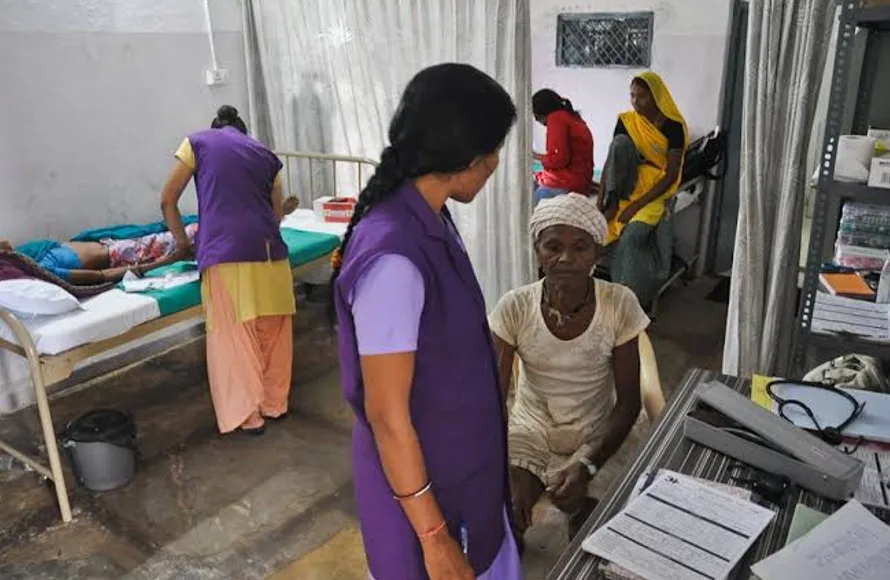
Indian ancient healing sciences are writing one of the most heartening employment stories of the new economy. Women now make up 43 per cent of the workforce in the country Ayush services sector and across several organised segments their share has crossed the halfway mark. In spas and wellness resorts more than 60 per cent of the workforce is female. Educational institutes stand at 58 per cent, day-care centres at 57 per cent and hospitals at 53 per cent.
The Ayush Service Sector Report, prepared by the Research and Information System for Developing Countries (RIS) and released on Ayurveda Day 2026. They sit inside a larger picture: a sector estimated at US$36.92 billion in FY2024-25 that directly supports about 1.76 million livelihoods across healthcare, wellness, education and allied services.
Ayurveda, Yoga and Naturopathy, Unani, Siddha, Sowa-Rigpa and Homoeopathy are no longer valued only as a cherished inheritance. Together they have become a living economy and women are among its most visible builders.
Where women lead the workforce
Wellness establishments top the list, which is hardly surprising. Therapy, yoga instruction, nutrition guidance and guest care are vocations built on patience, trust and personal attention and women have made them their own.
Educational institutes come next, pointing to a growing community of women who teach, mentor and research in Ayush colleges and training centres. Day-care centres and hospitals, the clinical core of the sector, complete the picture, each now employing a majority of women.
Union Minister of State (Independent Charge) for Ayush, Prataprao Jadhav, has noted that the sector’s growth is strengthening India’s healthcare ecosystem while opening fresh avenues for entrepreneurship, skill development and women’s participation in the workforce.
Ministry of Ayush Secretary Vaidya Rajesh Kotecha added that quality standards, skilling, digital infrastructure and stronger institutional networks can raise both the scale and the quality of employment and that the rising presence of women in organised establishments reflects the sector’s promise for inclusive economic growth.
A complete picture, for the first time
The report was unveiled at the 11th Ayurveda Day celebrations in Nagpur on 23 September 2026, held under the theme “Ayurveda for a Healthier Tomorrow”. It rests on a nationally scaled survey of 15,914 establishments spread across all six Ayush systems.
According to Secretary Kotecha, this is the first time the economic contribution of Ayush services has been measured through an establishment-level survey of such breadth, giving policymakers and investors a firm evidence base to work with.
RIS Director General Professor Sachin Kumar Sharma summed up “No longer a peripheral sector but a dynamic, knowledge-based service economy”. The same Nagpur event saw the launch of Ayush Vision 2030 and the CCRAS-AGNI Assessment Scale Web Portal, along with safety dossiers on medicinal plants and Standard Treatment Guidelines for skin disorders.
Research, standards and enterprise, in other words are moving forward together. As Dr Sanjeev Sharma, Vice-Chancellor of the National Institute of Ayurveda, Jaipur, pointed out in Nagpur, the day exists to show the public that Ayurveda is a scientific tradition of Indian knowledge.
An economy growing at pace
The expansion has been brisk. Since FY2022-23 the sector has recorded a compound annual growth rate of 16.91 per cent, a pace that places it among the country’s fastest-growing service segments. Standalone clinics are the largest revenue earners, contributing an estimated US$16.21 billion, or 43.9 per cent of sector revenue. Day-care centres add another US$10.13 billion. Between them, these two segments account for more than 70 per cent of revenue.
By system Ayurveda leads with US$17.73 billion, about 48 per cent of the total. That a tradition thousands of years old should anchor a modern, fast-growing service economy speaks to its enduring relevance.
Clinics at the heart of livelihoods
Figures of this scale mean little unless they reach ordinary households and here the Ayush story is particularly strong. More than one million livelihoods are concentrated in local and standalone clinics: the neighbourhood vaidya, the community homoeopath, the small therapy centre around the corner. These establishments are spread across urban and rural India alike, which means employment is being created close to where people live.
There is an Antyodaya spirit in this. Healthcare that is affordable, familiar and nearby also becomes a source of dignified work for the families who run and staff it. For many women, a livelihood rooted in their own community can make participation in the workforce easier to sustain.
The reach deserves a moment reflection. A sector whose livelihoods rest so heavily on small, locally rooted clinics does not depend on any single city or institution. Its strength is distributed across the country, much like the knowledge it carries.
Wellness and Yoga: Prevention finds its market
If clinics are the sector’s foundation, wellness is its fastest-moving frontier. The wellness segment, covering yoga centres, spas and resorts, has grown at 21.29 per cent annually. Yoga centres alone saw revenue rise by around 75 per cent over two years.
Such momentum reflects a public increasingly drawn to preventive health, balanced routines and holistic care rather than waiting for illness to strike. This turn towards prevention echoes what the Ministry has been saying all along.
Ahead of Ayurveda Day, Minister Jadhav observed that the world is increasingly looking towards preventive healthcare, healthy lifestyles, nutrition and holistic wellbeing, areas where India has both a rich tradition and vast experience.
He also called for Ayurveda Day to become a people’s movement, with evidence-based information reaching every household, school, college and workplace. When awareness grows in this way, demand for trained professionals follows and with it the livelihoods the survey now measures.
It is no coincidence that this is also the segment where women’s representation is highest. As demand for wellness grows, so does the need for trained therapists, yoga teachers, counsellors and managers. Women are stepping into those roles in large numbers.
Medical Value Travel: Healing that welcomes the world
Ayush is also finding admirers beyond India’s borders. Medical Value Travel generated an estimated US$1.77 billion in FY2024-25. International patients make up only around 5 per cent of patient volumes, they contribute roughly 15 to 25 per cent of hospital-segment revenue, a sign of how highly overseas visitors value what Indian establishments offer.
Therapeutic programmes such as Panchakarma and residential yoga typically involve stays of five to 11 days, giving visitors time to experience a complete system of care rather than a single procedure. The assessment also records that establishments with a dedicated website have 3.6 times higher odds of attracting international patients, while NABH or ISO accreditation is associated with a doubling of those odds. Quality marks and a strong digital presence open global doors and Indian institutions are well placed to walk through them.
Nari shakti and the wisdom of the home
Long before any survey counted them, Indian women were custodians of everyday health wisdom. Knowledge of turmeric and tulsi, of seasonal diets, of the kitchen as a pharmacy, travelled from grandmother to granddaughter without a single textbook. What the Ayush services sector now offers is a way to carry that inherited sensibility into formal careers, with qualifications, institutions and enterprises built around it.
This is Nari Shakti in its most practical form. It is not a slogan but a visible shift in who teaches in Ayush colleges, who heads day-care centres, who greets patients in hospitals and who builds wellness brands. Minister Jadhav has linked the sector’s progress to the vision of a healthy and self-reliant India, and the growing role of women gives that vision both depth and strength.
The road to 2047
The assessment looks ahead with confidence. The Ayush services sector is projected to grow from US$36.92 billion to between US$216 billion and US$318 billion by 2047, creating employment across healthcare delivery, wellness, education, medical travel, research, digital health and allied services.
The report names four broad areas that can carry this journey forward: the Ayush knowledge value chain, enterprise and institutional capabilities, global competitiveness together with Medical Value Travel and innovation through digital technologies and artificial intelligence. Each is also a field where skilled women professionals, entrepreneurs and researchers can lead.
That is the larger story the Ministry has drawn out. The growing representation of women across organised Ayush establishments, alongside the sector’s widening economic and employment footprint, supports women’s economic participation, inclusive growth and India’s march towards Viksit Bharat@2047.
A living tradition, a shared future
The ancient prayer for a world free of disease, sarve santu niramayah, has always been central to India’s civilisational outlook. Today it finds a modern expression in clinics, classrooms, wellness centres and hospitals where women are healing, teaching and building. The Ayush services sector shows that tradition and enterprise need not be set apart.
When heritage is backed by evidence, quality and opportunity, it becomes a source of health for the nation and livelihood for lakhs of families. That is a future worth working towards and the women of Ayush are already leading the way.