Colonial Narratives & Civilisational Truth: Why NCERT need reset
October 17, 2026
  • Read Ecopy
  • Circulation
  • Advertise
  • Careers
  • About Us
  • Contact Us
Android AppiPhone AppArattai
Organiser
  • ‌
  • Bharat
    • Assam
    • Bihar
    • Chhattisgarh
    • Jharkhand
    • Maharashtra
    • View All States
  • World
    • Asia
    • Europe
    • North America
    • South America
    • Africa
    • Australia
  • Editorial
  • International
  • Opinion
  • RSS @ 100
  • More
    • World Hindu Congress 2026
    • Op Sindoor
    • Analysis
    • Sports
    • Defence
    • Politics
    • Business
    • Economy
    • Culture
    • Special Report
    • Sci & Tech
    • Entertainment
    • G20
    • Azadi Ka Amrit Mahotsav
    • Vocal4Local
    • Web Stories
    • Education
    • Employment
    • Books
    • Interviews
    • Travel
    • Law
    • Health
    • Obituary
  • Subscribe
    • Subscribe Print Copy
    • Subscribe & Read Ecopy
  • ‌
  • Bharat
    • Assam
    • Bihar
    • Chhattisgarh
    • Jharkhand
    • Maharashtra
    • View All States
  • World
    • Asia
    • Europe
    • North America
    • South America
    • Africa
    • Australia
  • Editorial
  • International
  • Opinion
  • RSS @ 100
  • More
    • World Hindu Congress 2026
    • Op Sindoor
    • Analysis
    • Sports
    • Defence
    • Politics
    • Business
    • Economy
    • Culture
    • Special Report
    • Sci & Tech
    • Entertainment
    • G20
    • Azadi Ka Amrit Mahotsav
    • Vocal4Local
    • Web Stories
    • Education
    • Employment
    • Books
    • Interviews
    • Travel
    • Law
    • Health
    • Obituary
  • Subscribe
    • Subscribe Print Copy
    • Subscribe & Read Ecopy
Organiser
  • Home
  • Bharat
  • World
  • Operation Sindoor
  • Editorial
  • Analysis
  • Opinion
  • Culture
  • Defence
  • International Edition
  • RSS @ 100
  • Magazine
  • Read Ecopy
Home Bharat

Colonial Narratives and Civilisational Truth: Why NCERT textbook reset has been a overdue

The rewriting of NCERT textbooks has reignited the debate over colonial interpretations of Indian history and the representation of Bharat’s civilisational heritage. The authors argue for a balanced, evidence-based approach that highlights India’s achievements, resistance movements and diverse historical traditions

Shaitan SinghShaitan Singh
Oct 17, 2026, 05:30 pm IST
inBharat, Education
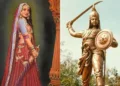
NCERT revisions renew the debate over colonial narratives and the need to reclaim Bharat’s civilisational heritage

NCERT revisions renew the debate over colonial narratives and the need to reclaim Bharat’s civilisational heritage

Facebook
Twitter
WhatsAppTelegramEmail

NEW DELHI: It is not just a debate on adding or removing a few chapters from the NCERT textbooks being rewritten. It poses a much bigger question: Who wrote the history, how, and why? The controversial issue of historical representation once again came into focus in the national debate with the recent changes in the NCERT books, especially the new Class IX Social Science book. The new text places more emphasis on Indian resistance, on relatively indigenous, less prominent figures and political traditions that had been largely overlooked in previous texts. Indian history was written in a significant manner by the colonial categories for a long time.

British historians were clearly in an imperial framework: the intellectual justification for colonialism. India was often described by imperialists as a civilisational entity that was devoid of political unity, historical consciousness and self-governance, which led them to believe that British rule is a civilising mission. However, another aspect of colonial history that had a significant impact on how the Indian past was perceived by later generations was the division of Indian history into discrete Hindu, Muslim and British eras.

The historiography of India after Independence took a few directions. Nationalist historians worked to reclaim India’s agency and the psychological and political underpinnings of the freedom movement. Concurrently, Marxist perspectives gained popularity in Indian universities and in the production of textbooks, from the second half of the twentieth century onwards. Despite their contributions to economic and social history, however, the importance of any one historiographical approach may pose a problem if it starts to influence the identification of those people, events and civilisational experiences that should be highlighted. It is not the fault of the Marxist historians that they studied class, economy or material conditions. These are valid aspects of history. The issue is that class is the only prism through which the past is viewed, or the political and cultural prism is limited to the economic prism. There is not enough class conflict vocabulary to explain a civilisation. It is also a historical subject that includes and remembers its ideas, institutions, religions, philosophies, resistance movements and its notions of “dharma”.

Also Read: Jantar Mantar Violence: Supreme Court-appointed High Powered Committee invites complaints and evidence on CJP protest

The historiographical plurality is demonstrated in the history of 1857. It was often referred to by the colonial writers as a ” Sepoy Mutiny” or “Indian Mutiny”, highlighting military disobedience. V.D. Savarkar’s “The Indian War of Independence of 1857” work (1909), on the other hand, framed the uprising in a nationalistic light and viewed it as a nationalist movement against British rule. This alone shows that students must be introduced to more than one interpretation of the text and not just the one that is written by imperialists. The uprising of 1857 was a combination of soldiers, rulers, peasants, religious warriors and parts of civil society, although it was geographically uneven, ideologically heterogeneous, and not very well organised. It is better to teach students these complexities than to make it a simple military mutiny or deem the event a fully integrated modern national movement automatically.

This stands true for medieval history of India as well. The strengths and resistance of several Indian powers were not always considered proportionately in popular textbook discourses for several decades. The political and military history of the Rajputs, the defiant spirit of Maharana Pratap, the Sikh custom of sacrifice and resistance, the Maratha state-building project and many regional kingdoms need to be studied in the context of the nation’s history.

An attempt at wider representation is being made through these new NCERT textbooks, which highlight figures like Maharana Pratap, Queen Naiki Devi and the resistance of the Sikhs. For example, the study of Maharana Pratap shouldn’t be done as a character in opposition to Akbar. His life poses and raises questions of sovereignty, political autonomy, resistance and the interplay of power and principle. In the same way, the history of the Marathas and Sikhs is not just a series of battles and skirmishes; it is a history of political organisation, state-formation and resistance which had a significant impact on the subcontinent.

A more balanced representation is needed of Ancient India as well. Indian civilisation had a tradition of advanced philosophy, mathematics, astronomy, medicine, Yoga, Ayurveda, statecraft, literature and political thought. Texts should not romanticise history nor use colonial imagery to denigrate it. The right method of study is an ‘appropriate academic approach’ which would involve not only the achievements but also the shortcomings and limitations of the historical societies; but the students should also be taught seriously about the Indian civilisational achievements, as much as they are taught about the achievements of European or other civilisations of the world. The concept of decolonising the mind is crucial at this juncture. Decolonisation is not about replacing one ideology of orthodoxy with another. It involves providing opportunities for students to investigate the past using Indian sources, Indian categories and Indian experiences and be open to evidence and the scholarly debate. History of Bharat should not be written to meet modern academic standards, present India’s rich culture, and it should not go on to perpetuate past colonial or ideological ideas.

Thus, NCERT books need to serve a purpose beyond mere information transfer. They are the formatters of the historical consciousness of generations. The young Indians should be aware of the sacrifices of their ancestors, the resilience of their civilisation, the intellectual achievements of ancient India, the struggles of regional powers, the freedom movement and the diverse traditions that contributed to the making of modern India. The goal should not be to build a history of glory; it should be a history of confidence – a history in which Bharat is neither glorified uncritically nor made unnecessarily lesser. A mature nation can recognise that it has its complexities in the past and be justifiably proud of the civilisational heritage.

Rewriting of the NCERT textbooks should thus be based on ancient evidence, multiple sources and thorough scholarship but also on an underlying principle: Indian young minds should be exposed to the history of India from an Indian perspective. The next generation can only become intellectually confident to design Bharat’s future if it knows what its ancestors did, defended, sacrificed and transmitted.

 

Topics: Maharana Pratapindian freedom movementdecolonisationNCERT textbooksEducation PolicyBharat’s civilisational heritagehistorical narrativesIndian history
Share
Tweet
SendShareSend
✮ Subscribe Organiser YouTube Channel. ✮
✮ Join Organiser's WhatsApp channel for Nationalist views beyond the news. ✮
Previous News

JDST 2027: UP students can get one year of free JEE or NEET coaching along with food and accommodation

Related News

Rani Durgavati’s birth anniversary honours the courageous Gondwana Queen who embodied courage, duty and self-respect

Rani Durgavati Birth Anniversary: Remembering the karmayogini who chose honour over surrender

Decolonisation saw nations across Africa and Southeast Asia reclaim their cultures, languages and identities after independence (This image is generated by AI)

From Colonial Rule to Cultural Revival: How African and Southeast Asian nations shed their colonial legacies

India’s journey from Swadhinta to Swatantrata begins with decolonising minds and embracing Bharatiya values (This image is generated by AI)

Decolonising the Mind: How citizens can embrace Bharatiya languages, traditions & values to realise absolute freedom

Bharat’s journey from ancient prosperity to colonial exploitation was marked by political upheaval, social disruption and economic decline (This image is generated by AI)

Bharat’s Historical Journey: Ancient prosperity, colonial exploitation and social disruption

Bharat’s decolonization is reshaping laws, education and culture while reclaiming its civilisational identity (This image is generated by AI)

Decolonising Bharat: How legal, educational and cultural reforms are reclaiming India’s indigenous identity

Decolonising Bharat: From the mass movements that won Independence to the challenge of breaking colonial legacies

Load More

Latest News

NCERT revisions renew the debate over colonial narratives and the need to reclaim Bharat’s civilisational heritage

Colonial Narratives and Civilisational Truth: Why NCERT textbook reset has been a overdue

JDST-2027 offers eligible UP students free JEE or NEET coaching, food and accommodation at Dakshana Valley near Pune

JDST 2027: UP students can get one year of free JEE or NEET coaching along with food and accommodation

Kerala Cops Shield Terror Accused Siddique Kappan’s Wife’s Vulgur Post, says She didn’t mean PM but Caste Modi”

Indian-origin US lawmakers Raja Krishnamoorthi and Ro Khanna

Illinois Hindu Temple Attack Plot: Indian-origin US lawmakers condemn hate crime; Urge FBI probe & safety of community

Oregon School Shooting: 3 children, teacher killed as gunman opens fire; Students evacuated as gun violence soars in US

The Aurora temple shooting plot has renewed calls to tackle anti-Hindu hostility and protect Hindu places of worship in US

From Mandir Vandalism to Mass-Shooting Plot: VHP expresses concern over repeated attacks on Hindu religious sites in US

Ex-minister V Abdurahiman (File Photos)

Keralam: UDF govt to register case against ex-minister V Abdurahiman in Messi Gate scandal, awaits Governor’s approval

RSS Vijayadashami Utsav 2026: Bal Vijayadashami celebrations to be held at 11 locations in Nagpur on October 17

ABVP organises ‘Stop Anarchy, Embrace Democracy’ protests at Himachal Pradesh University and Varanasi campus

‘Stop Anarchy, Embrace Democracy’: ABVP leads campus rallies in Himachal & Varanasi against anarchist tactics

The Graham Act of US, Russian Oil & Tariff Waiver for Bharat: A thaw where strategic autonomy holds the line

Load More
  • Privacy
  • Terms
  • Cookie Policy
  • Refund and Cancellation
  • Delivery and Shipping

© Bharat Prakashan (Delhi) Limited.
Tech-enabled by Ananthapuri Technologies

  • Home
  • Search Organiser
  • Bharat
    • Assam
    • Bihar
    • Chhattisgarh
    • Jharkhand
    • Maharashtra
    • View All States
  • World
    • Asia
    • Africa
    • North America
    • South America
    • Europe
    • Australia
  • Editorial
  • Operation Sindoor
  • Opinion
  • Analysis
  • Defence
  • Culture
  • Sports
  • Business
  • RSS @ 100
  • Entertainment
  • More ..
    • Sci & Tech
    • Vocal4Local
    • Special Report
    • Education
    • Employment
    • Books
    • Interviews
    • Travel
    • Health
    • Politics
    • Law
    • Economy
    • Obituary
  • Subscribe Magazine
  • Read Ecopy
  • Advertise
  • Circulation
  • Careers
  • About Us
  • Contact Us
  • Policies & Terms
    • Privacy Policy
    • Cookie Policy
    • Refund and Cancellation
    • Terms of Use

© Bharat Prakashan (Delhi) Limited.
Tech-enabled by Ananthapuri Technologies