S Gurumurthy exposes Congress’s emergency-era
October 12, 2026
  • Read Ecopy
  • Circulation
  • Advertise
  • Careers
  • About Us
  • Contact Us
Android AppiPhone AppArattai
Organiser
  • ‌
  • Bharat
    • Assam
    • Bihar
    • Chhattisgarh
    • Jharkhand
    • Maharashtra
    • View All States
  • World
    • Asia
    • Europe
    • North America
    • South America
    • Africa
    • Australia
  • Editorial
  • International
  • Opinion
  • RSS @ 100
  • More
    • World Hindu Congress 2026
    • Op Sindoor
    • Analysis
    • Sports
    • Defence
    • Politics
    • Business
    • Economy
    • Culture
    • Special Report
    • Sci & Tech
    • Entertainment
    • G20
    • Azadi Ka Amrit Mahotsav
    • Vocal4Local
    • Web Stories
    • Education
    • Employment
    • Books
    • Interviews
    • Travel
    • Law
    • Health
    • Obituary
  • Subscribe
    • Subscribe Print Edition
    • Subscribe Ecopy
    • Read Ecopy
  • ‌
  • Bharat
    • Assam
    • Bihar
    • Chhattisgarh
    • Jharkhand
    • Maharashtra
    • View All States
  • World
    • Asia
    • Europe
    • North America
    • South America
    • Africa
    • Australia
  • Editorial
  • International
  • Opinion
  • RSS @ 100
  • More
    • World Hindu Congress 2026
    • Op Sindoor
    • Analysis
    • Sports
    • Defence
    • Politics
    • Business
    • Economy
    • Culture
    • Special Report
    • Sci & Tech
    • Entertainment
    • G20
    • Azadi Ka Amrit Mahotsav
    • Vocal4Local
    • Web Stories
    • Education
    • Employment
    • Books
    • Interviews
    • Travel
    • Law
    • Health
    • Obituary
  • Subscribe
    • Subscribe Print Edition
    • Subscribe Ecopy
    • Read Ecopy
Organiser
  • Home
  • Bharat
  • World
  • Operation Sindoor
  • Editorial
  • Analysis
  • Opinion
  • Culture
  • Defence
  • International Edition
  • RSS @ 100
  • Magazine
  • Read Ecopy
Home Bharat

S Gurumurthi Ji schools activists on real emergency and how Constitution was trampled in 1975

S. Gurumurthy argues that the Emergency was more than 18 months of repression, alleging that Indira Gandhi’s constitutional changes threatened to entrench dynastic, one-party rule

WEBDESKWEBDESK
Oct 12, 2026, 05:30 pm IST
inBharat, Delhi
Facebook
Twitter
WhatsAppTelegramEmail

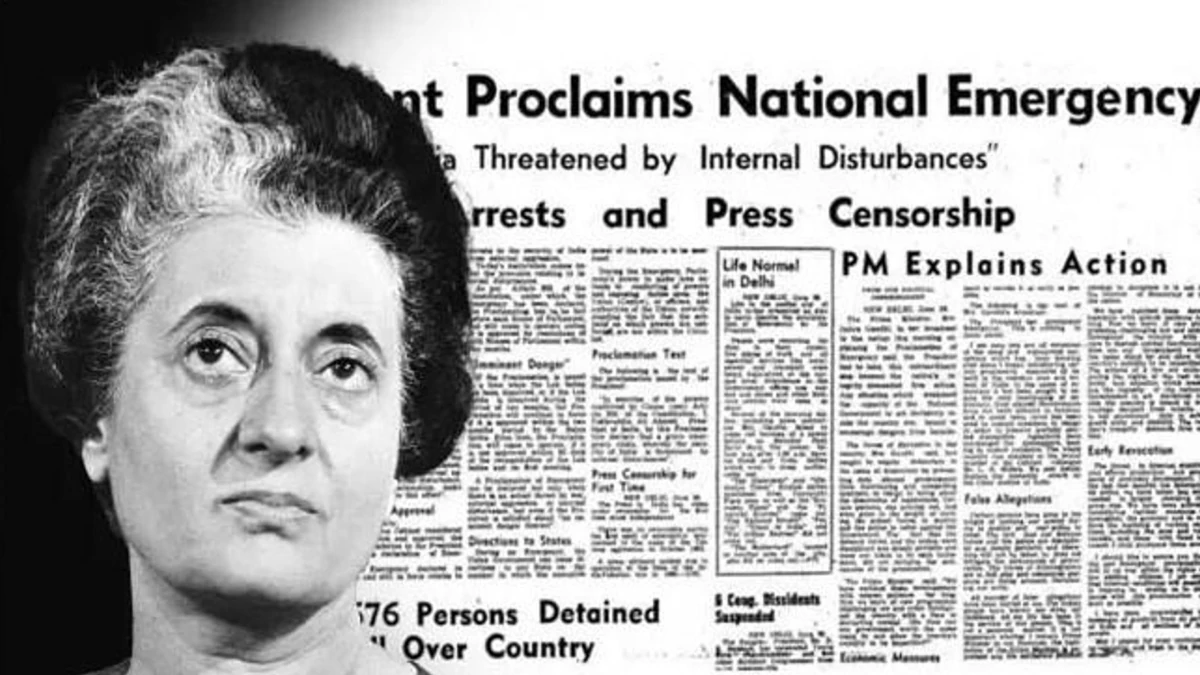
NEW DELHI: In a sharp indictment of the Congress’s political legacy, S Gurumurthy has argued that India’s Emergency story is being told only halfway, with the 18 months of repression overshadowing what he describes as an even more dangerous attempt to institutionalise dynastic, one-party rule through constitutional amendments.

In a strongly worded message addressed to younger activists, Gurumurthy recalled his own underground involvement in the anti-Emergency movement and accused political commentators, including the BJP’s own communication machinery, of failing to explain the full constitutional implications of Indira Gandhi’s actions in 1975–77.

He argues that the Emergency was not merely a temporary suspension of democratic freedoms but, in his interpretation, an attempt to create a political system in which the Congress leadership could have entrenched its dominance and weakened the possibility of an effective opposition.

Dear Guys speaking about emergency.

Read this carefully

You guys were not born or were toddlers in 1975

We in RSS fought emergency. I was personally underground for a year

Last year in Bangalore on the Constitution Hatya Day 2025 I explained the horror I saw and ensured… https://t.co/ifzdXbtZhr

— S Gurumurthy (@sgurumurthy) October 11, 2026

‘The Emergency was more than 18 months of horror’

Gurumurthy contends that public discussion of the Emergency has focused excessively on the period between June 1975 and March 1977, overlooking the wider constitutional changes and political calculations that, he argues, threatened the future of multiparty democracy.

He points to the 42nd Constitutional Amendment, which received presidential assent in January 1977, and alleges that the political strategy surrounding the amendment was intended to entrench Congress rule. He further argues that the opposition’s release from prison and the announcement of elections created a situation in which Indira Gandhi expected to secure a victory and legitimise her rule.

These are Gurumurthy’s political and historical interpretations. His broader warning, however, concerns a fundamental democratic question: what happens when constitutional power is used not to strengthen institutions but to protect the ruling establishment from meaningful opposition?

Article 32D: Gurumurthy’s central allegation

At the heart of Gurumurthy’s message is his reference to what he calls Article 32D, which he alleges was intended to facilitate a single-party dictatorship under Congress and the Gandhi family.

He argues that the constitutional changes made during the Emergency threatened to place the ruling establishment beyond effective legal and political challenge. In his account, an electoral victory for Indira Gandhi in 1977 could have enabled the government to consolidate its power further and marginalise opposition parties.

How the opposition turned the tables on Indira Gandhi

Gurumurthy recalls that the opposition initially faced formidable odds after its leaders and cadres had spent months in prison. He cites the formation of the Janata Party through the merger of opposition groups and the departure of Jagjivan Ram from Congress as developments that transformed the political contest.

He also highlights the underground resistance organised by the RSS, arguing that the movement helped build public anger against the government and contributed to the mass mobilisation that followed.

In his recollection, the opposition’s unity and the depth of public resentment proved decisive in defeating Indira Gandhi in the 1977 general election. The election remains a defining moment in Indian democracy: voters removed the government that had imposed the Emergency, demonstrating that electoral accountability could survive even after a prolonged assault on civil liberties.

For the BJP and RSS, Gurumurthy’s account reinforces that resistance to the Emergency was a defining chapter in their political history.

A direct challenge to the BJP: Tell the whole story

Gurumurthy’s criticism is not directed at Congress alone. He has also expressed disappointment with the BJP, arguing that the party has failed to communicate the full constitutional dimension of the Emergency despite the Modi government’s decision to observe June 26 as Samvidhaan Hatya Diwas, or Constitution Murder Day.

He has proposed printing and distributing copies of the Constitution as it stood after the January 1977 amendment, accompanied by an explanation of the provisions he believes threatened multiparty democracy.

He has even suggested sending copies to prominent political figures, including Rahul Gandhi, to highlight the contrast between the constitutional changes made under Indira Gandhi and the subsequent restoration of safeguards.

The proposal is deliberately provocative, designed to force a confrontation over the Congress’s historical record and challenge the party to account for its role during one of the darkest periods in Indian democratic history.

Also Read: Delhi Police de-notifies Jantar Mantar as protest site, designates Ramlila, Burari and CBD Ground as alternatives

Congress’s democratic record faces renewed scrutiny

Gurumurthy’s message revives a question that continues to haunt Congress: how does a party that presents itself as a defender of the Constitution account for the suspension of civil liberties, the detention of opposition leaders and the curbs on press freedom during the Emergency?

The historical record of the Emergency provides ample grounds for scrutiny. The declaration of Emergency in June 1975 was followed by arrests of opposition leaders, censorship and restrictions on civil liberties. The 42nd Amendment also made sweeping changes to the constitutional framework, many of which became major points of contention in subsequent years.

The Janata government that came to power in 1977 undertook constitutional changes aimed at reversing important aspects of the Emergency-era framework. The 44th Amendment, enacted in 1978, restored or strengthened several safeguards against the abuse of emergency powers.

Gurumurthy argues that the country must go further than commemorating the Emergency’s victims, it must explain how constitutional changes can be used to weaken democratic competition and why institutional safeguards matter.


Topics: 42nd Constitutional AmendmentArticle 32DConstitutionS GurumurthyemergencyIndira Gandhi1975 EmergencyCongress rule
Share
Tweet
SendShareSend
✮ Subscribe Organiser YouTube Channel. ✮
✮ Join Organiser's WhatsApp channel for Nationalist views beyond the news. ✮
Previous News

Congress’s ‘Smash Patriarchy’ slogan under fire: BJP slams Rahul Gandhi over JNU Professor sexual harassment case

Related News

Pakistan | Khyber Pakhtunkhwa under Emergency: Imran Khan’s PTI govt & CM Sohail Afridi ousted, Governor rule imposed

Union Minister for Coal and Mines, G Kishan Reddy

Telangana: G Kishan Reddy hits back at Kharge over ‘muzzled democracy’ remark: ‘Congress must look at its own past’

Tamil Nadu: Centre tells SC it does not want to reopen Katchatheevu issue with Sri Lanka

Gurucharan Jena, veteran RSS Swayamsevak and social karyakarta known as the “Bhagirath of RSS” in Bhubaneswar, passed away at 77

Gurucharan Jena, ‘Bhagirath of RSS’ in Bhubaneswar, passes away at 77; Remembered for lifelong service

Balakrishnan Ji’s life reflected selflessness & complete immersion in spirit of nation-building: Dr Mohan Bhagwat

Freedom with responsibility: From civilisational ethos to constitutional spirit

Load More

Latest News

S Gurumurthi Ji schools activists on real emergency and how Constitution was trampled in 1975

BJP Manipur staged a rally demanding the resignation of Congress MP Angomcha Bimol Akoijam

Congress’s ‘Smash Patriarchy’ slogan under fire: BJP slams Rahul Gandhi over JNU Professor sexual harassment case

Pakistan Prime Minister Shehbaz Sharif and Pakistan Army Chief Asim Munir

“Army is the Rule, Army is the Law”: India slams Pakistan at UN; Exposes control of judiciary & press as mockery of law

Delhi Police de-notifies Jantar Mantar as protest site, designates Ramlila, Burari and CBD Ground as alternatives

Al-Qaeda is encouraging Bangladesh-based JMB and ABT networks to form splinter groups such as Imam Mahmuder Kafila (IMK) to expand its regional reach

Al-Qaeda targets India with Pan-Islamism, using Bangladesh terror groups to expand its reach, outsmart agencies: Report

Fact Check: ABVP accuses NSUI of saffron impersonation at Delhi Protest, alleges conspiracy to defame RSS

Representative Image

India Condemns Attack on MT Petro Dolphin: 9 Indian seafarers rescued, 2 missing; MEA urges de-escalation & dialogue

Houthis attack airports and oil infrastructures in Saudi Arabia

Houthis Escalate Attack on Saudi Arabia: Hit airports & energy sites, warn “worse is yet to come”; 11 Indians injured

Prakash Rajpurohit takes charge as Deputy Election Commissioner

Who is Prakash Rajpurohit, India’s new Deputy EC?: From UPSC AIR 2 & IIT-Delhi alum to election custodian

CJI Surya Kant (Left), Rahul Gandhi (Right)

CJI Surya Kant snubs Rahul Gandhi: Supreme Court is not a political darbar, follow due process

Load More
  • Privacy
  • Terms
  • Cookie Policy
  • Refund and Cancellation
  • Delivery and Shipping

© Bharat Prakashan (Delhi) Limited.
Tech-enabled by Ananthapuri Technologies

  • Home
  • Search Organiser
  • Bharat
    • Assam
    • Bihar
    • Chhattisgarh
    • Jharkhand
    • Maharashtra
    • View All States
  • World
    • Asia
    • Africa
    • North America
    • South America
    • Europe
    • Australia
  • Editorial
  • Operation Sindoor
  • Opinion
  • Analysis
  • Defence
  • Culture
  • Sports
  • Business
  • RSS @ 100
  • Entertainment
  • More ..
    • Sci & Tech
    • Vocal4Local
    • Special Report
    • Education
    • Employment
    • Books
    • Interviews
    • Travel
    • Health
    • Politics
    • Law
    • Economy
    • Obituary
  • Subscribe Magazine
  • Read Ecopy
  • Advertise
  • Circulation
  • Careers
  • About Us
  • Contact Us
  • Policies & Terms
    • Privacy Policy
    • Cookie Policy
    • Refund and Cancellation
    • Terms of Use

© Bharat Prakashan (Delhi) Limited.
Tech-enabled by Ananthapuri Technologies