Regardless of how the Congress and the INDI Alliance may portray themselves as defenders of the Constitution to garner votes, the public is aware of the reality. This is the same Congress that instigated a constitutional emergency in 1975, amended the Constitution over 90 times, altered its Preamble, enacted the Wakf Board Act in contradiction to Dr Babasaheb Ambedkar’s vision, dismissed the Uniform Civil Code, and established the National Advisory Council, among other actions.
Bharat stands out as a highly diverse, multilingual, and multicultural nation, yet it is connected by deep-rooted ties of shared traditions, culture, and values. To foster mutual understanding and build a strong value system of unity among the people of various states in such a culturally rich country, it is essential to reinforce these connections through ongoing and meaningful trust and respect among individuals from different backgrounds and lifestyles.
The so-called “Breaking Bharat Forces,” who portray themselves as true defenders of the Constitution, are in fact among its fiercest adversaries. They craft a narrative that appears to celebrate the Constitution, while undermining its core principles in reality. Their efforts aim to fracture unity and diversity, positioning themselves against the “Making Bharat Forces.” Their hostility is intense, manifesting in support for Naxalism, terrorism, antisocial behavior, caste discrimination, religious conversions, and corrupt leadership. Their anti-Bharat agenda is often influenced by foreign entities or driven by a thirst for power.
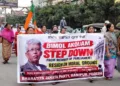
Those protesting against the current Modi administration and labeling him a dictator while perpetuating the false claim that an undeclared emergency is in effect overlook the fact that such actions are undermining the Prime Minister, constitutional institutions, and public order, all while distributing misleading videos and content. This raises the question of whether these protests could have happened during the actual Emergency declared by then-Prime Minister Indira Gandhi from 1975 to 1977.
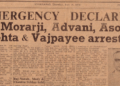
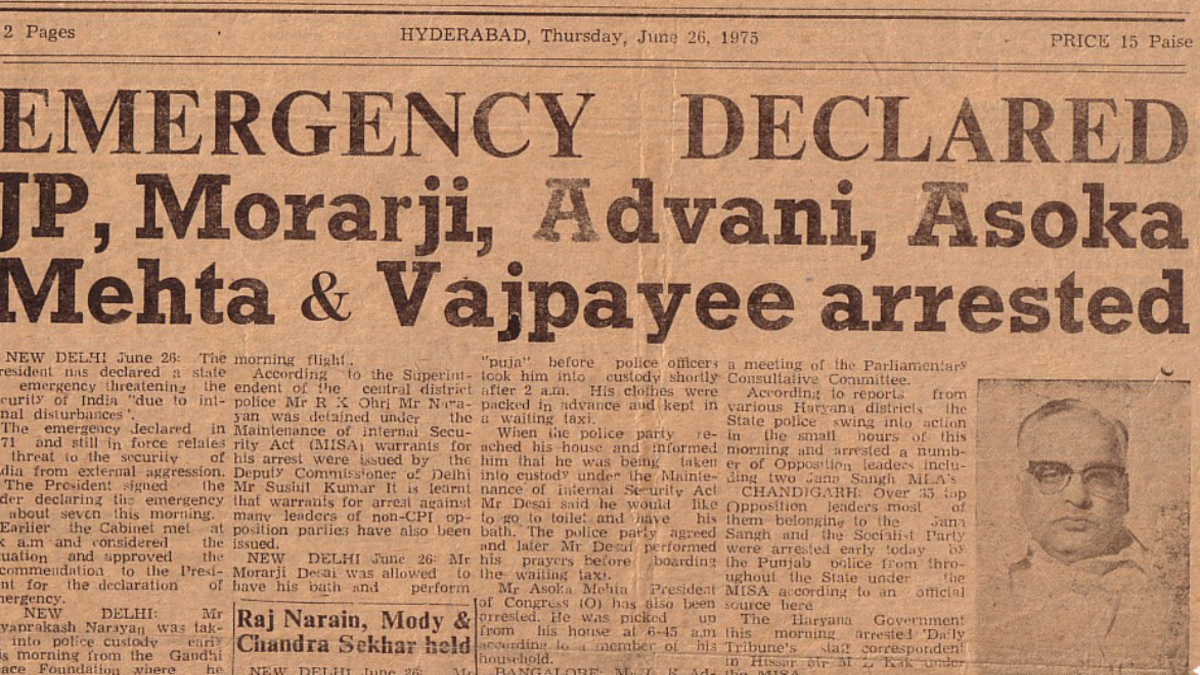
On June 26, 1975, President Fakhruddin Ali Ahmed proclaimed a state of emergency in Bharat due to alleged “internal disturbances” threatening national security. Indira Gandhi’s government suspended civil liberties, including press freedoms, and made significant alterations to the Constitution. During this time, many journalists, opposition figures, and activists were imprisoned under her oppressive regime.
Let’s understand the Realities of Real Emergency (imposed by then PM Indira Gandhi) and Today’s Reel Emergency
1975 (Real) : The fundamental rights under Article 19 were explicitly suspended and citizens lost the rights to approach courts for liberty.
Today (Reel ) : The constitution functions fully. Fundamental rights are legally intact and fully operational. All courts are not only routinely entertaining writ petitions however hearing them even on holidays even though the petitions and petitioners are completely against government. Courts are granting bails and even striking down executive orders. It shows that the legal system is active and fully operational. Was it possible if PM Modi imposed undeclared Emergency?
1975 (Real) : Over 100000 political leaders, activists and journalist were jailed without trial. State assemblies were suspended. Elections were postponed.
Today (Reel ) : Political parties, activists, Media activities, Journalists operate freely. Conduct nationwide rallies, win elections at different levels from Gram Panchayat to higher levels and form governments across multiple states.
1975 (Real) : Official pre-censorship was implemented, with government censors reviewing every newspaper line before it could be published. Electricity to printing facilities was cut, and foreign correspondents were deported. Following Stalin’s Russia, Bharat under Indira Gandhi faced one of the most severe attacks on free speech and journalism globally. During the Emergency she declared, hundreds of journalists were imprisoned, many others arrested for critiquing the government, and the independent press fought for survival. The Emergency marked an unprecedented restriction on freedom of expression in Bharat, which experienced a decline in the global press freedom index. Censorship became pervasive, with the government analyzing every news item prior to its publication. Most mainstream media outlets faced significant pressure; some were threatened with closure while others faced imprisonment. The Bharatiya Express and The Statesman were among the first to voice their concerns, leaving their editorial pages blank in protest. Other publications quickly joined in. Journalists from The Times of London, The Washington Post, and The Los Angeles Times were prevented from entering Bharat, while correspondents from The Guardian and The Economist returned to the UK after threats. Mark Tully of the BBC was also dismissed. According to the Home Ministry, around 7,000 journalists were arrested in May 1976. A Freedom House report revealed that Bharat’s rank in press freedom fell from third in the early 1970s to 34th between 1975 and 1977. The New York Times noted on December 28, 1975, that the severe press restrictions in Bharat had significantly undermined its democratic society.
Today (Reel ) : There is no censorship present; instead, there is an abundance of freedom granted to print, digital, mainstream media, and social media influencers. Criticism towards the Prime Minister, Home Minister, and various Chief Ministers from the NDA is at the worst level, yet no strict actions are taken against any media personnel or organizations. In contrast, in Punjab, governed by the AAP, an AAP MLA was suspended for questioning school facilities. Is this how the constitution should be upheld? When a Congress party member voices concerns about the Gandhi family, they are either suspended or removed from the party, all while the Gandhi family advocates for constitutional values that they themselves do not seem to respect.
1975 (Real) : Parliament’s term was arbitrarily extended by executive decree without holding scheduled general elections.
Today (Reel ) : General and state elections are happening as per schedule and conducted by constitutional boday Election commission. Opposition won in many states such as Punjab, Tamil Nadu, Keralam, Karnataka, Himachal Pradesh, Telangana, shows the voters mandate than the executive outreach.
1975 (Real) : High court judgements were overridden by illegal constitutional amendments such as 38th and 42nd amendments and judges who ruled against the government were systematically bypassed or transferred.
Today (Reel ) : The judiciary remains an independent constitutional body, frequently questioning state and central government decisions, nullifying laws like electoral bonds. Government is accepting the actions and taking necessary steps in accordance with constitutional rights.
1975 (Real) : Federalism was effectively suspended. The state governments ruled by non congress governments such as Tamil Nadu and Gujrat were summarily dismissed. Power shifted entirely to new Delhi, converting Bharat’s federal republic into a de facto unitary states where chief Ministers executed central decrees without debate.
Today (Reel ) : State governments hold real power and actively oppose and deny implementation against central government initiatives. Non ruling parties also govern major economic hub such as Tamilnadu, Karnataka and Telangana. Tensions manifest through legal disputes such as central fund allocation are routinely litigated through Supreme Court rather than using unilateral executive decree.
1975 (Real) : Non governmental Organizations, Student Unions and political factions were systematically banned or forced underground. Prominent grassroot movements such as Jayprakash Narayan’s Navnirman and Sampoorna Kranti or nationwide labour protests were crushed badly through mass arrests and brutal actions.
Today (Reel ) : Protestors, strikes, rallies and civil society movements occur frequently, some are against constitutional norms, still government is trying to resolve everything peacefully and following constitutional framework. Massive public demonstations such as Kisan aandolan lasted for few months which was not possible during 1975 emergency.
1975 (Real) : Executive power directly infringed on the personal privacy through mandatory, target driven state programs. The most notorious was the coercive mass sterilization program.
Today (Reel ) : Interventions are non coercive in terms of bodily autonomy. No personal privacy is harmed and every decision is taken in consultation with state governments, through Parliament proceedings and in accordance with Judicial legal requirements.
Conclusion
Dynastic leaders and activists linked to global market forces have consistently undermined democratic expressions to promote their own interests, damaging the fundamental principles of “Bharatiyatva.” Imagine if the present central government took just 10% of the actions that the dynasties and certain opposition parties employed in 1975 and during other times to suppress media, students, the general populace, and intellectuals. As Bharatiyas, we need to persist in our pursuit of “Bharatiyatva” to reclaim our status as “Vishwaguru,” rather than succumbing to a harmful political agenda.