Scheme announced in New Delhi by Government of India remains a promising until someone in the village turns it into a bank account. A well-fed child, working tap or a finished roof. In most of rural Bharat today, someone is a trained neighbour from the same lane.
Till 20 September 2026 counts more than 9 lakh Community Resource Persons (CRPs) at work in villages, standing alongside over 10.40 lakh ASHAs, 10.58 lakh trained Anganwadi Workers and a wide web of Swachhagrahis, Awaas Mitras and water committee members.
संघे शक्तिः कलौ युगे
In this age, the strength lies in coming together.
Much of the recent conversation on rural women has centred on dashboards, apps and digital marketplaces. Every app still needs a human hand to hold the farmer’s phone, explain the form and earn the family’s confidence.
What Is a Community Cadre?
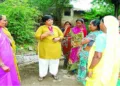
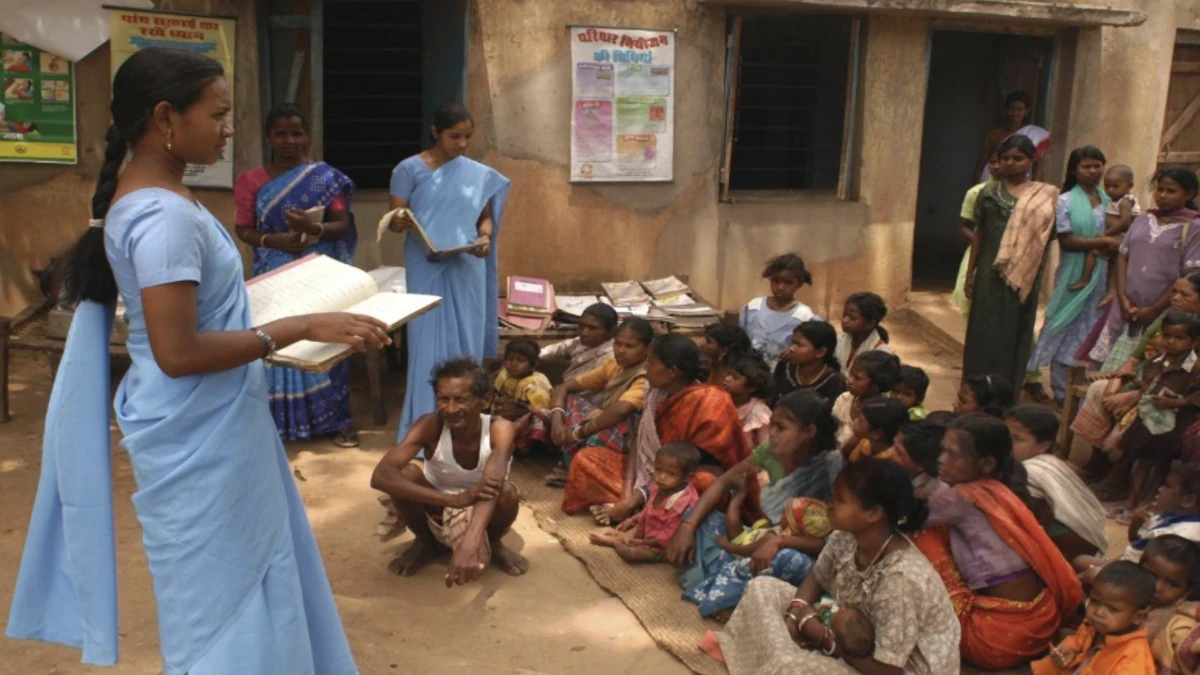
A community cadre is a person picked from within a village, trained by a government mission and deployed to serve that very village. The logic is disarmingly simple. An official visits or a neighbour stays.
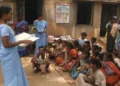
As a trainer, they pass on skills through peer learning. As service providers, they bring livelihood and banking services to the doorstep. As behaviour-change agents, they nudge families towards better health, hygiene and inclusion. As scheme facilitators, they sort out documents, enrolment and linkages that would otherwise mean repeated trips to the block office.
The backbone of this arrangement is the Deendayal Antyodaya Yojana–National Rural Livelihoods Mission (DAY-NRLM). It has mobilised more than 10 crore rural households into roughly 92 lakh Self-Help Groups (SHG).
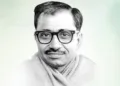
Village Organisations and Cluster Level Federations sit above these groups and the CRP are the working muscle that keeps the whole structure in motion. The mission carries Pandit Deendayal Upadhyaya name for a reason. Antyodaya is the rise of the last person and it is impossible without someone physically reaching that last person.
The Sakhi Family: A Quick Who’s Who
“Sakhi” means companion and the choice of word is taken with feelings. These are not inspectors but friends with training. Roughly 4.08 lakh of the 9 lakh CRP work on livelihoods, while the remaining five lakh or so handle banking, insurance, financial literacy and gender issues.
- On the farm: Krishi Sakhis act as the villagers agricultural extension workers, promoting sustainable farming and helping growers market their produce. The Annual Report of Ministry, 2025-26, puts their number above 1.91 lakh.
- In the cattle shed and the pond: Around 1.70 lakh Pashu Sakhis help livestock-rearing families improve animal health and cut input costs. More than 2,012 Matsya Sakhis support fisheries-based households with practices and market access.
- In the forest: About 2,993 Van Sakhis assist forest-based communities with the collection, cultivation and value addition of non-timber forest produce.
- In the marketplace: Nearly 48,785 Udyog Sakhis, along with specialised enterprise CRPs under the Start-up Village Entrepreneurship Programme (SVEP), help households spot a viable business, draw up a plan and secure credit.
By June 2026, SVEP had supported 4.32 lakh enterprises. A new National Campaign on Entrepreneurship aims to train 50,000 CRP and 50 lakh SHG members in enterprise skills.
At the bank counter, minus the counter: Over 1.48 lakh Business Correspondent (BC) Sakhis offer account opening, deposits, withdrawals and transfers at the doorstep. More than 50,548 Bank Sakhis, stationed at branches, smooth the path to loans since 2013-14 they have helped SHGs access Rs 13.41 lakh crore in bank credit.
Another 56,727 Financial Literacy CRP run village-level awareness drives and in 2025-26 alone more than 3.81 crore women SHG members received training on savings, insurance, pensions and enterprise finance.
What this looks like on the ground is best seen in Nagaon, Assam. Debashree Gogoi Bora began with basic transactions after a neighbour introduced her to the programme. Over five years she has built a Customer Service Point that serves 30 to 35 villagers a day, processing more than 2,500 transactions between April and August and earning Rs 10,000 to Rs 17,000 a month in commission.
On the side, she runs a photocopy and desktop publishing service and bakes for local celebrations. One trained woman, several livelihoods, an entire village served.
Beyond Income: Health, Water, Sanitation and Housing
The ASHA is the first point of contact between a rural family and the public health system. She works flexibly beyond fixed hours and earns performance-based incentives under national health programmes.
The Anganwadi Worker, under ICDS and Poshan 2.0, screens children for severe and moderate acute malnutrition, supplies supplementary nutrition and counsel’s mothers on feeding and hygiene. Under the Poshan Bhi Padhai Bhi initiative, Anganwadis are also being turned into early learning centres with play-based materials.
Swachhagrahis are the foot soldiers of Swachh Bharat Mission (Grameen), with at least one per village as the ideal and women given preference. The SBM(G) capacity-building dashboard records over 10.36 lakh functionaries and 36,342 master trainers trained.
In Bastar, SHG women working as Swachhata Didis set up resource management centres across 114 villages and 71 Gram Panchayats. Those centres earned Rs 12.22 lakh in a single year, against Rs 15.20 lakh over the preceding five years combined.
Under Jal Jeevan Mission, Village Water and Sanitation Committees or Pani Samitis are chosen by the Gram Sabha, must have at least 50 per cent women and manage funds, user charges and upkeep of village water systems.
Over 5.33 lakh such committees are operational. Nal Jal Mitras, trained in plumbing, electrical work and pump operation, handle minor repairs locally instead of waiting for an engineer from the district.
Under PMAY-Gramin, every sanctioned house is tagged to a village-level functionary such as an Awaas Mitra, who follows it through to completion. The scheme targets 4.95 crore houses by March 2029.
In West Tripura, Sumati Debbarma and her daughter lived in a crumbling kuccha house that became dangerous every monsoon. With an Awaas Mitra handling documentation, monitoring construction and liaising with the block, she received Rs 1.30 lakh in three DBT instalments and completed her pucca home in 2022.
How Are These Workers Paid and Trained?
Frontline cadres are compensated according to the guidelines of the scheme they serve. In most cases this is activity-based, with incentives linked to services delivered, tasks completed and community mobilisation achieved. In plain terms, they earn by doing.
On training, the model has moved away from the one-time workshop. Capacity building is now a continuing cycle of induction, thematic modules, refresher courses, field mentoring and on-site handholding. ASHAs, for example go through 23 days of phased training spread across the year.
Jal Sakhis and committee members learn water quality testing and system maintenance, while Awaas Mitras are trained in beneficiary identification and construction monitoring.
Why the Model Works: Trust Before Technology
Bharat villages have long governed shared resources through their own institutions, from panchayats to community-managed tanks and grazing lands. The cadre model draws on that instinct instead of replacing it.
Firstly proximity is the worker speaks the local dialect, knows which household has a sick child and which farmer lost his crop last season. Second, accountability with a neighbour who fails to deliver faces the village every morning. Thirdly it is overwhelmingly women-led, which has quietly turned lakhs of rural women from recipients of welfare into providers of services.
Aarti journey in Basti, Uttar Pradesh, captures this shift. Married young and unable to finish school, she joined an SHG in 2016. She went on to hold office in her SHG, then the Village Organisation, then the Cluster Level Federation.
As a Convergence CRP, she helped start a weekly market and linked the Panchayat, frontline workers and households into one working chain, adding to her own family’s income along the way.
One Household, Many Doors toward Convergence
The newest idea in this ecosystem is convergence. A rural family does not experience life in the same household needs a loan, a vaccination, a toilet and a job card. So, cadres are being trained to look across these needs.
ASHA now receives training on sanitation, nutrition awareness and responding to violence against women, while Gender CRPs under NRLM take on exclusion and inequality. A joint advisory from the Ministries of Rural Development, Women and Child Development, and Health and Family Welfare describes frontline cadres as the “last-mile enablers of convergence.”
The basics are sound, but scale brings its own questions. As each worker is asked to wear more hats, the risk of overload grows. Activity-based pay rewards effort but can leave incomes uneven across seasons and regions. Clear career pathways, like Aarti’s rise through the federation ladder, will decide whether the best cadres stay.
Bharat have built something few nations have attempted, a development workforce of several million, rooted in the very villages it serves. That is Antyodaya in practice, one doorstep at a time.